

7 Features U.S. Drones Need to Compete Globally

May 27, 2025
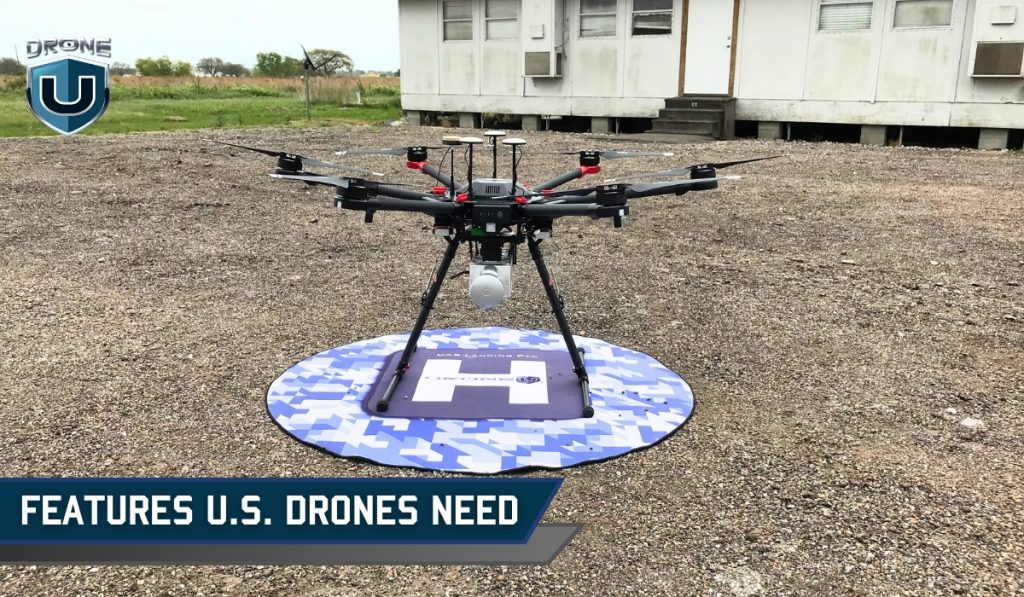
The drone industry is evolving at breakneck speed, but one thing is becoming increasingly clear: American drone manufacturers are struggling to keep pace with global leaders.
While the U.S. leads in innovation across many tech sectors, it often falls short when it comes to Drones. Yes, we’re talking about building drones in our country that are practical, deliver great performance, and are affordable.
I couldn’t help but talk about the most important features US drones need right now. So, a big shout-out to the American drone manufacturers who can do this. All we need is a little more pragmatic approach and a firm commitment to serve the masses.
Let’s talk about our feature bucket list..shall we?
US drones need to integrate Auto Exposure Bracketing (AEB). I know it may sound like a feature straight from a sci-fi movie. In simple terms, AEB is a mode where the drone captures multiple images at different exposures to create high-dynamic-range (HDR) photos. This is standard in many professional setups and should be a baseline feature in both commercial and prosumer drones.
Another key mode is Hyperlapse, a time-lapse technique where the drone moves through space while capturing footage at set intervals. This feature is crucial for mapping, real estate, and storytelling applications, and should be embedded into all serious aerial platforms.
Intelligent optical obstacle avoidance systems, especially in low-light or complex environments, are an area where American drones are still lagging behind. We need dynamic responsiveness, which is critical for both safety and autonomous missions. These systems should also include nighttime obstacle avoidance without needing to shell out more money from our pockets.
Battery technology is another key battleground. U.S. drones need self-healing or more resilient batteries that provide longer flight times and maintain performance over hundreds of charge cycles. Longer endurance is a must for commercial applications like inspections, surveying, and emergency response.
One of the most frustrating limitations with many U.S.-made drones is the unreliable radio and video transmission systems. Drones should be able to stream a steady, low-latency feed over distances exceeding five miles, without relying on cellular networks. The ability to maintain consistent communication is critical in mission-critical operations.
Perhaps one of the most user-unfriendly trends in American drone tech is the subscription model. Unlike foreign competitors, many U.S. manufacturers (notably Skydio) lock essential features like 3D scanning, cloud access, and nighttime flying behind recurring annual fees. This model frustrates professionals and discourages adoption. These core features should be part of the purchase—no hidden fees, no subscriptions.
Today’s users expect professional-grade imaging. Drones should natively support 4K at 120fps, 8K at 30fps, and 4K at 60fps as standard. If Sony’s LR1 camera payload—essentially an FX3 in drone form- can manage these specs, there’s no reason American drones shouldn’t as well.
Finally, all of these features must be packaged at a competitive price point. The global market demands cost-effective yet powerful solutions. Without lowering entry barriers, American drone makers will continue to lose ground to more agile and affordable international brands.
American drone companies have the talent, resources, and innovation potential to lead the industry. But that leadership won’t come from half-measures or subscription paywalls. It will come from building drones that professionals can rely on – drones that offer advanced imaging, autonomous capabilities, long-range communication, and fair pricing without compromise.
If U.S. manufacturers want to regain the trust and market share they’ve lost, the roadmap is clear: focus less on monetizing features and more on solving real problems.
 4
4