
DJI Air 3S Review: The Mid-Range Drone That Nails It (Mostly)

September 20, 2025
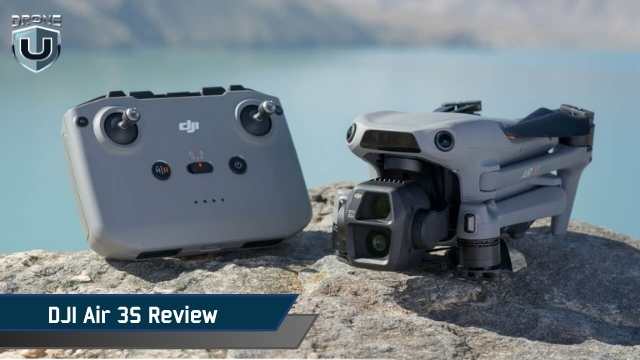
If you’re shopping for a drone that offers serious camera power without the size or price of a flagship model, the DJI Air 3S might be exactly what you need. And in this DJI Air 3S review, I’ll explain why.
It’s been out for a while now.
After months of flying it in different conditions, I’ve gotten a good feel for what it can really do.
Specs aside, how does it feel to use it in the real world?
I’ll break down how the Air 3S handles in the air, the footage quality, and what features stand out after long-term use.
The Air 3S is clearly built for people who want pro-level results without the complexity. It’s easy to fly, fun to use, and packed with smart features that do the technical heavy lifting.
That said, it’s not perfect. A few things are missing that could matter depending on how you fly.
So, is the DJI Air 3S still worth buying in 2025?
Let’s take a closer look.
The DJI Air 3S doesn’t scream “flagship,” but after months of flying it, it sure performs like one.
It lives right between DJI’s two biggest sellers: the Mini 4 Pro and the Mavic 3 series.
That middle-ground label might sound unappealing, but in practice, it’s what makes the Air 3S so versatile.
Take the Mini 4 Pro, for example. It’s light and easy to fly anywhere with fewer FAA restrictions. However, its smaller sensor and limited low-light performance reveal their limitations once the sun sets.
While the Mavic 3 Pro is powerful, it features an adjustable aperture, a larger sensor, and 5.1K video capabilities. But it also costs more, weighs more, and often feels like too much drone for casual users or even solo creators.
The Air 3S hits that rare balance, featuring solid pro features without feeling bloated or intimidating.
It’s powerful enough for serious shooting (dual cameras, dynamic range, full manual control) but still small enough to fold up and carry in a backpack.
It holds up in the wind, handles dusk flights confidently, and shoots footage that doesn’t fall apart in post.
However, it’s not for everyone. If you want to avoid FAA rules completely, stick with the Mini.
If you’re a commercial filmmaker who needs full-frame sensors or an adjustable aperture, the Mavic 3 Pro will suit you better.
But for the people somewhere in between?
The Air 3S might be the most practical drone DJI makes currently.
| Feature | DJI Air 3S | DJI Mini 4 Pro | DJI Mavic 3 Pro |
| Camera System | Dual: 1″ CMOS (wide) + 1/1.3″ CMOS (telephoto) | 1/1.3″ CMOS (wide) + 1/1.3″ CMOS (telephoto) | Triple: 4/3″ CMOS (wide), 1/1.3″ CMOS (medium tele), 1/2″ CMOS (telephoto) |
| Max Video Resolution | 4K/120fps HDR, 14 stops dynamic range | 4K/60fps HDR, 12 stops dynamic range | 5.1K/50fps, 4K/120fps DCI, 12.8 stops dynamic range |
| Max Photo Resolution | 50 MP | 48 MP | 48 MP |
| ISO Range | 100–12,800 (wide), 100–6,400 (telephoto) | 100–12,800 | 100–6,400 |
| Transmission | O4 Transmission, 1080p @ 60fps, up to 20 km range | O4 Transmission, 1080p @ 60fps, up to 20 km range | O3+ Transmission, 1080p @ 60fps, up to 15 km range |
| Obstacle Avoidance | Omnidirectional with low-light sensors and LiDAR | Omnidirectional with low-light sensors | Omnidirectional with low-light sensors |
| Return to Home | Smart RTH with real-time mapping | Advanced RTH with APAS 4.0 | Advanced RTH with APAS 5.0 |
| Max Flight Time | 45 minutes | 45 minutes | 43 minutes |
| Weight | 724 g | <249 g | 958 g |
| Internal Storage | 42 GB | 2 GB | 8 GB (Cine version: 1 TB) |
| Price Range | $1,099 – $1,599 | $759 – $1,159 | $2,199 – $4,799 |
Let’s talk about the Air 3S features in detail.
Air 3S delivers clean, crisp footage with solid dynamic range, even in tricky conditions like overcast skies, sunset lighting, or pre-dawn haze.
You don’t have to be a colorist to get usable, cinematic footage straight out of auto mode, but if you are into editing, the drone supports 10-bit D-Log M, HDR, and 4K at 60fps.
When I used it, there was no color grading, no color correction, and it still looked cinematic. That’s the 1-inch sensor doing its job.
With the 70mm equivalent field of view, you can punch its 3x telephoto lens in on distant subjects like wildlife, boats, hikers, or even architecture.
It also gives your footage a compressed, more professional look that the wide camera can’t always achieve.
That said, the camera system isn’t perfect.
Unlike the Mavic 3 series, the Air 3S doesn’t have a variable aperture. Both cameras are fixed at f/2.8.
So if you’re shooting in bright conditions, ND filters become mandatory. Not ideal when lighting changes mid-flight, forcing you to land just to swap glass.
Also, if you’re coming from a drone that shoots in 5.1K or 6K, the 4K cap here might feel limiting.
Flying the Air 3S feels smooth and reliable. One standout feature is how well it handles wind.
In real-world tests, the drone easily manages gusts up to 12 meters per second. That means you don’t have to cancel your shoot just because it’s a bit breezy. It stays steady and keeps your shots clean.
Safety-wise, the Air 3S comes with omnidirectional obstacle avoidance. Plus, its low-light sensors are improved, so it can spot things even when the sun goes down.
One feature that impressed me is the Return to Home (RTH) function. This lets it take a smart, obstacle-free path home, even if GPS signals get weak or lost.
The Air 3S strikes a great balance between automation and manual control. You get enough help to stay safe, but you can still take full creative charge when you want.
If you’re worried about crashes or unexpected situations, this drone gives you peace of mind without sacrificing fun or creativity.
DJI advertises the Air 3S with a flight time of up to 45 minutes, which sounds amazing on paper.
But in real-world use, expect closer to 30 to 35 minutes per battery.
That’s still pretty good for a drone this size, but it’s something to keep in mind if you plan on long shoots or all-day flying.
It takes around 80 to 90 minutes to fully recharge a battery. So if you’re out in the field and juggling multiple batteries, this slow charging speed can be a bit of a headache.
Still, the Air 3S’s battery life is enough to cover most typical shoots, especially if you plan your flights in shorter bursts.
Having a couple of spare batteries on hand is definitely recommended if you want to keep the drone up in the air for longer.
In short, the battery life won’t blow you away, but it’s reliable and consistent enough to get the job done without constant interruptions.
The DJI Air 3S comes with the reliable ActiveTrack 360 mode. It lets the drone automatically follow and orbit you or your subject without you having to manually control it all the time.
The drone even makes decisions on the best angles and movement to keep your video looking cinematic.
Another favorite is Waypoints mode, which lets you program a specific flight path for the drone to follow.
This is super helpful if you want to repeat the same shot multiple times.
However, setting up waypoints can be a bit fiddly and time-consuming at first, but once you get the hang of it, it’s a powerful tool.
You also get other helpful modes like MasterShots, QuickShots, Spotlight, and Cruise Control, which let you create dynamic, professional-looking clips with minimal effort.
These modes take a lot of the guesswork out of flying and framing, making the Air 3S a solid choice with a friendly learning curve.
In short, the intelligent flight modes bring both creativity and ease, letting you focus more on your activity and less on piloting the drone.
The DJI Air 3S feels like a drone built to last.
It weighs in at 724 grams, so it’s not super light, but it’s still compact and easy to carry around.
Despite not being featherweight, it’s surprisingly portable.
It folds up nicely, slipping into a backpack or camera bag without taking up much space.
The construction is durable enough to handle regular use and the bumps of travel.
The controller is another strong point.
DJI includes the RC2 controller with a built-in 5.5-inch display that gets plenty bright (700 nits), so you can see your shots clearly even in sunlight.
After months of use, I found it comfortable and reliable, with no glitches or crashes to complain about.
Note: The gimbal guard is simple but essential. It protects the camera during transport and is easy to put on and take off, so don’t skip it.
Overall, the Air 3S strikes a nice balance for creators who want a travel-friendly drone without compromising quality.
Air 3s has an O4 transmission system that delivers a rock-solid live feed at 1080p and 60 frames per second. It offers a maximum range of up to 20 kilometers in ideal conditions.
In real-world tests, the signal stayed strong and clear, which means fewer frustrating dropouts or lag during flights.
With its Off-state Quick Transfer feature, you can offload videos and photos to your phone or tablet without even powering on the drone.
Internal storage has also seen a big upgrade compared to previous models.
The Air 3S offers a generous 42GB built-in storage with a microSD slot if you want to expand storage further.
Overall, the combination of strong signal transmission, smart file transfer, and ample internal storage is ideal.
The Air 3S takes the hassle out of flying. It lets creators spend more time capturing content and less time dealing with tech.
That said, let’s compare the pros and cons of the DJI Air 3S.
Here’s a straightforward look at what really stands out and where it falls short.
After spending months with the DJI Air 3S, it’s clear this drone hits a sweet spot.
It combines many of DJI’s best features without the heavy price or size of their flagship models.
The dual-camera system delivers sharp, vibrant footage, even in low light. This makes it a solid choice for creators who want quality without breaking the bank.
Battery life is also decent, and the improved internal storage means fewer worries about running out of space on the go.
Of course, it’s not without its drawbacks. You’ll need ND filters to manage exposure. And if you’re chasing 5K+ video or immersive FPV-style flying, this drone may fall short.
If you want a mid-range drone that offers more than just good video quality, the Air 3S is a standout choice. It delivers an ideal mix of performance, portability, and price, making it one of the best options in its category.
If this drone has inspired you, why not take it to the next level?
Check out our hands-on drone courses and start flying with skill and confidence: Explore our drone courses here.
 1
1