

Keys for Success in Utility Drone Inspection Training

October 7, 2025
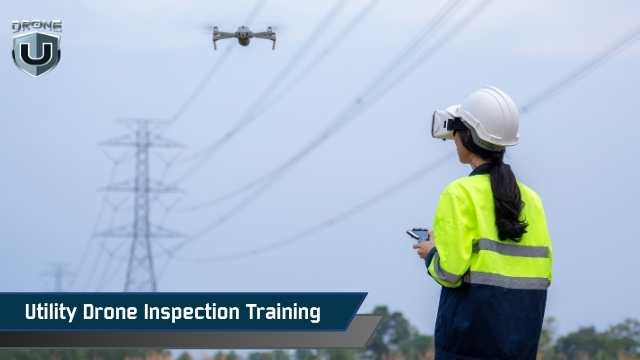
Have you ever wondered what it takes to fly a drone safely just inches from a live high-voltage power line? One wrong move could cost you time, money, or even result in a serious injury. That’s why utility drone inspection training is no longer optional. It’s essential for every mission.
Flying a drone isn’t just about controlling it. You also need to master safety protocols, follow FAA regulations, and collect accurate data under pressure.
The best programs go beyond teaching controls. They motivate you, enforce disciplined workflows, gamify learning, and help you develop the exact skills needed for real-world missions.
In this guide, you’ll discover the five keys to successful utility drone training. We’ll also learn how the right approach can turn you into a safety-conscious, data-savvy, mission-ready pilot.
Before we jump into the first key, let’s quickly cover what utility drone training really is.
Utility drone inspection training teaches you how to fly drones safely for industrial tasks. These tasks include inspecting power lines, monitoring pipelines, and surveying infrastructure.
In addition to flying skills, you’ll learn safety protocols, accurate data collection, and how to maintain disciplined workflows. Training also covers all FAA regulations and industry standards you need to follow.
The goal is simple: prepare you to handle real-world utility missions with confidence and precision.
In this guide, you’ll discover five keys to successful utility drone training. Each one will help you become a safer, smarter, and more capable pilot.
Let’s start with the first key.
Training feels meaningful when it advances your career. That’s where accreditation and certification come in.
Some programs offer PE-certified continuing education credits (for Professional Engineer) or FAA-recognized credentials. That means your training hours can count toward your professional development and give you recognition across the industry. These certificates can help you land promotions, secure higher pay, or qualify for specialized missions.
When your training is tied to professional growth and real-world opportunities, you’ll naturally stay focused, retain safety procedures, and take pride in your skills.
Always look for programs that partner with accrediting bodies so that the certificate you earn carries weight both inside and outside your company.
With the basics covered, the next key is to keep the training engaging while maintaining its serious/core aspects..
Long hours of slides and lectures can make even the most motivated pilots tune out. You need hands-on training that keeps you engaged while preparing you for serious challenges.
Practical exercises such as flight labs, obstacle courses, and simulation challenges enable you to practice real-world skills. At the same time, drills for handling equipment failures or navigating tight spaces prepare you for emergencies and responding under pressure.
Active learning is key. Instead of just reading about thermal inspections or LiDAR protocols, you perform them. You make mistakes in a safe setting and learn to correct them.
Adding friendly competition makes a big difference. Timed drills, accuracy tests, or team-based exercises encourage focus and help you retain knowledge.
With the right balance of engagement and seriousness, you’ll walk away ready to handle critical missions with confidence.
Next, let’s see how practicing these skills can produce clean, reliable data and establish disciplined workflows for every inspection mission.
Flying the drone is only half your job. The other half is ensuring that the data you collect is reliable, well-organized, and actionable.
If you mislabel a thermal image or skip metadata, you risk slowing down inspections or making critical errors. That’s why data management and strict workflows are just as important as mastering flight controls.
A strong training program teaches you not only what to capture, but why it matters. You’ll practice organizing files, documenting metadata, and verifying quality. Every photo or dataset you collect needs to fit seamlessly into the utility’s asset management system.
Once you see how your data prevents outages and supports compliance, following the correct workflows and quality checks comes naturally to you.
With your data and workflows in place, the next step is making training more engaging through gamification.
Training doesn’t have to feel like a chore. When you add elements of entertainment, you naturally push yourself to improve.
Leaderboards, point systems, and achievement badges turn routine drills into challenges. A timed inspection task or a flight obstacle course feels less like work and more like a game.
Each exercise strengthens the skills you’ll need in the field while making training more engaging.
Digital dashboards and performance tracking, along with micro-incentives, provide an additional layer of motivation. You earn points for completing scenario-based missions accurately.
Gamification keeps you motivated and shows you exactly where you stand. It’s not just about competition; it’s about improving your own performance with every session.
This approach helps you stay sharp and committed, even when training gets repetitive.
The final step in successful utility drone training is to use it to assess which pilots are ready for real-world missions.
Not everyone who picks up a drone is ready to fly critical utility operations, and that’s okay. Training is also a way to identify when you’re fully prepared for live missions.
Structured assessments help identify which pilots are ready for real-world missions.
The right program makes it clear who has the discipline, focus, and skill to fly safely near high-voltage lines.
In advanced training, you’ll face stress-test scenarios that simulate real-world pressure. You may need to navigate through confined corridors, troubleshoot mid-flight data failures, or respond to unexpected equipment malfunctions.
Your performance in these exercises shows where you excel and where you need retraining. Clear scoring systems and progression levels give you honest feedback, so when you do move forward, you’ll know you’re ready.
This filtering process ensures you and your team can handle high-voltage environments with competence and confidence.
Training is the foundation of a safe and effective drone inspection training program. When it’s designed with purpose, it becomes a driver of both personal growth and organizational success.
By focusing on motivation, engagement, data discipline, gamification, and readiness testing, you prepare yourself for evolving FAA regulations, including BVLOS operations. Each element builds on the next, shaping a program that delivers consistent results and long-term value.
When your training checks all the right boxes, you’ll reduce errors, speed up inspections, and boost confidence on every flight.
Here’s a checklist you can use:
If you can answer “yes” to these, you’re not just flying drones; you’re building a sustainable, high-performance career in utility drone inspections.
Ready to advance your career in utility drone inspections?
Enroll in Drone U’s training programs and learn real-world techniques to confidently handle the demands of utility missions.
 1
1