In professional and government contexts, “American-made drone” means more than a drone sold by a US company or assembled in the United States. It refers to a drone that meets NDAA compliance requirements — the manufacturer is not owned or controlled by a covered foreign entity, critical components do not originate from restricted sources, and the software does not route data through restricted infrastructure. Assembly location alone does not determine compliance.
The American drone industry is entering a new phase of growth and regulation. According to industry reports, the USA drone market will reach $31.34 billion by the end of 2034. A major reason for this growth is the rising demand for American-made drones.
Across public safety, utilities, and infrastructure sectors, many organizations are moving away from foreign-made aircraft, especially DJI, because of national security and data privacy concerns.
The result is a growing market for American-made and NDAA-compliant alternatives, but also a growing amount of confusion about what those terms actually mean.
Not every drone marketed as American-made meets federal procurement requirements. Not every NDAA-compliant drone is on the Blue UAS Cleared List. And not every drone assembled in the United States qualifies under the supply chain rules that actually govern government procurement. These distinctions matter because choosing the wrong platform can mean a failed compliance review, a lost contract, or a forced fleet replacement.
This article focuses on professional operations in public safety and government, utilities and infrastructure inspections, and enterprise mapping and ISR missions. When operations involve regulated airspace or government funding, American-made and NDAA-compliant drones are required.
In this article, we’ll explore the best American-made drones, highlighting their features and capabilities so you can make an informed choice.
Let’s first understand what exactly US-made drones are.
What Does “American-Made Drones” Mean and What It Doesn’t?
An “American-made drone” does not simply mean a drone sold by a U.S. company. In professional and government operations, the term usually refers to a drone that meets NDAA compliance requirements and follows strict supply-chain security rules.
In practice, this means:
The drone manufacturer is not owned or controlled by a covered foreign entity
critical components do not originate from restricted sources, and
The software does not route data through restricted infrastructure.
All three conditions must be true at the same time. Failing any one of them disqualifies the drone regardless of where it was put together.
Assembly Location
Assembly location is the most common source of confusion. A drone can be assembled in the United States and still fail federal procurement requirements if its parent company is headquartered in a covered country or its core electronics, such as flight controllers, cameras, radios, and navigation systems, come from restricted manufacturers.
“Made in USA” on the packaging does not satisfy the supply chain rules that govern government procurement. What matters is where the critical components originate and who ultimately controls the company behind the product.
US Branding and Distribution
US branding and distribution create a similar confusion. Just because a drone is sold by a US distributor, has a US brand name, or is supported by a US office, doesn’t mean it is NDAA compliant.
Compliance is not decided by who sells the drone in the US. It depends on who actually designs and controls the product. This includes the original manufacturer, its parent company, and its ownership structure.
In simple terms, you need to look at the full supply chain, not the marketing.
For example, a French company can manufacture drones in the US using compliant components and still meet NDAA requirements. On the other hand, a US-branded drone assembled in the US can fail compliance if it uses restricted Chinese parts.
The Parrot Anafi USA GOV/MIL is a good example of a compliant product. Many drones labeled “assembled in the USA” fall into the second category, in which their components make them non-compliant.
The ASDA update that changed everything: As of December 22, 2025, the American Security Drone Act extended NDAA-style procurement restrictions from defense agencies to all federal agencies and all federally funded programs. A state police department using a DHS grant, a utility company on a federal infrastructure contract, or a university receiving federal research funding are now all subject to the same restrictions.
NDAA, Blue UAS, and Green UAS: How They Relate to “American-Made”
Buyers frequently confuse these three standards. Each plays a different role in qualifying a drone for government or funded procurement.
STANDARD
WHAT IT IS
LEGALLY REQUIRED?
WHO MANAGES IT
BEST USED FOR
NDAA Compliance
Federal legal requirement — manufacturer, components, and software must avoid restricted entities
Yes — federal & funded programs
US Congress (via NDAA / ASDA)
All government and federally funded procurement
Blue UAS
DoD security validation — cybersecurity, supply chain, and operational risk review
DoD contracts
Defense Contract Management Agency (DCMA)
Defense and defense-adjacent procurement
Green UAS
Industry-led verification program for civilian and public safety buyers
No — voluntary
AUVSI
State/local government, public safety, enterprise
Key Point
A drone does not need to be on the Blue UAS Cleared List to be NDAA compliant. Many American-made drones that fully meet NDAA requirements do not pursue Blue UAS listing because they serve state, local, and enterprise markets rather than defense contracts. Absence from the list is not the same as non-compliance. For the full breakdown, see our NDAA-compliant drones guide.
Importantly, approval is drone-specific, not manufacturer-specific. A company may sell both compliant and non-compliant models simultaneously, making configuration selection critical.
The Blue sUAS 2.0 project has incorporated the following drones into the DIU Blue UAS Cleared List:
ANAFI UKR and ANAFI USA GOV/MIL, by Parrot
eBee Tac, by senseFly (an AgEagle company)
WingtraOne Gen II, by Wingtra
Spirit, by Ascent AeroSystems
Osprey (Free Flight Version), by Easy Aerial
Alta X – Blue Package, by Freefly Systems
X2D and X10D, by Skydio
Edge 130, by Flightwave
Vector, by Quantum Systems
IF800 and IF1200A, by Inspired Flight
Because of these rules, many public safety departments and government agencies can no longer use older Chinese-made fleets. As a result, organizations across the country have been replacing their fleets with secure, NDAA-compliant alternatives designed and supported by U.S. manufacturers.
As NDAA rules tighten, more U.S. companies are stepping up with secure and reliable drones built for public safety, inspection, and enterprise use. Let’s explore 7 of the best American-made drones in 2026.
Best American-Made Drones by Mission (2026)
American-made and NDAA-compliant drones now cover a wide range of professional missions. The right choice depends less on specs and more on how you plan to fly, what data you collect, and which compliance rules apply to your work.
How We Evaluated These American-Made Drones
We evaluated each drone based on regulatory compliance, mission fit, and real-world use.
Our assessment prioritized NDAA and Blue UAS status, payload support, flight endurance, autonomy, and field reliability.
We examined how teams use these drones in public safety, mapping, inspection, and ISR missions, using manufacturer documentation, program adoption, and training examples.
This guide includes only drones built for professional and government operations.
Here’s a side-by-side comparison table to help you quickly identify the best American-made drone for your mission.
Here are the top NDAA-compliant options available in the market:
Best overall enterprise platform: Freefly Astro Max(Blue)
Best value for public safety: Parrot Anafi USA GOV/MIL
Best compact mapping drone: ACSL SOTEN
Best autonomous ISR drone: Skydio X10D
Best for heavy sensors and LiDAR: Inspired Flight IF800 Tomcat
Best for night and thermal missions: Teal 2
Best for defense and force protection: Anduril Ghost X
Each drone below meets different operational, compliance, and budget requirements. Some excel at mapping accuracy. Others prioritize autonomy, endurance, or night performance.
Let’s break down each platform so you can match it to your mission.
The Freefly Astro Max is the newest and most powerful drone in the Astro series. It’s built for professionals who need a secure, high-performance platform for mapping, inspections, or enterprise work.
The full-frame Sony sensor and RTK L1/L2 positioning deliver survey-grade accuracy without a secondary positioning module. The Blue-specific variant (Astro Max Blue) uses NDAA-certified RF communications throughout.
Compared to earlier Astro models, the Astro Max delivers more thrust, higher payload capacity, and longer flight times. It’s both NDAA-compliant and DIU Blue UAS-approved, making it suitable for government and critical infrastructure missions.
The standard (non-Blue) version does not meet NDAA requirements, so model selection is critical if you operate under government or compliance-driven programs.
Key Features:
61 MP full-frame Sony ILX-LR1 camera
Up to 43 minutes of flight time
RTK L1/L2 positioning for high-accuracy mapping
LTE cloud connectivity for remote operations
Long-range Doodle Labs RF (NDAA/DIU Blue certified)
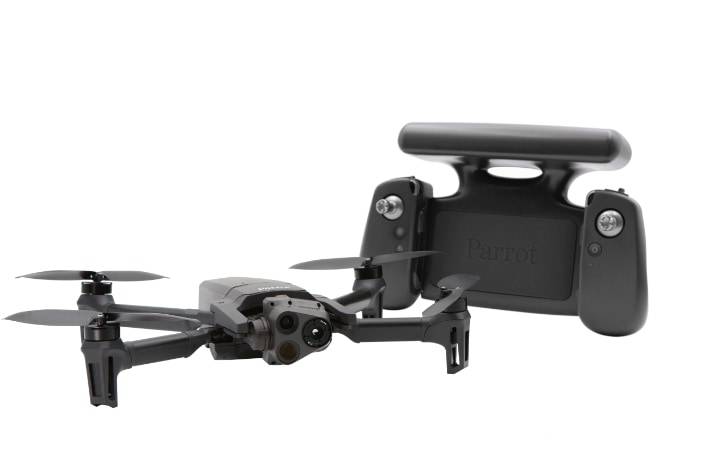
The Parrot Anafi USA GOV/MIL is manufactured in the United States and listed on the Blue UAS Cleared List. Despite Parrot being a French company, the GOV and MIL variants meet NDAA supply chain requirements.
It’s one of the most affordable NDAA/Blue UAS-compliant drones available. That’s why many public safety teams choose it when they need to move away from DJI but still stay within a tight budget.
It also simplifies field operations. The built-in 32× zoom and FLIR thermal camera are combined into a single compact payload. This means teams don’t have to stop and swap cameras during missions, which is especially important for police, fire, and EMS where time matters.
Key Features:
21 MP dual cameras with 32× zoom
FLIR Boson thermal camera
4K HDR video
Up to 32 minutes of flight time
IP53-rated dust and rain resistance
AES-XTS encrypted SD card
Operating temperature from –32°C to +50°C
NDAA-compliant and Blue UAS-approved
Price:
Around $7,000–$14,000, depending on the GOV or MIL version.
3. ACSL SOTEN
Company: Autonomous Control Systems Laboratory Ltd. (ACSL)
Developed by an ex-DJI engineer, ACSL SOTEN offers Phantom 4 Pro-level capabilities in an NDAA-compliant package.
It is compact, lightweight, and designed for mapping, inspections, and public safety missions. Its global shutter camera helps capture distortion-free imagery. It also supports multiple payloads, including thermal options, making it a flexible choice for enterprise and government users.
Although ACSL is a Japanese company, SOTEN is sold and supported in the U.S. through ACSL USA and meets NDAA supply-chain requirements. It is widely used in regulated enterprises and government-adjacent programs. However, it is not consistently listed on the DIU Blue UAS Cleared List.
Choose ACSL SOTEN if you want a compact, NDAA-compliant mapping or inspection drone that replaces DJI-class platforms without complexity.
Skydio is known for its industry-leading autonomous flight systems. The X10 sets the standard for AI-powered obstacle avoidance. It’s one of the smartest autonomous drones in production as it uses advanced computer vision to navigate complex environments.
The X10 is equipped with high-resolution cameras and thermal sensors, enabling detailed imaging under a variety of conditions. This makes it a versatile tool for industries like infrastructure inspection, firefighting, and law enforcement.
Skydio also offers the X10D, a defense variant of the X10. The “D” stands for Defense, indicating that this drone is fully NDAA-compliant and listed on the Blue UAS Cleared List.
Inspired Flight is a U.S. drone manufacturer founded in 2017. The company builds high-performance drones for professional and industrial use. Their drones are known for strong payload options, long flight times, and durable designs.
TheInspired Flight IF800 Tomcatis a durable, mid-lift drone built for industrial and government applications. It is a strong choice for inspection teams, public safety departments, and mapping professionals.
It’s fully NDAA-compliant and Blue sUAS certified. With a 3 kg payload capacity and dual-battery setup, it can stay airborne for nearly an hour. This makes it suitable for teams transitioning from DJI M300-class workflows without sacrificing capability.
Key Features:
Up to 54 minutes of flight time with a dual battery system
Includes Blue Herelink ground control station
Industrial-grade airframe for tough environments
Supports Sony, Sentera, LiDAR, and other custom payloads
The Teal 2 is a compact, NDAA-compliant professional drone built for night operations and tactical intelligence work. It is designed for defense, law enforcement, and critical infrastructure teams that operate in low-light or high-risk environments.
Teal 2 is listed on the DIU Blue sUAS Cleared List, which makes it eligible for federal and defense-funded programs. The platform focuses on rapid deployment, secure communications, and reliable thermal imaging rather than mapping or payload expansion.
It’s lightweight, quick to deploy, and built to handle demanding field conditions. It works best for teams that value speed, security, and situational awareness over mapping accuracy or payload flexibility.
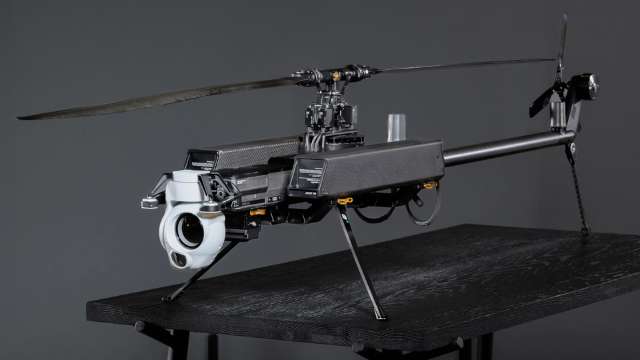
The Anduril Ghost family is a series of American-made tactical drones built for military and defense missions. Both Ghost and Ghost X are NDAA-compliant and listed on the Blue sUAS Cleared List. They offer long endurance, modular payload options, and strong autonomous capabilities.
Using the Lattice AI system, these drones support multi-vehicle teaming and autonomous mission execution. Ghost X expands on the original Ghost design by offering longer endurance and greater flexibility for field operations.
Key Features:
Up to 1 hour flight time
Modular EO/IR sensor options
Lattice AI for autonomous mission planning and execution
Multi-vehicle teaming support
Fully NDAA-compliant and Blue sUAS approved
Price:
Custom pricing (based on model and payload)
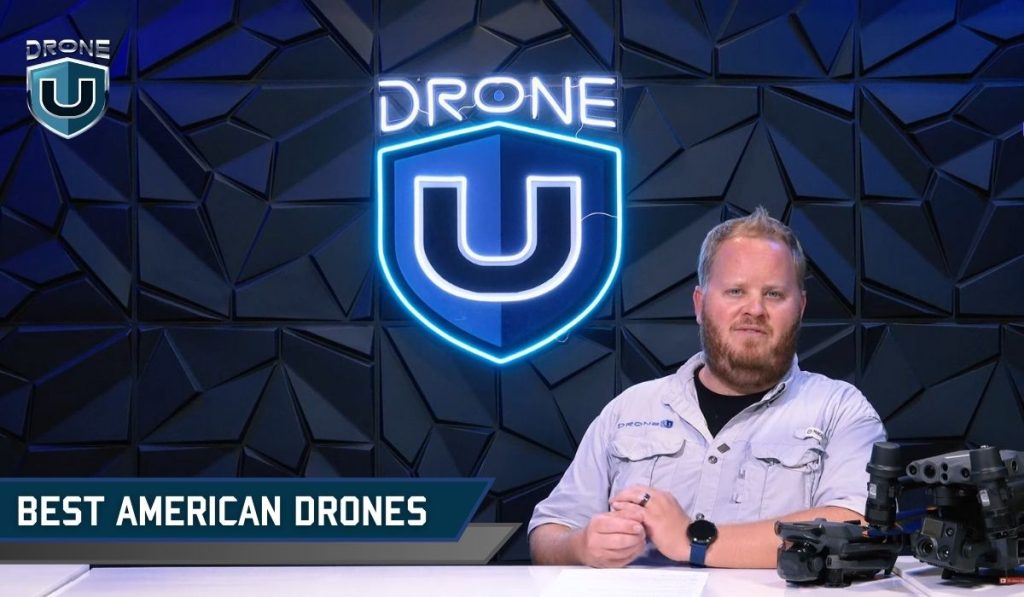
Among the 7 U.S.-made drones listed above, watch the video to discover the top drone choices:
Next, let’s explore how to choose the best American-made drone for your needs.
Are You Operating the Way Serious Clients Expect?
Many pilots focus solely on the gear rather than mastering the operations. To get hired, you should know
Experienced pilots approach safety and planning
What enterprise-ready operations look like in the field
How professional systems support consistent, reliable missions
Thank you!
Thank you. You will now be redirected to your requested resource.
How to Choose the Best American-Made Drone for Your Missions
Choosing the right American-made drone starts with understanding your mission and matching it to the right platform. Here are some key points to consider before choosing.
1. What Compliance Standard Does Your Program Require?
Start with your funding source and contract requirements — not the drone spec sheet.
If federal funds are involved, NDAA compliance is mandatory. If you are procuring for DoD or defense-adjacent work, Blue UAS status is effectively required. If you are a state or local agency using your own funds, NDAA compliance is best practice even if not legally mandated.
Do not assume a drone is compliant because it is marketed as American-made or because it was compliant when you last checked. Compliance status can change when manufacturers update firmware, change suppliers, or restructure ownership. Verify at the time of procurement and document it.
2. What Mission and Payload Does Your Operation Require?
Choose sensors based on your task or mission.
Use thermal cameras for search and rescue, zoom lenses for inspections, and a global shutter, or LiDAR for mapping.
Also, check flight time. longer endurance suits for survey and mapping work, while shorter flights fit tactical or ISR missions.
Always confirm that the drone can carry your required payload without sacrificing stability or flight time.
3. Can your team support and maintain this platform?
Enterprise and government drones require ongoing support for firmware updates, payload calibration, parts availability, and manufacturer responsiveness. Verify that the manufacturer has a US-based support operation and can provide replacement parts and technical assistance within your program’s operational timelines.
If you’re managing multiple drones, it helps to have a clear system in place.
Check out our drone fleet management guide to learn how to organize maintenance schedules and track compliance across your entire fleet.
The procurement decision that matters most: Choosing the most technically capable drone is less important than choosing a drone your team can operate legally, maintain consistently, and document compliantly. A Skydio X10D, your compliance team cannot verify, is worth less than a Parrot Anafi, your procurement officer can clear in an afternoon.
Key Takeaway
American-made drones are advancing fast. They now provide secure, reliable, and compliant platforms for professional pilots.
Still, the list of top U.S. drones that can capture cinematic footage and deliver accurate mapping data remains small.
Most drone pilots ultimately want a portable, easy-to-use, and reliable drone. However, few US drone manufacturers have achieved that balance at a reasonable cost.
These drones are driving U.S. innovation forward, helping pilots take on higher-value missions with greater confidence.
Each drone mentioned above brings something unique to the table. Some excel in autonomy, others in flight time, sensors, or data security.
Choosing the right drone is not just a purchase decision. It’s a long-term operational commitment. Use this guide as a starting point, then validate each platform against your mission requirements before you fly.
Enterprise-Ready Operations Go Beyond Equipment
When the work carries more responsibility, how you operate matters just as much as what you fly.
Learn how experienced pilots make decisions on site
Learn how clear systems reduce risk and uncertainty
Learn what builds trust with serious clients
Thank you!
Thank you. You will now be redirected to your requested resource.
How do you think American-made drones will impact your drone business?
Do share your thoughts in the comments below.
9
FAQs
1. Are American-made drones required for government contracts?
Not always, but many government contracts require NDAA-compliant drones. Federal agencies, defense programs, and some state-funded projects may also require Blue sUAS–approved drones. Always check contract and agency requirements before procurement.
2. Does “assembled in the USA" mean a drone is NDAA compliant?
No. Assembly location does not determine NDAA compliance. A drone assembled in the United States can still fail compliance if its parent company is based in a covered country or its critical components originate from restricted manufacturers. Compliance is determined by ownership structure, component sourcing, and software data pathways, not where the final product is put together.
3. Is Blue UAS approval required for public safety departments?
Blue UAS is not mandatory for all public safety agencies, but many departments prefer or require it.
Blue UAS drones undergo deeper cybersecurity and supply-chain reviews and are often required for federally funded or defence-adjacent programs.
4. Can a non-U.S. drone be NDAA-compliant?
Yes. Some drones manufactured outside the United States qualify as NDAA-compliant if they meet strict supply-chain and cybersecurity standards.
However, not all of these platforms appear on the Blue UAS Cleared List.
5. Are DJI drones NDAA compliant?
No. DJI drones are not NDAA compliant and are prohibited for Department of Defense use.
Since 2024, DJI drones are also restricted for many DoD contractors and government-funded programs.
6. Which American-made drone is best for mapping?
For mapping and surveying, drones with global shutter cameras, RTK support, and long flight times perform best.
Platforms like Freefly Astro Max (Blue) and Inspired Flight IF800 Tomcat are common choices for compliant mapping workflows.
7. Which American-made drone is best for public safety?
Public safety teams often choose compact, fast-deploy drones with thermal sensors, such as Parrot Anafi USA GOV/MIL, Skydio X10D, or Teal 2, depending on mission and compliance needs.
Author
Paul Aitken
Co-Founder and CEO
Paul Aitken is a Certified Part 107 drone pilot and a Certified Pix4D Trainer. He is a pioneer in drone training and co-founder of Drone U. He created the industry’s first Part 107 Study Guide and co-authored Livin’ the Drone Life.
Paul is passionate about helping students fly drones safely and effectively. With over a decade of experience, he has led complex UAS projects for federal agencies and Fortune 500 clients such as Netflix, NBC, the NTSB, and the New York Power Authority.
Add Your Comment
Related Articles
The Top 36 Drone Companies in 2025
How to Choose the Best Drone for Cinematic Filmmaking




 Parrot Anafi USA | Source: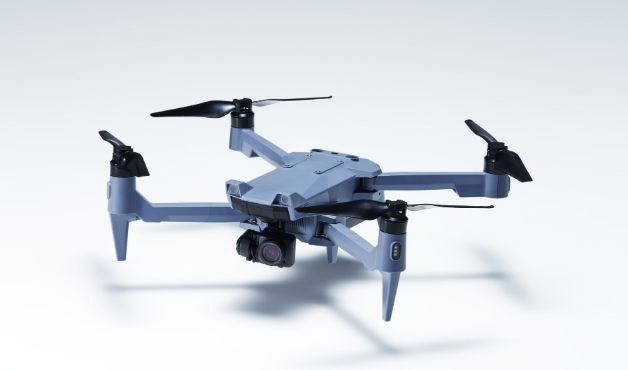
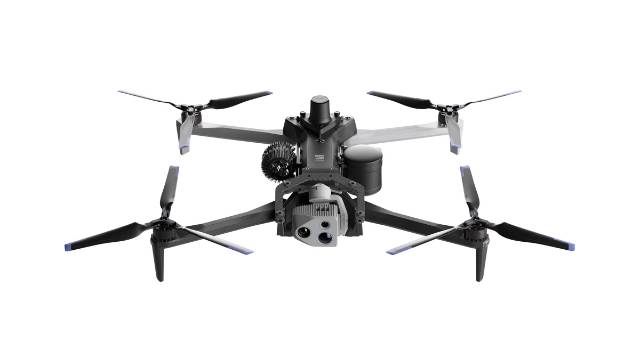 Skydio X10 | Source: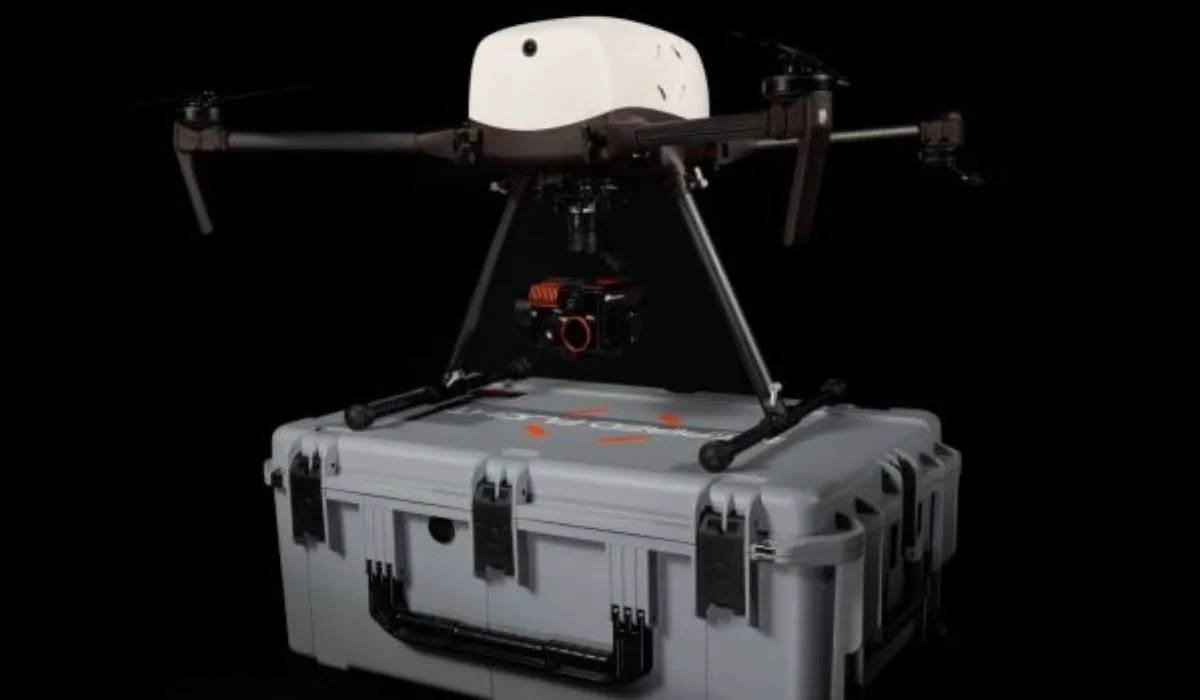



Add Your Comment