
Top 5 Utility Drone Program Challenges

October 14, 2025
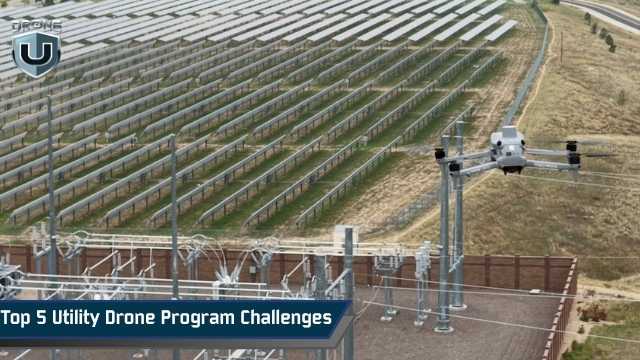
Ever wondered why some utility drone programs fail while others thrive?
Power lines stretch for miles, and wind farms cover vast coastlines. Inspecting them manually is slow, risky, and expensive. Drones make inspections faster and safer. They can reach hard-to-access equipment and provide live data to help teams make better decisions.
The reality, however, can be challenging. Many utility drone programs struggle with high costs, strict regulations, and limited flight capabilities. Some teams even encounter resistance within their own organizations. Others deal with public mistrust or concerns about privacy.
Still, when done right, drones transform how utilities work. They cut inspection time, improve safety, and reduce downtime.
In this article, we’ll explore the five most common problems utility drone programs face and learn the practical steps to solve them.
Starting a drone program can feel expensive. The drones, sensors, and cameras alone can cost tens of thousands of dollars. When you factor in software for data management, licenses, and specialized training for pilots, the costs climb higher than you expect.
For utilities, the challenge isn’t just buying drones. It’s managing capital expenditure (CAPEX) versus ongoing operational costs (OPEX).
Should you purchase drones outright or subscribe to a UAS-as-a-Service (UaaS) model? Leasing or using managed services spreads costs over time and often includes maintenance, insurance, and software updates.
Maintenance and lifecycle costs also add up. Batteries need replacement, sensors wear out, and drones themselves require periodic inspections. Planning helps avoid unexpected expenses and delays.
Here’s a simple example of the Total Cost of Ownership:
To calculate break-even, divide total cost by monthly savings:
(15,000+5,000+3,000) ÷ 1,500 =15 months
This means the program would pay for itself in about 15 months. Adding extra drones or sensors changes the calculation, but understanding the full cost helps you plan budgets and justify investment.
These costs can quickly overwhelm a drone program. You need clear strategies to control spending and get the best return on investment.
Steps to keep costs under control:
Once you’ve handled the budget challenge, the next major obstacle is staying compliant with airspace and safety regulations.
If you manage or fly drones for a utility, regulations are probably your biggest headache. The rules exist for safety, but they often don’t match the way real inspections work.
The main problem is that the existing rules are complex, slow to change, and rarely fit how your operations actually work.
You might need to inspect miles of power lines or pipelines, but long-range flights usually require Beyond Visual Line of Sight (BVLOS) approval. Getting that waiver can take months, and delays often slow down your entire program.
Even after approval, compliance is ongoing. You need certified pilots, Remote ID-ready drones, and detailed safety documentation. Miss one requirement, and your operation could be grounded.
For example, when you inspect transmission lines in rural areas, the rules limit you to 400 feet in altitude and visual line-of-sight flights. That means multiple launches and landings just to cover short sections, costing time and resources.
Rules also vary by region, which complicates cross-border or multi-state projects. What’s legal in one area might need special approval in another.
Here’s how to stay compliant without losing momentum:
When you grow your operations gradually and maintain transparency, regulators gain confidence in your program. That trust gives you more flexibility to scale safely and legally.
And once you’ve cleared regulatory hurdles, the next challenge lies in the technology itself.
Even when you’ve handled budgets and regulations, technology can still hold you back. Drones are powerful tools, but they still have limits. These physical and digital limits directly affect inspection quality, safety, and efficiency.
Most utility drones have limited flight durations per battery cycle. If you’re inspecting long transmission lines or solar panels, you’ll need to land and relaunch often. Every extra takeoff wastes time and increases wear on your equipment.
Heavier payloads mean shorter flights. When you add sensors such as thermal cameras, LiDAR, or zoom lenses, the drone burns more power. You often have to choose between flight time and data quality.
In remote valleys, dense forests, or near substations, drones can lose GPS or communication links. Without a stable connection, live data streams can fail, forcing you to redo flights. Using redundant communication systems or dual-band controllers can reduce these risks.
Each mission can generate gigabytes of data, 3D models, or video. Sorting, storing, and analyzing all that data can overwhelm your team. LiDAR and thermal imaging each require different data-processing workflows, which adds complexity.
How to manage these technical limits:
Once your technology is optimized, the next barrier is often internal: getting your team on board.
The people you recruit can make or break a drone program.
Some field crews worry that drones will replace their jobs, while managers expect instant results, assuming that drones will solve all inspection challenges overnight. When expectations don’t match reality, programs lose momentum before they even begin.
Skills gaps worsen the situation. Drone programs need trained pilots, analysts, and coordinators who understand both aviation and utility operations. Without collaboration, teams operate in silos. The operations crew flies the drones, the engineering team analyzes the data, and no one owns the final results.
How to overcome resistance:
When your team sees drones as an ally, not a threat, adoption grows faster and performance improves.
After your internal culture adapts, one final challenge remains, i.e., public perception.
Many people still associate drones with surveillance, not safety. Rumors spread quickly, and communities can resist even legitimate inspection flights.
For utilities, public distrust is more than just bad PR. It can shut down operations entirely. Residents might call regulators, post complaints online, or block access to areas where drones are essential for safety inspections.
When you fly near residential zones to inspect power lines, people may worry about cameras. Instead of ignoring their concerns, organize open days or live demonstrations. Show them how drones prevent outages and improve safety.
Here’s how to build trust:
By addressing privacy concerns directly and involving your community, you turn skepticism into support and build trust. Make community partnerships part of your program’s strength.
Running a utility drone program is not just about buying drones. You also have to manage costs, meet regulations, handle technical limits, overcome internal resistance, and build public trust. Each of these can slow your progress if ignored.
The key is to combine technology with good processes. Start small and show quick results. Involve your team, regulators, and community from the beginning. With a clear plan and steady improvements, drones can help you inspect faster. You can operate more safely and make smarter data-driven decisions.
Looking ahead, drones are becoming more capable and autonomous. AI-assisted analytics will keep expanding what’s possible. Smarter sensors, stronger batteries, and automated flight paths will push inspection efficiency even further.
By focusing on practical solutions and steady improvement, you can build a drone program that overcomes today’s problems and grows safely for the future.
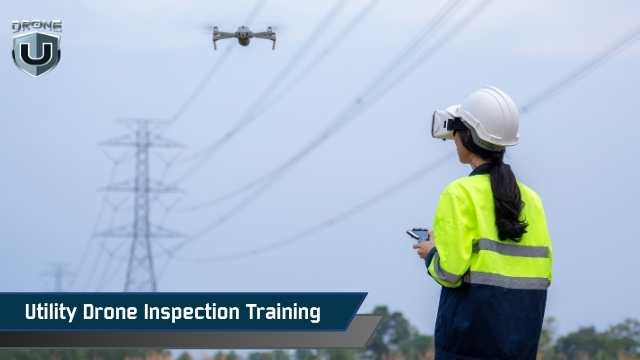
Strengthen your team with utility drone inspection training to ensure everyone is prepared for safe, efficient operations.
Ready to tackle the challenges of utility drone operations?
Join Drone U today and learn advanced drone operations, AI-assisted inspections, and practical strategies.
 1
1