
How to Choose the Right Drone School for Your Career

July 19, 2025
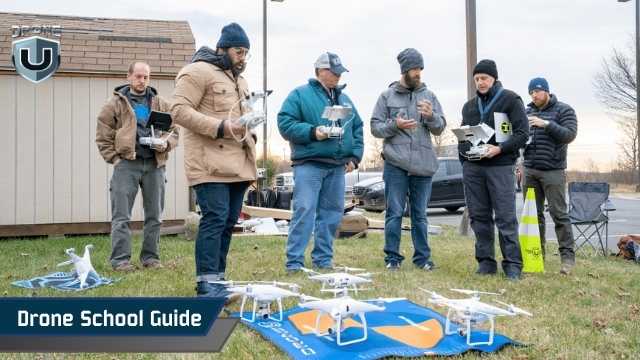
The commercial drone industry is booming, and choosing the right drone school plays an important role in shaping your success as a drone pilot.
The global commercial drone market is expected to reach USD 54.64 billion by 2030, with pilots needed for all sorts of scenarios, from infrastructure inspection and surveying to real estate and emergency services.
But here’s what most people miss:
The most successful drone pilots, the ones earning six figures, do not get their edge simply from having flown more. They also trained smarter and learned from the right instructors in the right programs, with a clear focus from the start.
In this guide, you’ll learn exactly how to choose a drone school that aligns with your goals. We’ll cover:
Make drones more than just a hobby! This guide will help you invest in the right school, starting with defining your career path.
Define Your Career Path Before Choosing Drone School
The drone industry is diverse, and so are the skills required to succeed in each niche. A course that’s perfect for an aspiring real-estate photographer might fall short of the expectations of someone planning to support search-and-rescue missions or map utilities.
Take a few minutes to clarify what path you want to follow so you can work your way to it from the word ‘go.’
Here’s a breakdown of in-demand drone careers, including what they pay and what skills are needed:
Typical earnings: $50,000-$90,000 annually
Requires creative vision, advanced camera operation, and post-production expertise. Focus on cinematic composition, gimbal control, and software like Adobe Premiere Pro or DaVinci Resolve.
Typical earnings: $70,000-$105,000 annually
Requires technical precision and a thorough understanding of construction principles. Acquire knowledge of thermal imaging, structural analysis, and specialized sensors.
Typical earnings: $65,000-$95,000 annually
Calls for data expertise and precision. Essential skills include knowledge of GIS platforms such as ArcGIS and QGIS, photogrammetry software like Pix4D and Agisoft Metashape, and an understanding of survey-grade accuracy requirements.
Typical earnings: $55,000-$90,000 annually
Focuses on life-saving missions and public safety agencies. This path emphasizes emergency protocols, thermal imaging interpretation, and coordination with first responders.
Typical earnings: $50,000-$90,000 annually
Centers on precision agriculture and crop monitoring. It involves crop health assessment, NDVI analysis, specialized spraying techniques, and the use of agricultural software platforms.
Typical earnings: $75,000-$120,000 annually
This is an emerging sector with companies like Amazon Prime Air and Wing. It requires an understanding of Beyond Visual Line of Sight (BVLOS) operations, automated flight systems, and advanced traffic management.
Your Turn: Write Down Your Goals
Take five minutes right now and write down the following:
This simple step could shape every decision you make, from the school to the gear you’ll eventually purchase.
Get Your FAA Part 107 certification
In the US, every commercial drone pilot needs an FAA Remote Pilot Certificate under Part 107 regulations. On paper, it’s not a hard test; over 92% of people pass it on their first attempt.
But here’s what many don’t realize:
Passing the exam doesn’t mean you’re ready to fly commercially. Plenty of new pilots freeze up on their first paid gig because their training stops at memorizing answers. To make it in the industry and have a solid drone career, you need a program that teaches real aviation knowledge, not just test prep.
The FAA test gauges your ability to make smart decisions in real-world flight conditions. To prep for that, look for a course that:
You can ask the school if you’ll read sectional charts, TAFs, and METARs, concepts that many pilots struggle with.
The FAA updates its testing material frequently, and real-world regulations change perhaps even more. If your course doesn’t keep you, you could be operating under outdated assumptions.
Example: Since January 2023, Remote ID has become mandatory, which shifts how drones are tracked and identified in the national airspace. A good program should teach you:
When shopping for schools, ask about when they last updated Part 107 prep materials.
Quality programs offer multiple practice exams using questions similar to actual FAA test questions. That includes:
If you can, request access to a sample quiz before enrolling. It’s a great preview of how they actually teach.
Good schools know how their students perform, and they’re not afraid to share the stats. To help with this, you can ask:
It is wise to avoid programs that promise ‘guaranteed passing’ without sharing real data. It highlights a focus on selling, not teaching.
Remote Pilot Certificates require renewal every 24 months. Look for schools that offer:
Your goal with Part 107 is to build a foundation that will make you a safer pilot, better decision-maker, and valuable in the field. Next up, we dive into the one thing that separates amateurs from pros: hands-on training.
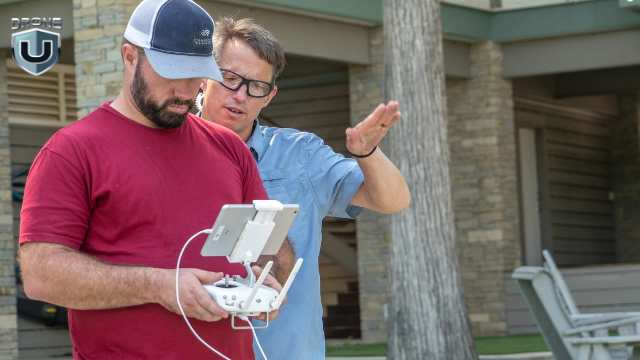
Hands-on Flight Training with Top Drone School
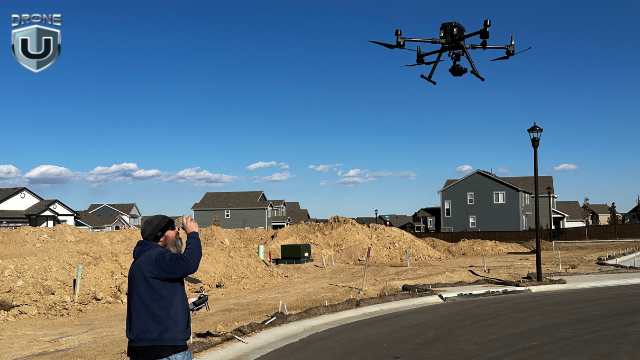
Hands-on training is where confident, capable drone pilots are made. It helps you build muscle memory, master real-world conditions, and learn how to troubleshoot under pressure. This is how you avoid freezing up on a windy day or fumbling the bag during a client inspection.
The best drone schools don’t treat flight training as an afterthought. They make it the core of your education, with an emphasis on structured, repeatable, and career-relevant skills.
Here’s what to look for in a flight training program worth your time and money:
Before they let you go out and fly, great schools take you through a logical progression of skills, starting with the basics and working up to complex maneuvers.
This stage should teach you how to:
To find out more, you can ask what specific maneuvers you are required to demonstrate before graduating and how many solo flight hours are included. If they can’t answer clearly, that’s a red flag.
Different drones serve different purposes. Learning to fly just one craft limits your experience and job opportunities.
The best programs expose you to:
It’s important to learn from an organization that has solid experience with drones manufactured outside the US, as well as domestically manufactured drones.
Here’s a pro-tip: Ask if you’ll fly any drones with RTK/GNSS positioning, which is often required for precision work like mapping.
Quality training programs simulate actual work conditions. This may include inspecting a bridge, mapping a construction site, or filming a wedding, depending on your career focus. These scenarios teach you how to plan flights, manage your battery capacity, communicate with collaborators or crew, and adapt to changes in the environment.
Apart from unpreparedness, the weather is one of your biggest foes. You might be dealing with unclear skies or fast winds. Your training programs to prepare for this should cover:
It is a great bonus point if your training includes night flying scenarios and the use of anti-collision lighting, both of which are valuable skills in real-world applications.
One of the most valuable ways to build experience is to rack up hours of hands-on, independent flying time with an instructor nearby to offer guidance or step in as needed.
The best schools offer:
The more hours you have, the more precise and confident your flights are.
The strength of your drone education should combine a good curriculum with a skilled instructor. The best teachers can help refine your skills, offer professional feedback, and impart confidence that tutorials may not provide.
How do you evaluate the instructor quality at a drone school? Let’s break it down:
Choose instructors who aren’t just certified but who actively work in the drone industry. Look for:
Experience in real-world scenarios not only adds credibility but also facilitates real-world troubleshooting and incorporates scenario training into the lessons.
Skilled instructors hone specific, crucial skills that make them effective at teaching what they know. Patience, empathy, and clear communication are essential, especially for beginners, to advance realistically.
They also tweak their teaching methods to adapt to individual learning styles, ensuring information learned is retained. You’ll learn how they problem-solve on-site, especially with issues such as wind management, tech glitches, or unforeseen weather.
The drone industry evolves rapidly, giving instructors who remain active in commercial operations and bring current market knowledge to their teaching the edge. Ask your instructor, “What commercial work are you currently performing?” Those who still fly professionally bring real-world insights that go beyond the textbook.
In drone training, personal attention can make a big difference, whether you’re practicing maneuvers or reviewing mission plans. Increased access to your instructor means you can quickly and confidently improve.
Look for programs that have a low student-to-instructor ratio to get more time on the controls, a more focused practice session, and personalized feedback. If the class is too large, the experience might be rushed and shallow.
The best instructors keep learning. They grow with the industry. That means taking new certifications in diverse scenarios such as photogrammetry and thermal imaging, flying with the latest tools and platforms, and staying engaged in professional organizations like FAASTeam and AUVSI, among other efforts.
Look for instructors who are up-to-date on the tech and best practices.
Not all drone pilots fly for the same reason. Whether you’re inspecting cell towers or filming real estate, ensure your training aligns with your objectives.
Master Industry-Specific skills like Pix4D for Photogrammetry
Getting your FAA Part 107 certification is a critical first step, but it is just that: a starting point. The real value of a drone school lies in what it offers beyond the basics. Matching your training to the kind of work you do involves industry-ready specialization across fields such as agriculture, inspections, mapping, media production, etc
Here’s what to look for:
Flying well is about having precision, control, and confidence under pressure. A solid training program should teach you how to:
You should be able to get a list of what you will learn from a school before signing up to evaluate the depth of learning.
Every drone career has its own technical demands. If you have figured out your preferred niche, look for a school that provides specialists in the field you want to enter. For example:
Specialized skills make you far more competitive and dramatically increase your earning potential.
Over 60% of successful drone pilots eventually work as contractors or start their own companies. If you plan to freelance or run your own drone business, you’ll need to understand the business side of the industry. Look for programs that teach you how to:
Many new pilots striking out on their own may fail if they don’t properly handle the business and maintain sustainable, long-term income.
Good pilots learn how to integrate flight planning, data capture, and post-processing into their workflows. Strong programs will teach you how to:
In some cases, you may get more than skills. Templates, tools, and repeatable systems are important for making price sheets, flight logs, client reports, checklists, and so much more. These provisions save time and help you quickly establish your professional standing.
Remember: general skills get you started, and specialized skills get you paid.
A strong resume starts with a respected name. Let’s find out how a drone school’s reputation can impact your job opportunities.
Look for Drone School with Strong Industry Recognition
Not all drone schools carry the same weight when it comes to your resume or future opportunities. While your skills and professionalism make the difference, it can be beneficial to find schools that have a strong reputation in the industry. They could offer more than a certificate of completion, including:
When researching drone schools, accreditation, industry affiliation, and certification carry weight in some settings. However, how much they matter depends on your goals.
If your goal is to work in a government or corporate role, as an industrial designer or GIS analyst, then formal recognition may be important. Having credentials from an accredited institution could give you an edge.
Some key affiliations to keep an eye out for include:
Also, look for schools with manufacturer partnerships with companies like DJI, Autel, or Parrot. These indicate that the school is up to date with what the workforce needs and can transfer that to their course.
But if your goal is to do paid drone work like mapping, inspections, or construction deliverables, then hands-on flight experience, real-world practice, and dealing with clients matter far more than formal school credentials.
Most drone clients and companies want to know:
This is where schools like Drone U specialize. From real flight skills, workflows, and real clients, the school helps you become a capable and confident drone operator.
Check out the major employers in your specific industry to find out if they have preferences you can meet. You could find out if:
You can find information like this on LinkedIn and other networking connections that plug you into the zeitgeist.
Beyond Part 107, there are additional industry-recognized credentials to consider. Some examples include:
While not necessary for every job, they can make the difference when a hiring manager is comparing you with another pilot of similar skills.
Strong programs produce successful graduates. If you can find out what the students go on to do, it can help you make the decision. Read any case studies or testimonials and talk to the school about what information they can offer.
Good schools are happy to showcase their graduates. You can verify claims through LinkedIn research, direct contact (within reason), or industry placement data.
Let’s take a closer look at what you’re paying for in drone training.
Drone school prices vary widely. You can find online courses for under $500, and full professional programs that go into five figures per year. However, do not make the mistake of focusing on just the price tag. What matters is the value you get for what you spend.
Let’s break it down:
Drone schools typically fall into four pricing categories. Each tier benefits you differently and is suited to different types of learning:
| Tier | Price Range | Key Features |
| Basic Online | $300-$800 |
|
| Intermediate Hybrid | $1,500-$4,000 |
|
| Premium | $5,000-$10,000 |
|
| Elite Specialized | $10,000-$15,000+ |
|
It is important to factor in everything that goes into your training experience. Here’s what to include:
Keep an eye out for hidden fees. Some low-cost programs add charges for things like simulator access, practice tests, or certificate printing, which can add to your bill.
The right drone school should pay for itself within the first few months of paid work and set you up for long-term growth.
Let’s say you spend $6,000 on training. If your first few jobs net you $1,200 – $2,000 each (a doable sum in real estate or inspections), you could recoup your investment in just a few projects.
Here’s what affects your ROI and drone pilot salary:
One of the first questions to ask when you start is, ‘How soon can this course help me start earning, and how much will it help me grow?’
Next, let’s explore how the best drone schools support your career beyond the classroom.
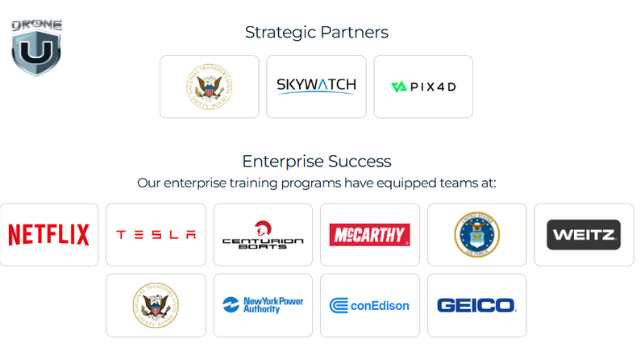
Training Schools like Drone U offer Real Job Connections
When it comes to drone education, ’career support’ can mean different things depending on the type of institution. A university or technical school offering a degree or certification may provide structured job placement services, such as internships, career centers, and alumni networks that connect you to full-time jobs.
On the contrary, specialized drone programs and hands-on drone training platforms usually offer practical rather than formal support. They focus on helping students build in-demand skills, understand workflows, and connect with active professionals.
Whichever path you choose, the kind of career support a program offers can have a big impact on how quickly and successfully you transition into paid drone work.
One of the most practical forms of that support is access to real job connections.
Some top-tier training programs go a step further and actively work with industries using drones as standard tools. These include:
Look for programs that have job boards with fresh listings, direct referral pipelines, or have alumni working successfully in your target field. Even when there is no guarantee for formal placement, access to a strong professional network can be equally valuable in the long term.
It is possible to be an excellent pilot and struggle to showcase your skills, which ultimately impacts your hirability. That is where portfolio building is essential. Top drone schools help you visualize your professional story by helping you prep:
Some programs have options to learn editing and use these skills later to build a portfolio on your own.
This is the strongest indicator of quality career support. Ask to speak with three graduates who found jobs in your chosen specialty within the past year. If they can’t arrange that conversation, keep looking.
A high-quality drone school is a launchpad that makes a difference when you are trying to become a professional pilot. As such, due diligence should lead your actions. Take your time, research, ask tough questions, talk to graduates, and choose a school that respects your ambition and can help you build a base that lasts.
Flying is fun, and it can be even more so when you build a future with drones.
Ready to Start Your Drone Career Journey?
Learn the basics of drone operations with Drone U’s beginner-friendly courses.
Do you still have questions about choosing the right drone school?
Schedule a free consultation with our career advisors for personalized guidance and expert advice on choosing the right drone school.
 4
4