
Why Training Is the Key to Successfully Scaling a Drone Program

October 1, 2026
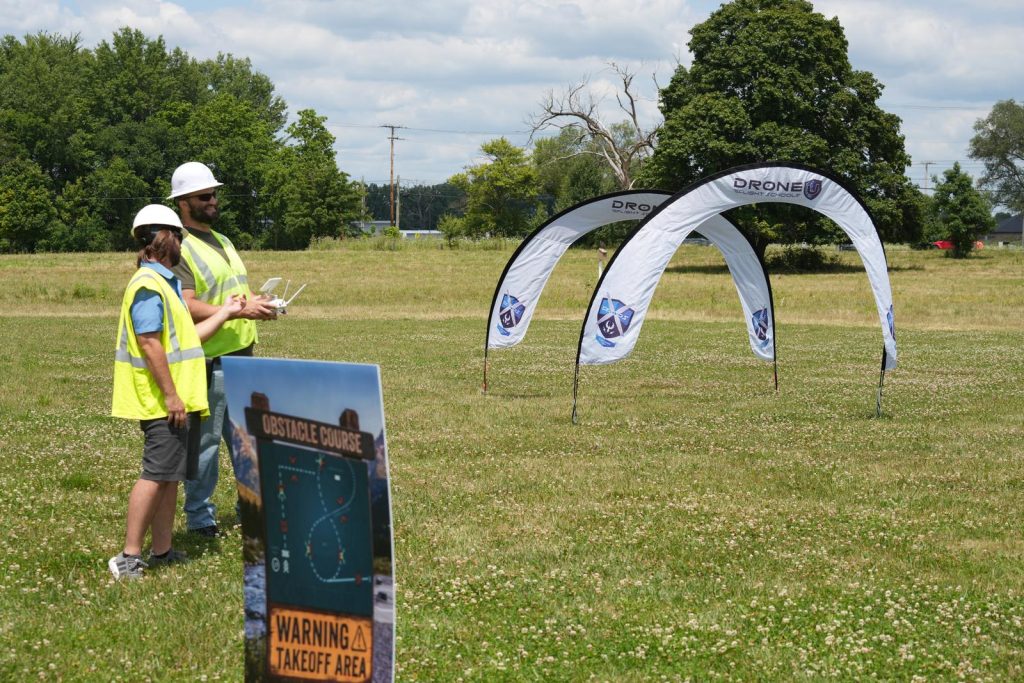
Scaling a drone program doesn’t come from buying more aircraft or better software. It comes from building trained, consistent operators who reliably turn a flight into useful data, and data into action.
Most organizations approach scaling a drone program the same way: buy more aircraft, hire more pilots, and invest in a better software platform. Then they wonder why the results don’t grow with the budget.
Here’s the problem. Aircraft don’t produce results. Software doesn’t produce results. Operators do.
A drone program scales when it can put more pilots in the field who reliably turn a flight into useful data, and that data into decisions and action. Every time. Regardless of who’s flying.
That doesn’t happen by accident. Instead, it happens through training.
Drone U has more than 10 years conducting in-person drone training and more than 14 years in online drone education. Over that time we’ve observed a strong relationship between the amount, quality, and structure of training a pilot receives and their real-world performance. That’s not a controlled study. Rather, it’s what we’ve seen across years of classrooms, field days, and practical evaluations. As a result, we believe training is the most underrated lever in scaling a drone program.
There’s a temptation to treat training as a box to get through. A day here, a webinar there, and then the pilot is “qualified.”
In our experience, that’s exactly where scaling a drone program starts to stall.
Across our in-person courses, we’ve seen a consistent pattern: pilots who spend more days in structured training tend to perform better in the field. Specifically, they tend to be:
We want to be precise about that. In other words, this is an observed relationship, not a controlled experiment. Pilots who invest more time in training may also be more motivated to begin with. But the pattern repeats often enough that we wouldn’t tell any program manager that training time doesn’t matter.
However, the key isn’t just hours. It’s meaningful stick time and structured repetition.
Ten hours of aimless flying isn’t ten hours of training. But ten hours of deliberate, evaluated practice is.
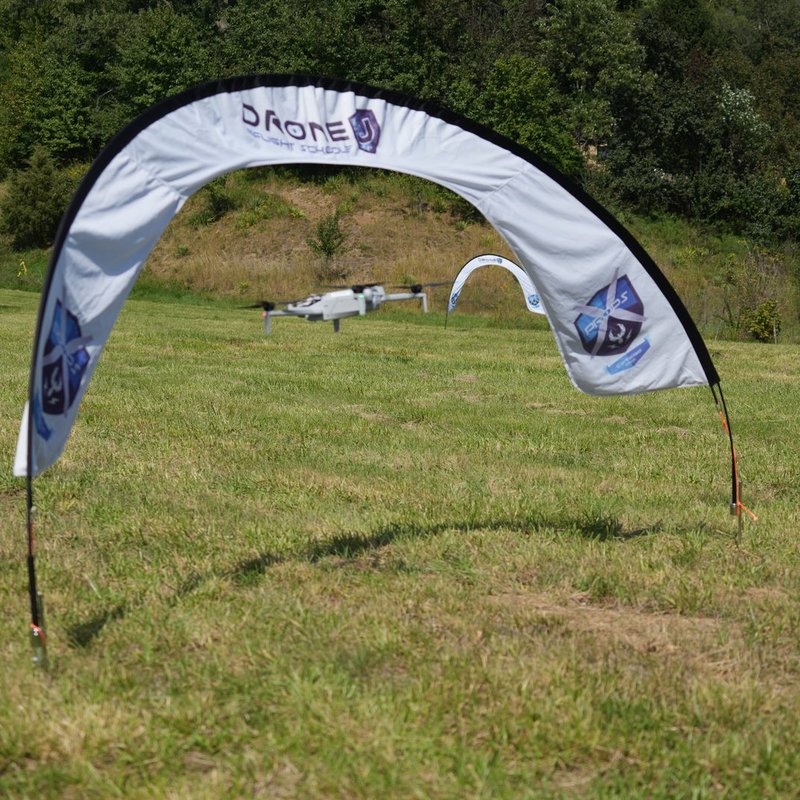
Deliberate practice: low, precise runs through the gates, repeated until they’re consistent.
Most training walks pilots through a task. Good training, on the other hand, challenges them to perform it.
That distinction matters because a walk-through only shows a pilot what right looks like. A challenge, however, shows the pilot, and the instructor, whether they can actually do it.
That’s why our training leans heavily on gamification:
This isn’t about making training “fun,” although it often is. Instead, it’s about pressure and repetition in a controlled environment.
That’s the thinking behind Drone U’s Flight Mastery System. Every drill follows a simple Brief ? Fly ? Debrief framework, starting small and then adding complexity like levels in a video game, and the training finishes with a timed run through our obstacle course under full manual control.
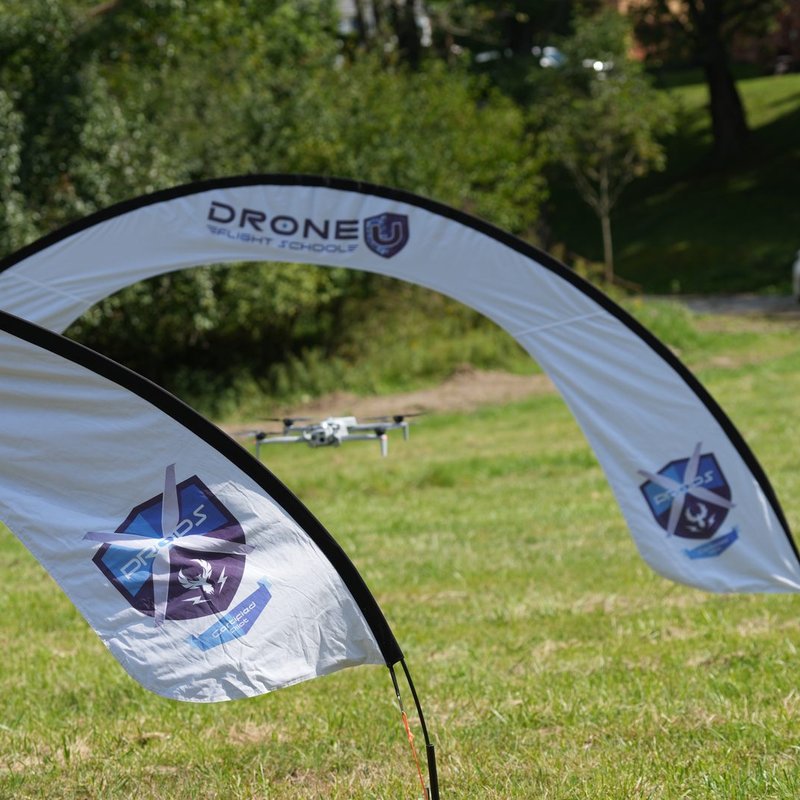
Gate drills put pilots under pressure in a place where mistakes are cheap.
Real missions don’t always go to plan. For example, the wind picks up. A site manager changes the scope. Suddenly a signal drops, or a structure is closer than the plan said it would be. A pilot who has only ever followed a script tends to freeze or improvise. In contrast, a pilot who has been pushed, timed, scored, and challenged has been there before, in a place where mistakes are cheap.
We’ve observed that pilots trained this way are better at thinking and operating at the same time. That’s the skill that matters when a mission goes sideways.
Pressure in training is an investment. Pressure in the field is a test.
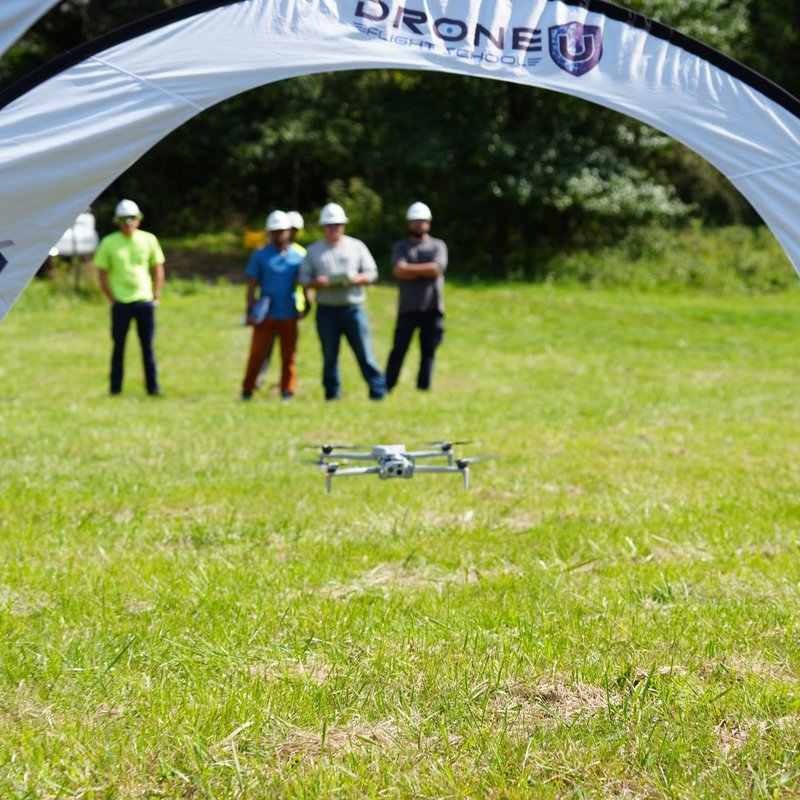
Every run is flown, watched, and debriefed.
Part 107 training can’t just be about passing the knowledge test.
The test matters, because it’s the legal foundation for commercial flight under the FAA’s Part 107 rules. But a pilot who memorizes answers without understanding why the rules exist has learned the minimum, and the minimum doesn’t hold up under stress.
So pilots need to understand why each of these matters:
The goal isn’t to follow a rule because a regulator says so. The goal is to practice disciplined behavior until it becomes habit.
Here’s why. In an abnormal situation or an emergency, pilots don’t rise to the occasion. Instead, they fall back on what they’ve practiced. So a pilot with strong habits doesn’t have to invent a process in the middle of a lost link or a flyaway. Their training and routines guide the response.
Compliance done right isn’t paperwork. It’s muscle memory.
There’s a gap in our industry that doesn’t get discussed enough. It’s the gap between three very different things:
A Part 107 certificate verifies the first. However, it doesn’t verify the other two.
A pilot can pass Part 107 and still lack:
That’s not a knock on the certificate, because it was never designed to measure those things.
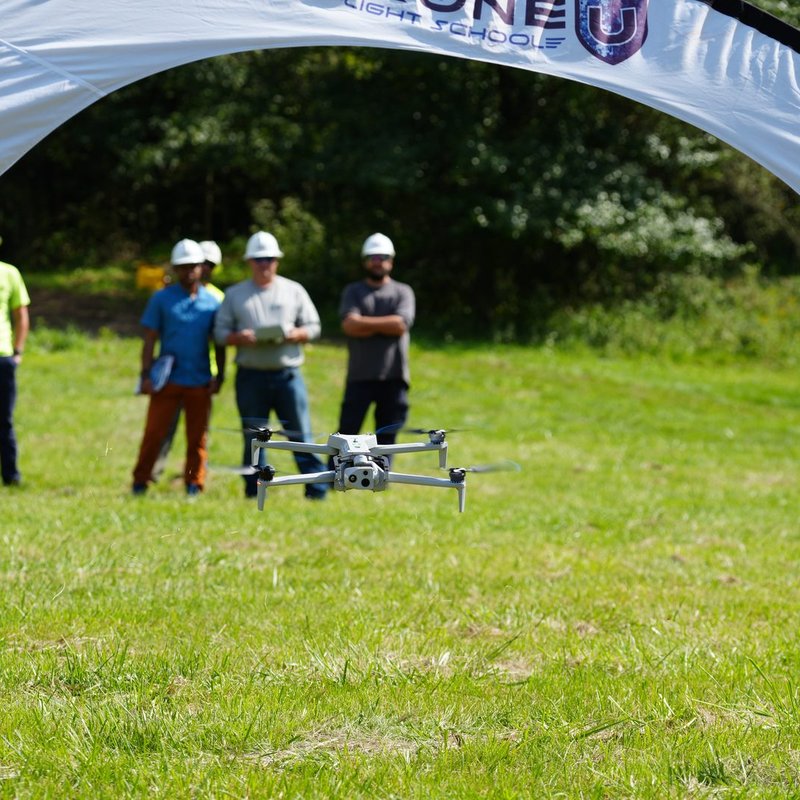
A certificate proves knowledge. Precise aircraft control has to be trained.
The problem starts when organizations treat certification as the finish line. If the only metric in your program is “certified: yes or no,” you know who is legal to fly. But you don’t know who is ready to fly.
As a result, organizations need to measure operational proficiency, not just certification. That means practical evaluations, defined performance standards, and a record of how each pilot actually performs, both at onboarding and over time.
Here’s the workflow every enterprise drone program depends on:
Pilot ? Inspection ? Data ? Analysis ? Report ? Action
Every step inherits the quality of the step before it, so it all comes back to the pilot.
Small acquisition mistakes don’t stay small. Instead, they show up downstream, where they’re far more expensive to fix:
Any one of these can force a re-flight. Then you’re looking at another mobilization, more crew time, more aircraft time, and a delayed report. Worse, some of these mistakes are never caught, and a decision gets made on incomplete data.
This is why training isn’t merely a safety expense. It’s also part of a data-quality and operational-efficiency strategy. When you’re scaling a drone program, the cost of an under-trained pilot repeats with every mission they fly.
The flight isn’t the product. The data is. In the end, the decision that data supports is what the organization is actually paying for.
Ask most people what makes a great drone pilot and they’ll talk about stick skills. Those matter. But in our experience, many of the problems that derail an enterprise mission have nothing to do with aircraft control. Instead, they come down to communication.
A field pilot routinely has to coordinate with:
If the pilot doesn’t understand what the engineer needs, the data won’t answer the engineer’s question. Similarly, when the visual observer and the pilot don’t share standard callouts, a hazard gets reported late. And if the site manager doesn’t know the plan, the operation gets interrupted at the worst possible moment. Because scaling a drone program puts more crews on more sites, every one of those conversations matters more, not less.
That’s why training has to deliberately build:
These aren’t “nice to have.” They’re operational skills, and they can be trained, practiced, and evaluated just like a maneuver.
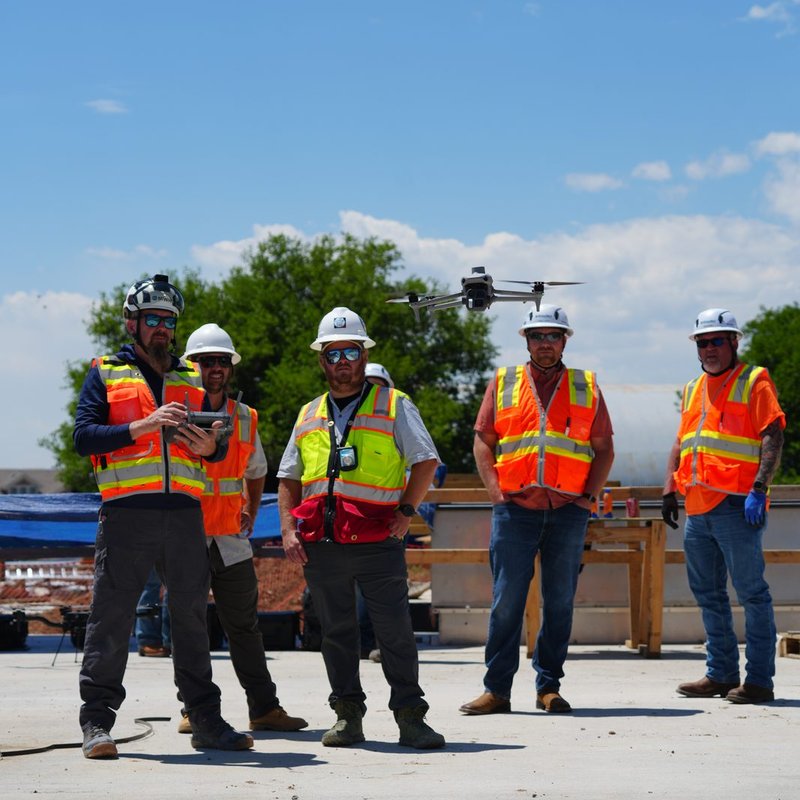
Pilot, crew, and observers working as one team. Crew coordination is a trained skill.
A five-pilot program can survive on a few talented individuals. Everyone knows who the best pilot is, so the hardest jobs go to them.
However, a 50-, 100-, or 500-pilot program can’t work that way.
At that size, talent isn’t a strategy. Standards are. Specifically, you need repeatable standards for:
In other words, the goal is to reduce performance variance between pilots. When standards are clear, trained, and evaluated, results should be consistent regardless of who flies the mission.
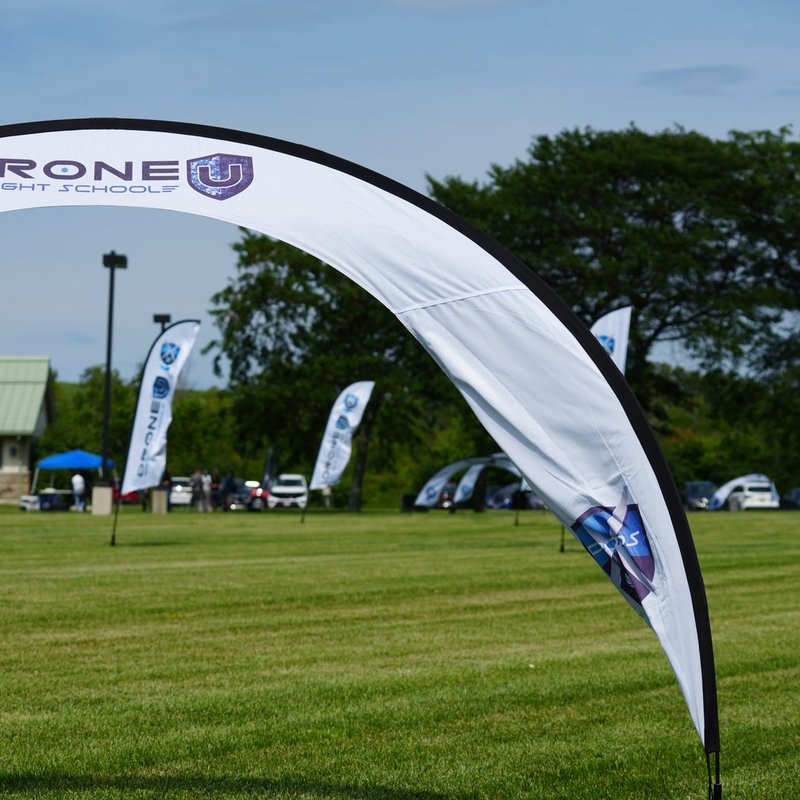
Same course, same gates, same standard, regardless of who’s flying.
That’s the real test of a scalable program. Not how good your best pilot is, but how reliable your average pilot is.
Standards also need maintenance. Without recurrency and ongoing evaluation, skills decay and standards drift. Slowly at first, then all at once. Recurrent training and periodic re-evaluation keep a program from eroding as it grows.
Put it all together and a clear picture emerges. In our experience, training duration, methodology, gamification, repetition, retention, and evaluation are all closely tied to operational performance. We’ve seen that relationship hold across pilots from many industries and experience levels.
We’d also encourage every organization to go further than our observations. Measure it. Track training time, evaluation scores, re-flies, rejected datasets, and incidents for your own pilots. Your program’s own data will tell you more than anyone’s opinion, including ours.
Because the question that matters isn’t:
“Did the pilot pass the test?”
It’s:
“Can this pilot repeatedly produce a safe, efficient, high-quality operational result in the field?”
Too many organizations see training as the thing slowing them down on the way to scale. In fact, it’s the opposite. Training is the infrastructure that makes scaling a drone program possible without sacrificing safety, efficiency, data quality, or operational consistency.
You can buy aircraft in a week. But you can’t buy discipline. You have to build it.
If you’re laying the foundation, start with our Part 107 course. It covers the regulations, airspace, weather, and emergency procedures every commercial pilot needs, in on-demand lessons you can take at your own pace.
If you’re responsible for a larger team, our Enterprise Drone Programs blend online and in-person instruction to help organizations build compliant, efficient operations. You can also see our upcoming in-person training.
We don’t teach hype. We teach what works—because we fly it ourselves.
 0
0