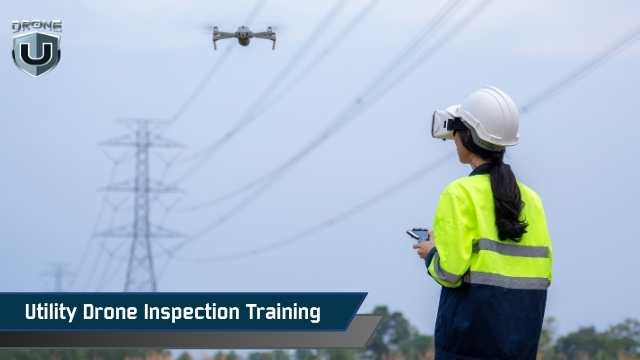

How to Inspire and Motivate Employees to Become Drone Pilots

October 1, 2026
You can’t order people to love flying, but you can motivate employees to become drone pilots when you give them a reason, a path, and a challenge worth taking on.
Most organizations that try to motivate employees to become drone pilots start with a memo. Then they wonder why nobody volunteers.
Here’s the reality. To most employees, “join the drone program” sounds like extra work, a federal exam, and a very expensive way to get in trouble. So they wait for someone else to raise a hand.
That’s not a people problem. It’s a program design problem.
Drone U has more than 10 years of in-person drone training and more than 14 years in online drone education. Over that time, we’ve trained a lot of people who never pictured themselves as pilots. In our experience, the ones who stick with it rarely do so because they were told to. Instead, they stay because the program gave them a clear reason to start, a path they could see, and a reason to keep getting better.
Here’s how to build that.
Before you recruit anyone, be honest about why you want internal pilots in the first place.
Outsourcing is the right call for some work. For example, occasional, specialized, or geographically scattered jobs often make more sense with an outside provider. We break down that decision in In-House Drone Program vs. Outsourcing.
However, for frequent, repeatable work, internal pilots bring something a contractor usually can’t:
In other words, an employee who learns to fly brings years of context to every flight. That’s the real reason to invest in them. And when you can explain that clearly, recruiting gets a lot easier.
Nobody gets excited about “additional responsibilities.” However, plenty of people get excited about learning a skill that makes them more valuable.
That’s the framing that works. Drone training isn’t another task piled onto someone’s job. Rather, it’s a professional credential and a technical skill set that grows with them.
Consider what an employee actually gains:
The good news is that the most effective way to motivate employees to become drone pilots is also the simplest. Make the pitch about them. So instead of asking “Who can take this on?”, ask “Who wants to build a new skill set?” The first question assigns work. The second one invites people in.

Clear, structured prep turns the Part 107 exam into a milestone instead of a wall.
For many employees, the biggest barrier isn’t the drone. It’s the test.
Words like “FAA,” “airspace,” and “knowledge exam” make people nervous, especially if they haven’t sat for a test in years. As a result, capable people quietly opt out before they ever start.
Here’s what they need to hear: the FAA’s Part 107 rules are learnable. The knowledge test doesn’t measure stick skills. Instead, it covers regulations, airspace, weather, and safety, which a motivated adult can study and master.
Next, make the process feel concrete:
Most importantly, give them protected time to study. When studying only happens after hours, it signals that the program isn’t a real priority.
Clarity removes fear. And once employees can see every step, the exam becomes a milestone instead of a wall.
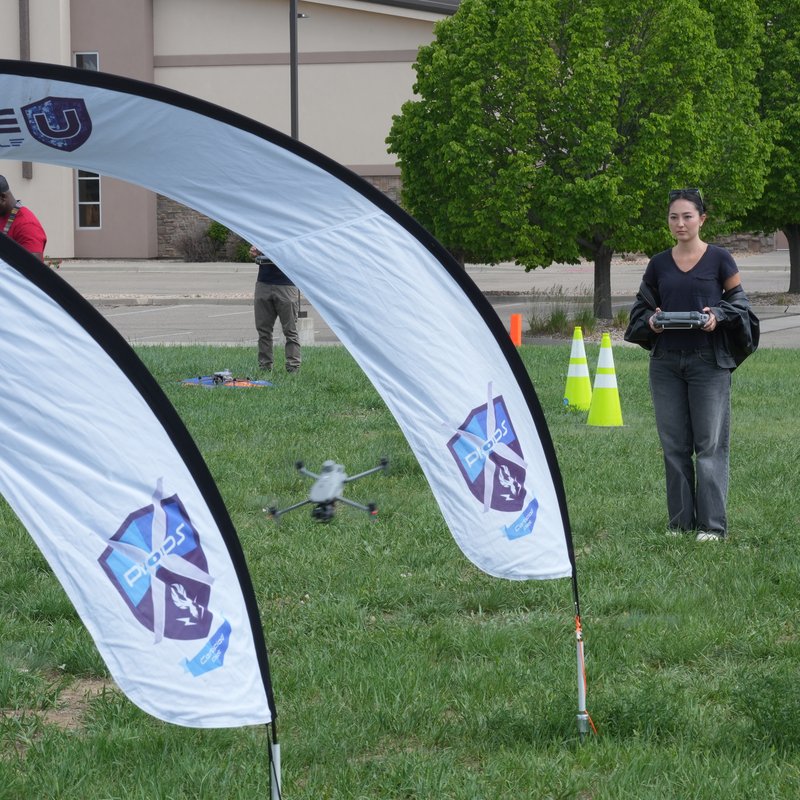
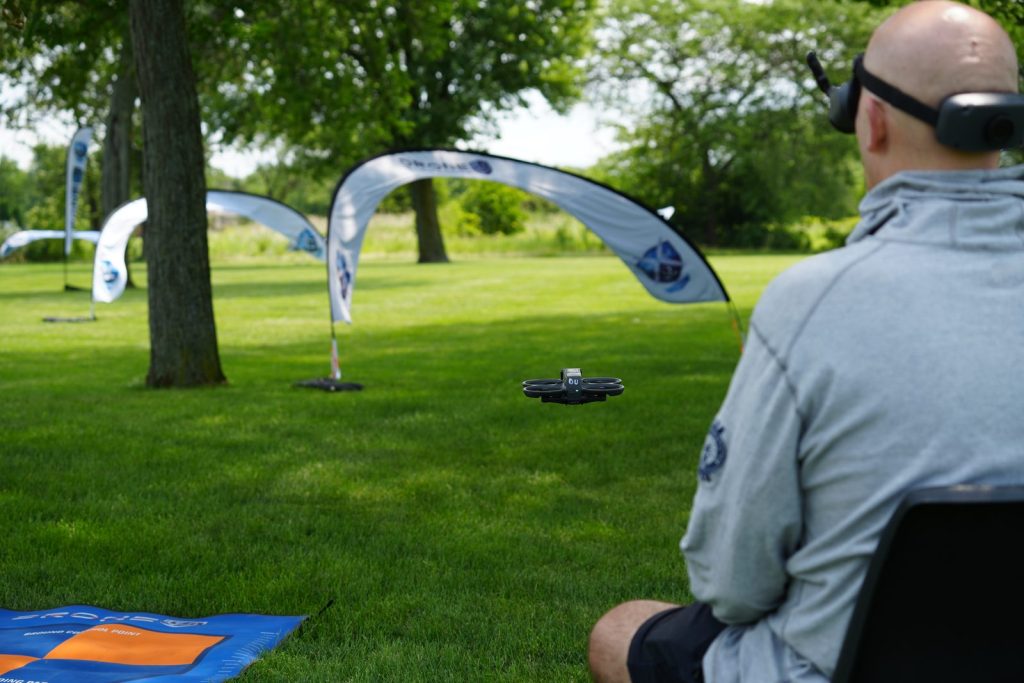
Gates and timed runs turn practice into a challenge people actually want to take on.
Here’s the part most programs miss: flying drones is fun. So let it be fun.
Lectures and slide decks rarely make anyone want to become a pilot. On the other hand, a timed run through an obstacle course gets people talking.
That’s why gamified training works so well for recruiting. In our experience, when training feels like a challenge rather than a chore, people lean in. Specifically, build in:
This is exactly the approach behind Flight Mastery, our hands-on progression of drills that builds toward a timed obstacle course run. If you want a place to start, our guide to the best drone drills for beginners is a good first step.
Competition also does something subtle. Because it gives people a scoreboard, practice becomes something they choose to do. And in our experience, pilots who practice by choice keep improving long after the class ends.
Motivation fades when progress is invisible. Therefore, make progress visible.
Build a simple ladder of milestones and celebrate each one:
Then recognize those milestones in ways people actually notice. For example, announce new certificates at team meetings, give pilots a title that reflects the role, and let them present their results to leadership.
Recognition costs almost nothing. Yet it tells everyone else in the organization that this path is real, valued, and open to them.
Better yet, let the training count for more than the drone program. Continuing education credits matter to engineers, inspectors, and other licensed professionals, and Drone U offers CE credits for teams. So if your pilots need them, reach out through our enterprise page to set them up.
Employees watch what leaders do, not just what they say. So if leadership treats the drone program as a side project, everyone else will too.
Real buy-in looks like this:
Just as important, answer the questions people are afraid to ask. Is drone work a collateral duty or a dedicated role? How does it affect performance reviews? Is there a pay differential, or a path to one? Who is accountable when something goes wrong?
You don’t need perfect answers on day one. However, you do need honest ones, because nobody wants to volunteer for something undefined.
Ultimately, the fastest way leaders motivate employees to become drone pilots is simple. They make it obvious that the organization values the people who step up.
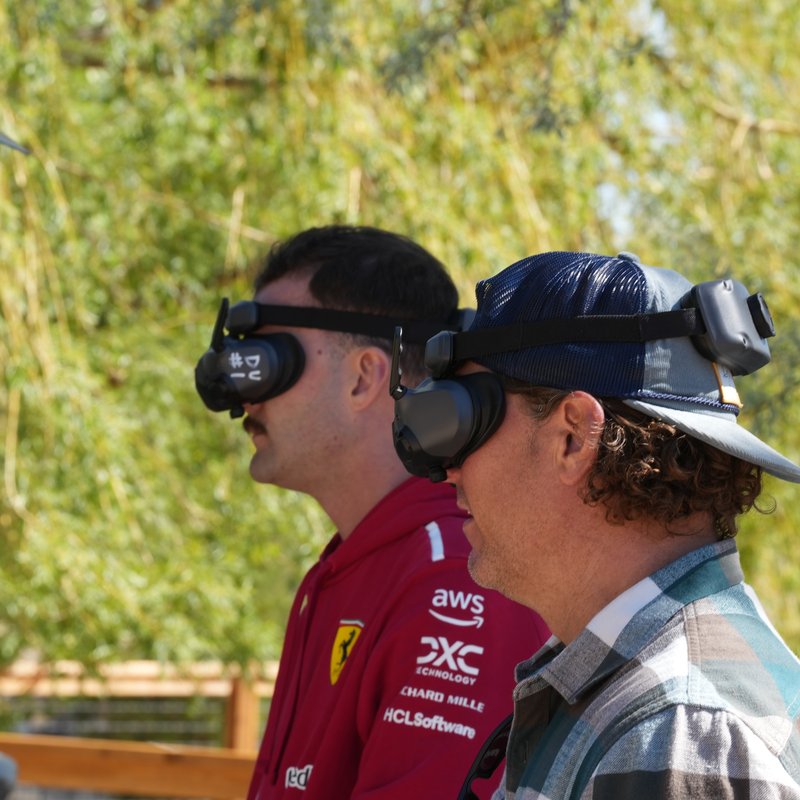
A coworker’s enthusiasm is contagious. Train your first champions well.
A coworker’s enthusiasm beats a memo every time.
That’s why your first few pilots matter so much. Choose people who are curious, disciplined, and respected by their peers. Then train them well and give them a chance to succeed early.
From there, start small:
As a result, curiosity spreads. When employees see a peer solve a real problem with a drone, the program stops being abstract. In our experience, that’s often when people start asking how to join.
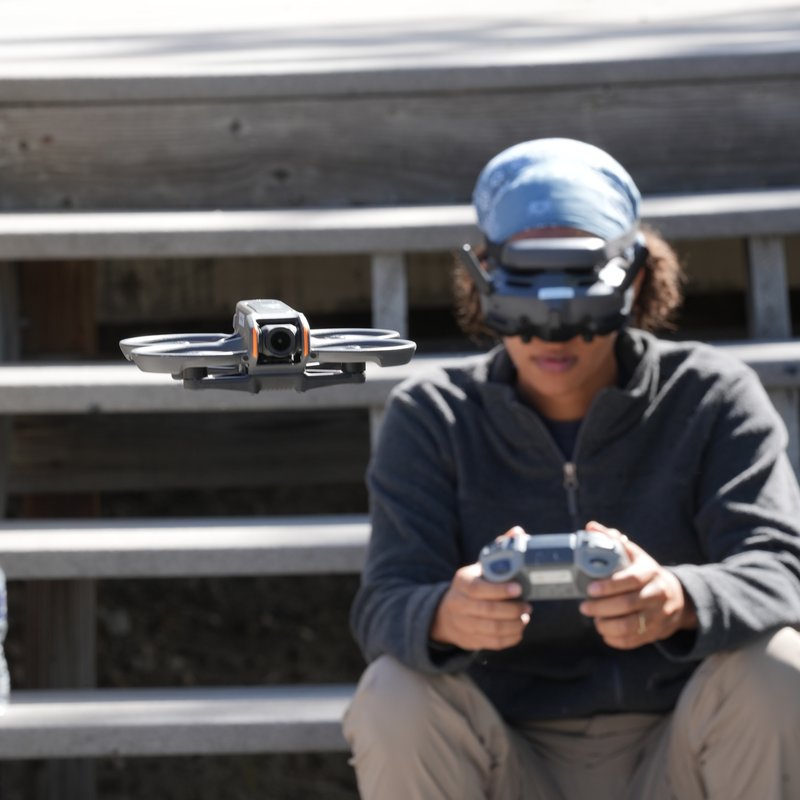
Structured, hands-on training makes stepping up feel a lot less risky.
Here’s a fear many employees won’t say out loud: “What if I crash it?”
Don’t dodge that question. Instead, answer it with structure. Show prospective pilots that the program has:
A strong safety culture doesn’t scare people away. On the contrary, it reassures them. That’s why safety is one of the most underrated ways to motivate employees to become drone pilots. When people know they’ll be trained properly, supported by procedures, and held to clear standards, stepping up feels a lot less risky.
You can’t mandate motivation. However, you can design for it.
If you want to motivate employees to become drone pilots, give them a reason that’s about their growth, a path that removes the fear, training that’s genuinely fun, and leaders who visibly back them up. Then recognize every step forward.
Do that, and you won’t just fill seats in a drone program. Instead, you’ll build pilots who want to be there. And in our experience, those are the pilots who become your best ones.
You don’t have to design this program alone. Our Enterprise Drone Programs help organizations recruit, train, and keep confident in-house pilots. We blend online and in-person instruction, hands-on Flight Mastery drills, and continuing education credits for your team.
So if you’re ready to turn curious employees into skilled, safe pilots, schedule a consultation with us. We’ll help you build a drone program your people actually want to join.
Have employees who are ready to start studying today? Our Part 107 course gives them a clear, self-paced path to the knowledge test.
We don’t teach hype. We teach what works—because we fly it ourselves.
 0
0