
Getting a Part 107 License Is Simple—and Just the Start
October 5, 2026
Getting a Part 107 license is simple—and seriously just the first step. The FAA Remote Pilot Certificate proves you understand how to access airspace and stay inside the rules. It does not prove you can fly a smooth shot, land a client or run a business that pays you.
That gap is where most new pilots get stuck. Below is what the test actually checks, what you still have to master after you pass, and how to build the flight craft, sales habits and automation that turn a certificate into real work—with help from the Drone U community.
Here’s the honest take. The Part 107 certification course and the FAA knowledge test exist to get you legal. They teach airspace, limitations, weather, regulations and safety. That matters. Without it, you cannot fly commercially under 14 CFR Part 107.
And yet—that’s about it.
The exam checks whether you know how to access airspace and what you cannot do. It does not check whether you can hold a hover in wind, sell a package to a realtor or invoice a job without losing a weekend to admin. In our experience, a lot of the questions aren’t even practical for how most drone pilots work day to day. Learning airport taxiways is a classic example. It’s on the test. It almost never shows up on a real estate or inspection job.
None of that means the test is useless. Knowing Class B from Class G, when you need authorization, how weather affects a small aircraft and what to do in an emergency keeps you—and everyone around you—safer. The point is narrower: passing proves knowledge of the regulatory box. It does not prove craft, sales or systems.
Think of it like a driver’s license written exam. You need it. It keeps the roads safer. Still, nobody hires you as a delivery driver because you named every highway sign correctly. They hire you because you can drive, show up and deliver. Commercial drone work is the same pattern—just with more airspace rules and a camera.
So pass it. Use a structured path if you want one—our course covers the material in short lessons with FAA-aligned quizzes, and our free Part 107 practice test is a solid readiness check. Then treat the certificate as a door, not a career.
For the step-by-step of IACRA, the knowledge test and your temporary certificate, see how to get your Part 107 license. The FAA’s own overview is here: Become a Certificated Remote Pilot.
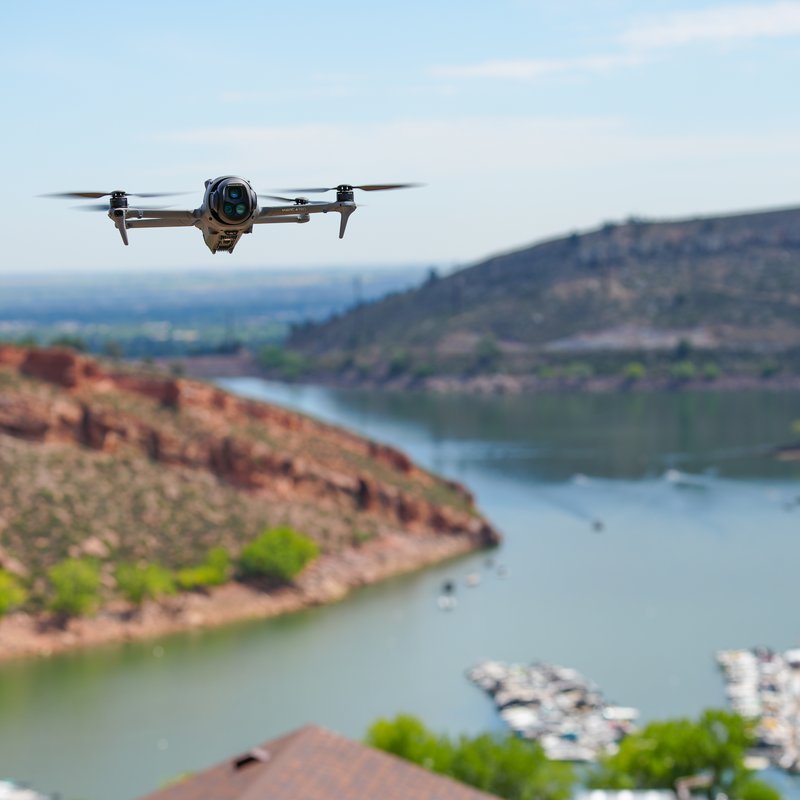
Once the paperwork is done, the real craft starts. Clients don’t hire a certificate. They hire footage that looks intentional—and a pilot who can deliver it without burning the battery on bad takes.
Start with control. Then layer camera motion. Progress looks like this:
That last line is the goal. When you can run a full sequence—establish, orbit, lower, push—in one battery, you’re not guessing on the job. You’re executing. That confidence shows up in the edit, and it shows up when a client is watching over your shoulder.
Smooth also means knowing when not to fly. Wind that looked fine in the parking lot can be ugly at altitude. Low light can wreck an otherwise perfect orbit. If conditions won’t give you the shot you sold, reschedule. Clients remember the pilot who protected the result more than the one who forced a bad take.
Build the habit the same way we coach it in the field:
Practice on purpose. Fly the kind of shots you want to sell. Turn GPS and obstacle avoidance off only where it’s safe, so your hands learn the aircraft. Obstacle avoidance is a safety layer, not a crutch. And if you want structured flight training for a team, our hands-on Flight Mastery work lives under Enterprise Drone Programs—not as a weekend shortcut past practice.
Here’s the part almost nobody warns you about. Getting the Part 107 license is the easy half. Building the business is the hard half.
Clients aren’t going to walk up and ask you for work. You have to sell yourself. That means:
You live in a market where “I’m Part 107 certified” is table stakes. Everyone who plans to get paid has that, or should. What separates you is whether you can explain the outcome, show similar work and make it easy to say yes.
Also, selling is a skill you can practice. Start local. Bring a one-page sample of work that matches what they buy. Ask for a small paid job before you pitch a huge package. Follow up once without being weird about it. Most of the pilots who struggle after the test aren’t bad at flying—they’re quiet about their work and waiting for the phone to ring.
Pick a niche early, even if you expand later. “I shoot real estate video” is easier to buy than “I do everything.” The same goes for roofs, solar, mapping or public safety support. Specialization makes the portfolio clearer, the price clearer and the outreach list shorter. You can always add services once the first lane is paying.
If you’re still setting up the company side—entity, insurance, first offers—our guide on how to start a drone business walks through the basics. For a deeper stack of business courses in one place, the Drone Business Bundle is built for pilots who are past the test and into getting paid.
We also live in a time when you can automate most of your business. Quotes, follow-ups, scheduling, invoicing, basic marketing—those don’t need to eat your evenings if you build the systems once.
That matters because your highest-value hours are not in a spreadsheet. They’re on the handshake and in the air. The pilots who scale aren’t working harder on every email. They’re spending more time with people and aircraft, and less time chasing admin.
Think in layers:
None of this replaces flying well or talking to people. It clears the clutter so those two things get more of your week. If you’re still doing every quote and invoice by hand, you’re paying a hidden tax on every job—and that tax grows as you get busier.
At Drone U, we’re building toward that with upcoming AI automation classes—practical training on using AI to cut the busywork so you can focus on clients and flying. Those classes don’t have a public page yet, so we won’t invent a date or a URL. When they go live, they’ll sit in the same place the rest of our training does: taught by people who actually run drone work.
Until then, you don’t have to wait. Kara Cavalca’s Automating and Scaling Your Drone Business course ($97) is live now. It covers the systems side of growing past one-off gigs—so when the AI automation classes arrive, you’re not starting from zero on process.
A Part 107 license alone is a weekend project for many people. Building a business that lasts is not. You need information, yes—but you also need community and connections.
That’s been our whole model. Drone U has 10+ years of in-person drone training and 14+ years of online drone education. We’ve trained 25,000+ pilots. The private community is where questions get answered by people who have already booked the job you’re staring at. Referrals and partnerships show up there that don’t show up on a cold LinkedIn message.
In our experience, the pilots who stick with it aren’t the ones who memorized every taxiway question. They’re the ones who kept learning flight craft, talked to real clients and stayed around people who were already doing the work. When something changes—a new chart format on the test, a new client type, a new software stack—you have somewhere to ask besides a random comment thread.
Community also keeps you honest. It’s easier to skip practice when nobody sees your work. It’s harder when you’re surrounded by pilots who are shipping jobs every week. That pressure is useful. Use it.
We don’t teach hype. We teach what works—because we fly it ourselves.
So yes: get certified. Treat a Part 107 license as step one. Then stack smooth flying, honest selling and systems that free you up for the work only you can do.
If you’re still studying, start with the course. If you already passed, skip ahead to flight drills, outreach and automation. Either way, the certificate is the floor—not the ceiling.
Enroll in Drone U’s Part 107 course for $147 (regularly $197). You get on-demand video lessons, FAA-aligned quizzes (score 90%+ and you’re ready), a downloadable study guide, access to the private Drone U community, lifetime access and a 14-day money-back guarantee.
Already certified? Move into business and automation next with the Automating and Scaling Your Drone Business course, or dig deeper with the Drone Business Bundle. Watch for our upcoming AI automation classes when they publish.
Training a team? Explore our Enterprise Drone Programs, including hands-on Flight Mastery training, or book a consultation to build a plan for your organization.
 2
2