

Drone-Only TFRs Over Festivals and Game Days: What Pilots Need to Know

October 8, 2026
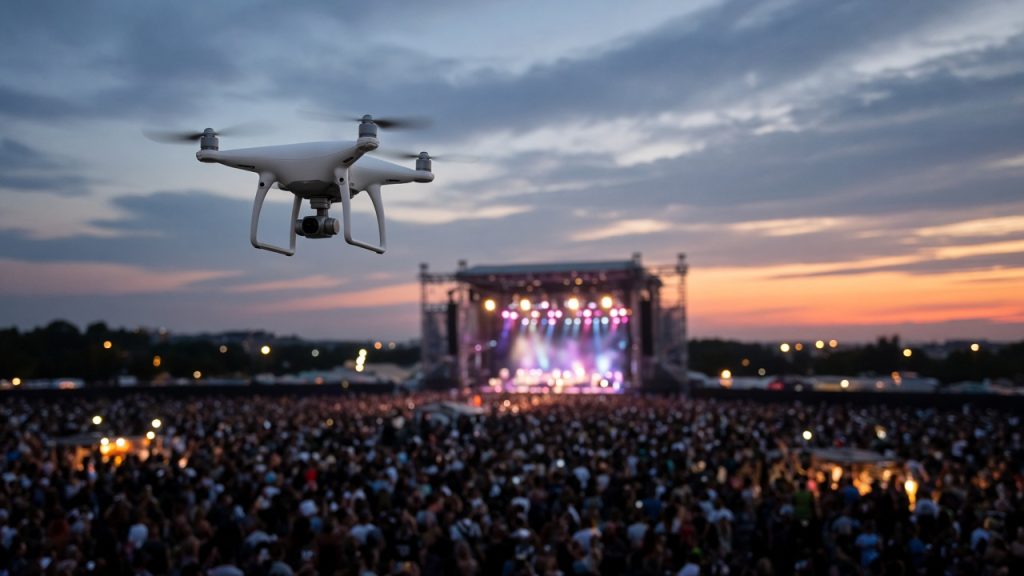
If you fly near a big festival, a college football game or a downtown event this fall, there’s a new line item on your preflight checklist. The FAA’s temporary flight restriction list now includes a category called “UAS Public Gathering,” and as of Thursday morning, October 8, it showed 10 of them across eight states.
These restrictions apply only to drones. They come from a law Congress passed in 2024, and the local police department that requested the restriction often decides who gets in. Here’s how they work and how to stay on the right side of them.
The authority is 49 U.S.C. 44812, which was amended by Section 935 of the FAA Reauthorization Act of 2024. Under that section, the FAA must restrict drone flights over an “eligible large public gathering” when a credentialed law enforcement agency asks for it. That can be a federal, state, local, tribal or territorial agency.
The law sets a fairly high bar for which events qualify:
Agencies must submit requests at least 30 days before the event. The FAA, in turn, has to publish each restriction publicly at least two days before the gathering starts. So a drone-only TFR shouldn’t surprise anyone who checks before flying.
The FAA’s TFR list on October 8 showed UAS Public Gathering restrictions in Austin, Cincinnati, Daytona Beach, Tampa, Raleigh, Atlanta, Auburn (Alabama), Perry (Georgia), Santa Clara (California) and North Scituate (Rhode Island). A few examples show how much they vary:
This is the part that’s different from the security TFRs most pilots know. Under the statute, nobody may fly a drone inside one of these restrictions unless one of these is true:
The NOTAMs we reviewed name a specific officer and phone number at the requesting agency. So if you’ve been hired to shoot a festival or a tailgate, call that contact well before the event. Don’t count on getting a yes on the day.
These new restrictions add to the FAA’s long-standing stadium restriction rather than replacing it. That rule bans drones within 3 nautical miles of the venue from one hour before to one hour after the scheduled time of Major League Baseball, NFL, NCAA Division I football and major motorsport events. On a college game day, you may face both the standing stadium rule and a separate UAS Public Gathering TFR at the same time.
Reading NOTAMs, decoding UTC times and knowing which restriction applies where are core Part 107 skills. If you’re working toward your certificate or want a refresher, our Part 107 test prep course covers airspace and flight restrictions in plain English.
Drone-only TFRs over large crowds aren’t theoretical anymore. They’re on the FAA’s list right now. Check before every event flight, call the agency contact if you need access, and when in doubt, keep the drone in the case.
Sources: Drone Authority; FAA TFR list (UAS Public Gathering type); 49 U.S.C. 44812; FAA: Stadiums and Sporting Events
 0
0
