

FAA Awards $12 Million for Drone Research as Part 108 Waits for Final Approval

October 8, 2026
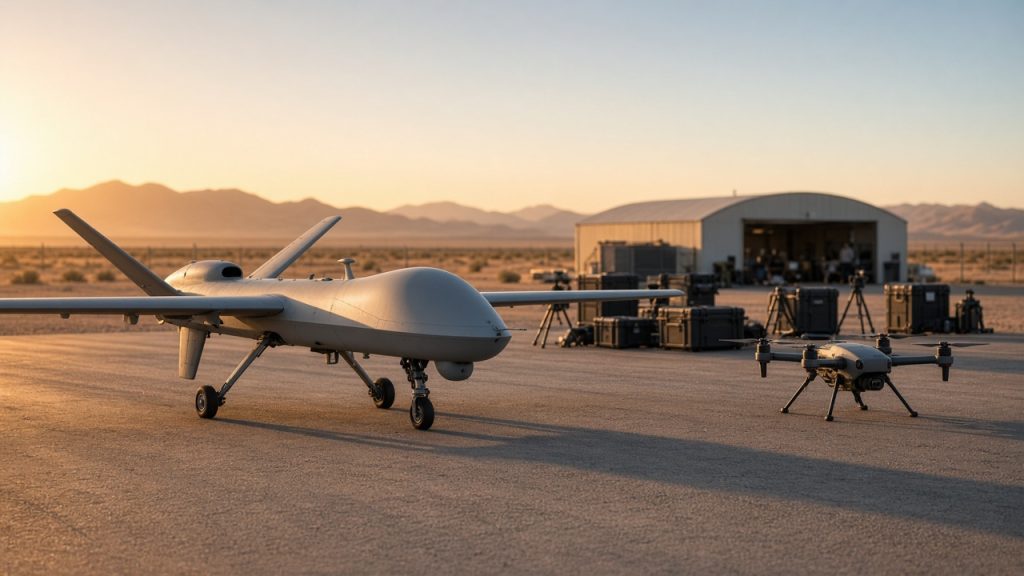
The FAA announced on Monday, October 5, that it has awarded $12 million in FAA drone research funding to 19 research and testing projects. The money pays for technology the agency says it needs before drones can routinely share the sky with crewed aircraft. That includes detect-and-avoid, drone identification, traffic management and counter-drone tools.
It’s welcome news, but the timing is worth noticing. The rule most commercial pilots are actually waiting for, Part 108 for beyond visual line of sight (BVLOS) flight, still hasn’t been released. Here’s what was funded, where Part 108 stands, and what it means if you fly for a living.
The awards come through the FAA’s UAS Broad Agency Announcement (BAA) Program. That program pays companies to test and evaluate technologies in partnership with the FAA’s designated UAS Test Sites. The FAA tied the awards to the June 2025 “Unleashing American Drone Dominance” executive order, which called for fuller use of those test sites.
The project list reads like a map of the hardest problems in drone integration:
Recipients include General Atomics, DroneUp, ANRA Technologies (which won several awards), Skydweller, Censys Technologies, ResilienX and Oklahoma State University, among others.
FAA Administrator Bryan Bedford said the research “will give us better data” and help the agency understand the operational challenges of integrating these aircraft.
The work runs through the FAA’s nine designated UAS Test Sites in Alaska, North Dakota, New Mexico, Nevada, New York, Texas, Virginia, Oklahoma and Indiana. Commercial UAV News notes that the Oklahoma site (run by the Choctaw Nation) and the Indiana site were added in January 2026. Those were the first new sites in nearly a decade.
Not exactly. As DroneXL points out, Congress directed this BAA funding in the FAA Reauthorization Act of 2024. So the announcement delivers money that had already been planned rather than a new spending push. Spread across 19 projects, the awards fund demonstrations and data collection, not large-scale deployments.
Part 108 is the proposed rule that would make routine BVLOS flight possible without the case-by-case Part 107 waivers operators rely on today. The FAA published the proposal in August 2025.
The final rule, titled “Normalizing Unmanned Aircraft Systems Beyond Visual Line of Sight Operations,” has been at the White House Office of Information and Regulatory Affairs (OIRA) since July 10, 2026. As of October 8, OIRA’s public dashboard still listed it as pending review. That’s roughly 90 days, the standard review window under Executive Order 12866, and that window can be extended. There’s no public text yet, so nobody outside government knows exactly how the final version differs from the proposal.
Whatever the final Part 108 looks like, it will build on the fundamentals every commercial pilot already needs: airspace, weather, risk management and the Part 107 rules. If you’re not certified yet, our Part 107 prep course is the place to start.
FAA drone research funding will help shape advanced drone operations, and that’s a good thing. But the rule that would unlock routine BVLOS flying is still waiting on a signature. We’ll cover Part 108 here as soon as the final text is public.
Sources: FAA: FAA Funds Drone Research to Support Safe Integration (Oct. 5, 2026); DroneXL; Commercial UAV News; OIRA regulatory review dashboard (RIN 2120-AL82)
 0
0
