

FAA’s eVTOL Pilot Program Shifts Toward Regular, Repeatable Flights

October 8, 2026
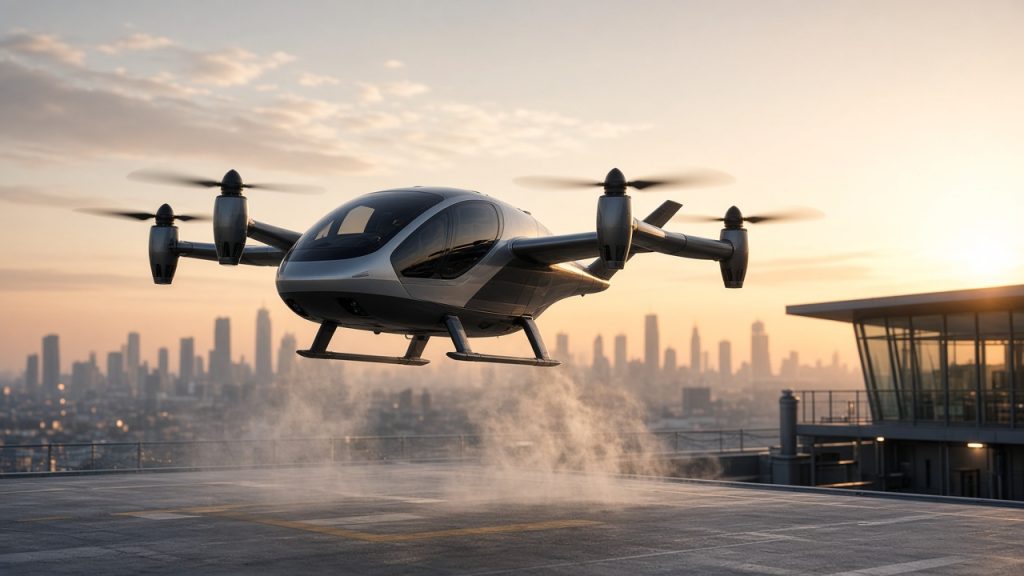
The FAA’s eVTOL pilot program, officially the eVTOL Integration Pilot Program (eIPP), is moving into a new phase. After a summer of one-off demonstration flights, the agency now wants participants to fly on a regular schedule so it can collect real operating data.
That’s a big step for advanced air mobility (AAM), and it’s relevant to drone pilots too. These aircraft include autonomous cargo drones, and they’ll increasingly share low-altitude airspace with the rest of us. Here’s where the program stands.
The FAA and the Department of Transportation announced eight eIPP selections in March 2026. The program was outlined in the administration’s drone dominance executive order, and the selected projects span 26 states. The lead partners are:
The projects cover a wide range of missions, including urban air taxis, regional passenger flights, cargo and logistics, emergency medical response, autonomous flight and offshore energy transport. According to the FAA, data from these projects will feed into future regulations for these aircraft.
In an interview published by Aerospace America on October 8, eIPP program director Tina Buelo said the program is moving as fast or faster than expected. Demonstration flights have taken place in eight states: Louisiana, Maryland, New Jersey, North Carolina, Pennsylvania, Texas, Utah and Virginia. Upcoming flights are planned in Florida, New Mexico and the New York-New Jersey area.
So far, nearly every flight has had a pilot on board and carried cargo or medical supplies rather than passengers. The notable exception is California-based Elroy Air. Its Chaparral drone flew autonomous cargo missions in Louisiana, including a week of flights in September.
One highlight was a September flight by BETA Technologies. Its electric aircraft landed at Dare County Regional Airport in North Carolina carrying medical supplies, and a crowd turned out to watch.
Buelo said the next goal is to move beyond single flights or short series of flights. Instead, the FAA wants participants to set up regular schedules, which she described as “repeatable operations,” so the agency can gather data over time.
Operators say that kind of flying exposes the problems a demo can’t. BETA told Aerospace America it’s learning from real-world conditions, such as wet runways, and figuring out the best places to put charging stations and cargo offloading docks.
Routine paid cargo or passenger service is possible later on, Buelo said. The program is scheduled to run for at least three years.
Whether you want to fly drones commercially now or move into advanced aviation later, it starts with understanding the airspace system. Our Part 107 certification course covers sectional charts, controlled airspace and right-of-way rules.
The eVTOL pilot program is moving from proving that new aircraft can fly to showing they can fly reliably, on a schedule, in real conditions. That’s the step that turns demonstrations into an industry, and drone pilots will be sharing the sky with it.
Sources: Aerospace America; FAA: eIPP selections announcement (March 9, 2026); FAA: The eIPP, What You Need to Know
 0
0
