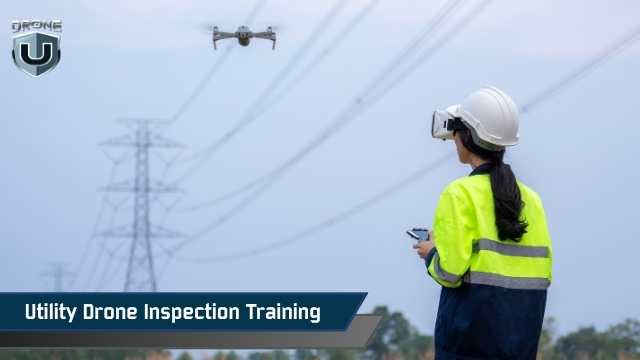

Drones in the Workforce: How Teaching Your Team to Fly Re-Invigorates Work

October 26, 2026
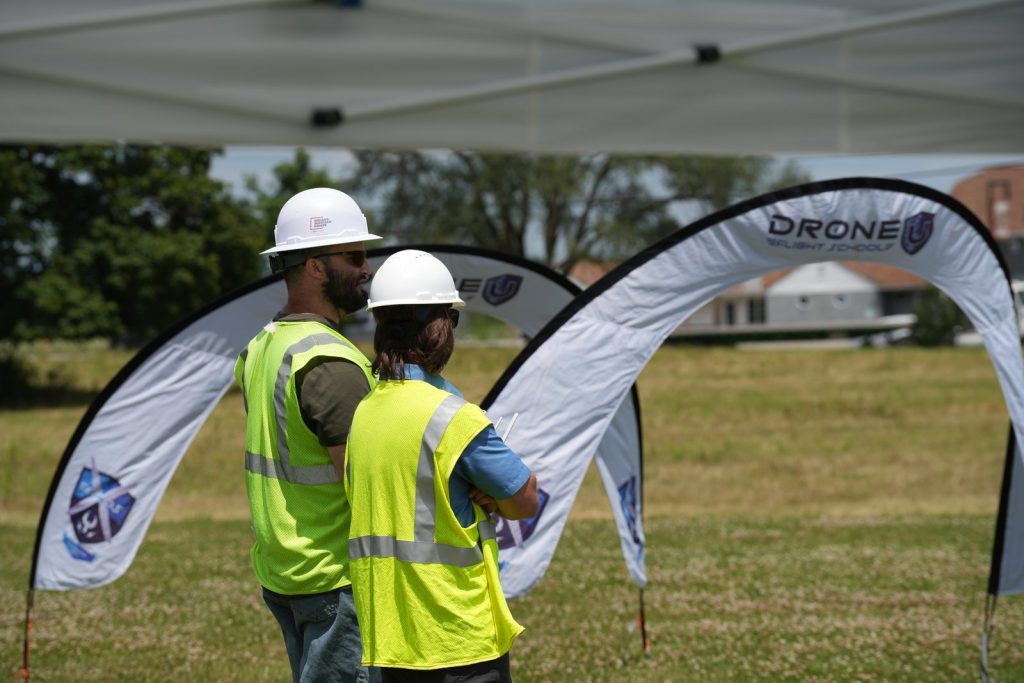
Drones in the workforce aren’t just new tools. Teaching your people to fly gives them a fresh way to see their work, find problems sooner and, for crews like utility linemen, climb less.
Drones in the workforce start with a simple truth: we’re all human. Even great employees hit a wall. The job that once felt challenging becomes routine, the routine becomes mundane, and people plateau.
That’s not a character flaw. It’s what happens when people do the same work, from the same angle, for years.
So how do you re-invigorate a team that’s quietly coasting? In our experience, one of the best ways is to teach your workforce how to fly. Not as a gimmick, and not as a side hobby, but as a real skill that changes how they see the job.
Drone U has more than 10 years of in-person drone training and more than 14 years of online drone education. Over that time, we’ve watched seasoned crews light up the first time they see their own worksite from 200 feet up. Step one is always the same: an FAA Remote Pilot Certificate, which our Part 107 course prepares employees to earn.
But the certificate is only the starting line. The real payoff shows up in the field, and nowhere is that clearer than on a utility pole.
Ask a utility lineman what would make the job easier. More often than not, the answer isn’t a new tool or a bigger truck. Instead, they just want to go up the ladder fewer times.
That makes sense. Power-line work combines high voltage with height. According to the Bureau of Labor Statistics, electrical power-line installers and repairers “encounter serious hazards on the job, including working with high-voltage electricity, often at great heights.” Likewise, OSHA lists arc flashes, electric shock, falls and thermal burns as hazards in the electric power industry that “can cause injury and death.”
Now think about how a typical repair often goes without a drone:
With a drone, that sequence changes. First, the lineman flies the tower or pole they’re about to climb. Next, they inspect the hardware up close on a screen, while their boots are still on the ground. Then they discern the problem, load up exactly what they need and climb once to fix it.
Two or three trips up the ladder become one. That’s the clearest case we know for drones in the workforce.
Of course, the drone doesn’t replace the lineman’s training, their procedures or their judgment. It simply gives them better information before they leave the ground. And better information means fewer surprises at the top.
Here’s where it gets interesting for safety managers and executives.
If you think about it, the climb itself is one of the riskiest moments of the job. Every trip up and down is another stretch of time at height, near energized equipment. In fact, OSHA’s power-line rules generally require fall protection for work more than 4 feet up a pole or tower.
So if a drone flight cuts the climbs on a job from two to one, you’ve cut that exposure in half. If it cuts three climbs to one, you’ve cut it by two-thirds.
That means less exposure for the employee. Just as important, it means less exposure for the company. In other words, you’ve reduced both employee liability and company liability on one of the most hazardous jobs in the country, without asking anyone to work faster or cut a corner.
To be clear, that’s reasoning, not an actuarial table. Your safety team should measure it on your own jobs. Still, the logic is hard to argue with: the safest climb is the one you never have to make.
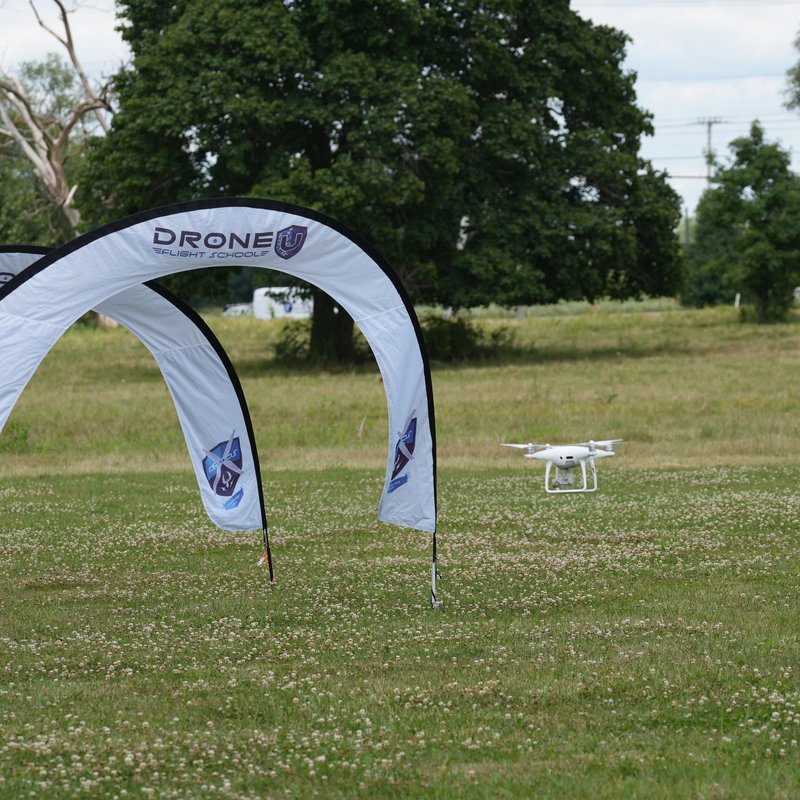
Back to the people side, because that’s where this really starts.
Plateaus rarely come from laziness. Rather, they come from repetition. When every day looks the same, people stop noticing things. They default to “how we’ve always done it.” Eventually, motivation fades along with it.
You can’t fix that with another memo or a new slogan. However, you can fix it by handing people a new skill that’s genuinely challenging, measurable and, frankly, fun.
Learning to fly does all three:
That last point matters. Your 20-year veteran already knows what a failing insulator or a cracked weld looks like. Put a drone in their hands, and that experience suddenly has a new reach. That’s where drones in the workforce earn their keep.
Here’s how we like to explain it. It’s not just learning how to fly. It’s learning how to use the tape measure of the sky.
A tape measure doesn’t do the job for you. Instead, it lets you see the job accurately before you commit to anything. A drone works the same way, only from above.
Once employees learn to use that tool, a few things happen:
As a result, the work gets easier. Not because anyone is cutting effort, but because they’re spending it in the right place.
That’s the quiet power of drones in the workforce. The aircraft is the tool. The new perspective is what re-energizes people.
Linemen are the clearest example. Even so, the same tape-measure-of-the-sky thinking applies across any team that inspects, measures or maintains things that are high up, spread out or hard to reach.
In each case, the pattern is the same. Look first, from above. Then decide whether, where and how a person needs to go up. For a deeper look at specific use cases, see our guide to drone inspections.
That said, flying near infrastructure takes real skill. For instance, high-voltage equipment and steel structures can interfere with a drone’s compass. That’s exactly why we treat automation as a safety layer, not a crutch, and why training matters more than the aircraft.
The fastest way to kill the energy is to make flying feel like extra paperwork. So build the program around the work people already do.
If your challenge is getting people to raise their hands in the first place, we cover that in How to Inspire and Motivate Employees to Become Drone Pilots. And once you’re ready to grow, Why Training Is the Key to Successfully Scaling a Drone Program explains how to keep standards consistent as you add pilots.
You don’t need to figure out drones in the workforce alone. Our Enterprise Drone Programs bring in-person and team training to your crews, built around the real tasks they do every day. We also offer continuing education credits for organizations, so the training counts toward the professional requirements your people already have.
Ready to see what the tape measure of the sky can do for your team? Schedule a consultation with us, and we’ll help you build a program around your crews and your worksites.
Want to start today? Step one for every pilot is the FAA knowledge test, and our Part 107 course gives employees a clear, self-paced path to it.
We don’t teach hype. We teach what works—because we fly it ourselves.
Sources
 0