

Dallas Drone Indictment: Love Field Runway Flight Brings Federal Charges

October 12, 2026
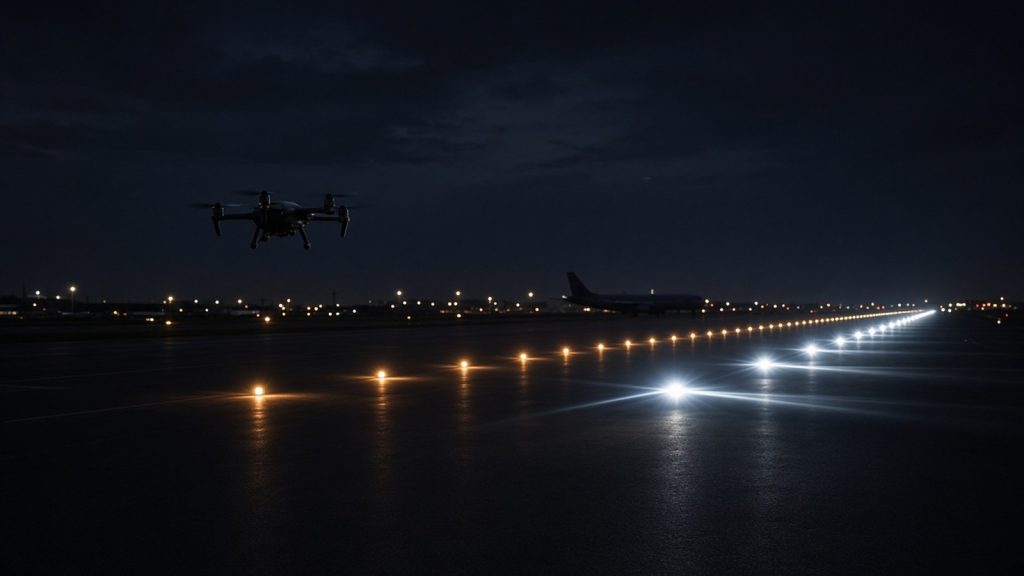
A drone flight across an active runway at night is about as serious as airspace violations get. Now it has led to a four-count federal indictment in Dallas, with a maximum sentence of up to eight years in prison.
Here’s what prosecutors allege, what the runway exclusion zone law says and what every pilot should take from it.
The U.S. Attorney’s Office for the Northern District of Texas announced the case on October 8. According to the office:
Federal agents arrested him on September 22, and he made his initial court appearance that day. If convicted, he faces up to eight years in federal prison. An indictment is an allegation, not a conviction, and he is presumed innocent unless proven guilty.
U.S. Attorney Ryan Raybould put it plainly: “Safe and secure air travel depends on strict compliance with federal aviation rules.”
The press release doesn’t list the statutes behind each count. But “runway exclusion zone” is a term from federal criminal law, 18 U.S.C. § 39B, which Congress added in 2018. It makes it a crime to knowingly operate an unmanned aircraft inside one of these zones without authorization.
The law defines the zone as a rectangle centered on an active runway at an airport with Class B, C or D airspace at the surface. The rectangle is half a statute mile wide and runs 1 statute mile past each end of the runway. The basic penalty is a fine, up to one year in prison or both. The penalties go much higher if someone is seriously hurt or killed.
Notice what the law doesn’t require: a near miss. Being in the zone without authorization is the offense.
DroneXL’s reading is that most of the eight-year maximum comes from the airman-certificate allegations, at up to three years per count under a separate statute. It hasn’t seen the charging document, so treat that breakdown as unconfirmed.
This is the detail recreational flyers tend to miss. The recreational exception (49 U.S.C. 44809) lets you fly without a Part 107 certificate only while you follow all of its conditions. One of those is getting authorization before flying in controlled airspace, like the Class B over Dallas.
Step outside those conditions and you’re no longer flying under the recreational exception. At that point, the general rule applies: you need a remote pilot certificate. That’s how an unauthorized flight near an airport can turn into a charge for operating without an airman certificate.
If you’re not sure how to read the airspace around your local airport or when LAANC applies, that’s exactly what the Part 107 exam covers. Our Part 107 test prep course teaches airspace, sectional charts and authorizations in plain English, so you never end up on the wrong side of a runway.
The runway exclusion zone law is short and blunt. Knowingly fly inside that half-mile-wide box around an active runway at a Class B, C or D airport without authorization, and you’re committing a federal crime. Fly legally, get authorization and give runways the respect they deserve.
Sources: U.S. Attorney’s Office, N.D. Texas release (via sUAS News); 18 U.S.C. § 39B; 49 U.S.C. § 44809; FOX 4 Dallas-Fort Worth
 0
0
