

Is DJI Banned in the US? Banning Drones, the FCC Covered List and What It Means for You

October 23, 2026
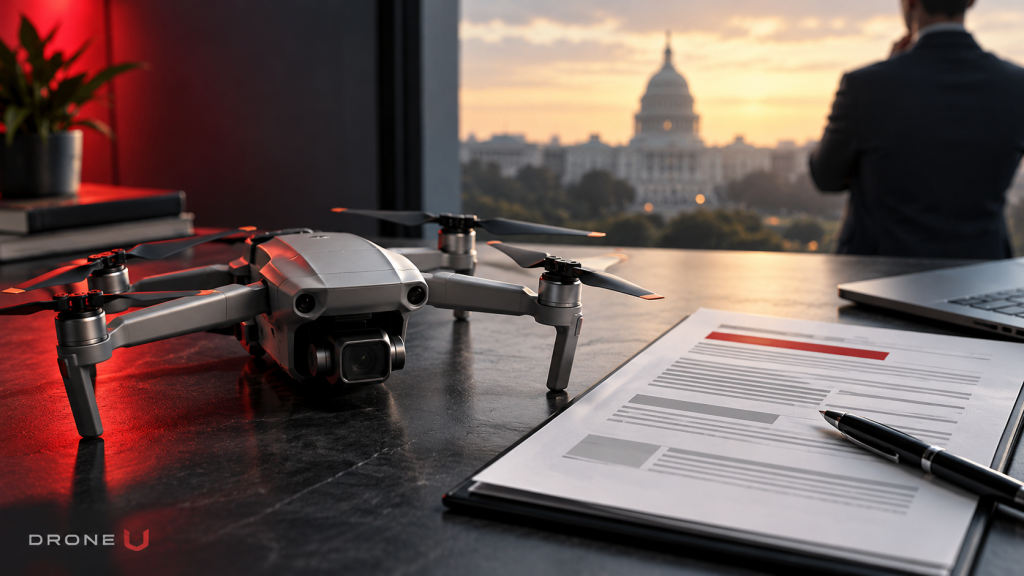
Talk of banning drones has been everywhere since late 2025, and the question we hear most is simple: is DJI banned in the US? The short answer: new DJI models are effectively blocked from the U.S. market, but the DJI drone you already own is still legal to fly. Below is what changed, what it means for hobbyists, Part 107 pilots and businesses, and where the legal fight stands as of October 22, 2026.
On December 21, 2025, an interagency national security body determined that foreign-produced drones and critical drone components pose an unacceptable risk to U.S. national security. The next day, the FCC’s Public Safety and Homeland Security Bureau issued Public Notice DA 25-1086 adding those items, along with DJI and Autel equipment named in Section 1709 of the FY2025 National Defense Authorization Act, to the FCC Covered List.
The FCC can’t add items to the Covered List on its own. Under the Secure Networks Act, the FCC explains, it acts on determinations made by qualifying national security agencies. That shapes where any challenge has to go.
The FCC lays out the effects in its Covered List FAQ for drones and drone components:
Keep flying. If you want a new DJI drone, your choices are limited to models the FCC authorized before the listing, while stock lasts. New releases sold overseas won’t come to the U.S. through normal channels.
Your certificate and your aircraft are unaffected. The risk is in the future: replacement aircraft, batteries and parts may get harder to find. Many operators are stocking critical spares and testing non-covered or conditionally approved alternatives.
Fleet planning gets harder. Some government contracts and grants carry their own limits on which drones can be bought, separate from the FCC list. Check the requirements of any contract or grant before you buy.
The listing covers “UAS critical components” as well as complete drones. The FCC’s conditional approval entries show what that includes in practice, such as data transmission devices, communications systems and flight controllers. For pilots, that can affect replacement parts and repairs. For U.S. manufacturers, it affects supply chains, because many American-assembled drones have used foreign-made components.
The FCC grants conditional approvals for specific drones and components and lists them on its Covered List page. As of the October 21, 2026 update, recent entries include Dronus’s K500L system (October 2, 2026), Ascento’s Guard Dori USA v1 (August 21, 2026) and Parallel Flight Technologies’ Firefly (July 24, 2026). Conditional approval is how a specific product can keep or gain access to the U.S. market despite the broader listing.
Owners also worry about updates. The FCC addresses software and firmware updates for previously authorized covered equipment in its guidance. Because those terms can change, check the FCC’s FAQ before assuming any update path is permanent, and install safety-related updates you’re allowed to.
DJI is fighting the listing in two places:
DJI argues the listing is a final decision because it immediately bars DJI from marketing and importing its products. The government says the court case is premature, because DJI’s reconsideration petition is still pending at the FCC, so there’s no final agency action for a court to review. In May 2026 the Ninth Circuit denied the government’s first motion to dismiss without prejudice and paused the case until November. On October 16, 2026, the government filed a renewed motion to dismiss, citing recent Supreme Court orders in an unrelated FCC case, Communications Daily reported. DJI’s opening brief is due November 2, 2026. We covered the filing in FCC Asks Ninth Circuit Again to Dismiss DJI’s Covered List Challenge.
Either way, don’t plan around a quick reversal.
Whatever you fly, the FAA rules are the same. If you’re flying for work, the Drone U Part 107 course covers everything on the knowledge test. Shopping for a first drone? See our beginner drone buying guide.
New DJI models can’t get FCC authorization, so they can’t be newly imported or sold. Previously authorized models and drones you already own remain legal to use.
No. Nothing in the Covered List disables or grounds existing drones.
Yes, previously FCC-authorized models can still be sold legally, though stock may be limited for some models.
No. The Covered List is about FCC equipment authorization, not flight rules.
No. The December 2025 action covered foreign-produced drones and critical components broadly, plus DJI and Autel equipment named in the FY2025 NDAA. Specific products can receive FCC conditional approval.
There’s no date. DJI’s opening brief is due November 2, 2026, and the government has asked the court to dismiss the case as premature.
The FCC says the Covered List doesn’t prohibit the sale of previously authorized device models, so a lawfully bought drone can generally be resold.
Whether you are flying for work, for public safety or for the love of it, it starts with knowing the rules. The Drone U Part 107 course covers every topic on the FAA knowledge test, including airspace, sectional charts, weather, regulations and operations, with lessons from working commercial pilots and practice questions built around how the FAA actually tests. Start the Part 107 course today.
 0
