

Zipline Raises $1.5 Billion at a $21.5 Billion Valuation as Walmart Adds 300 Delivery Sites

November 6, 2026
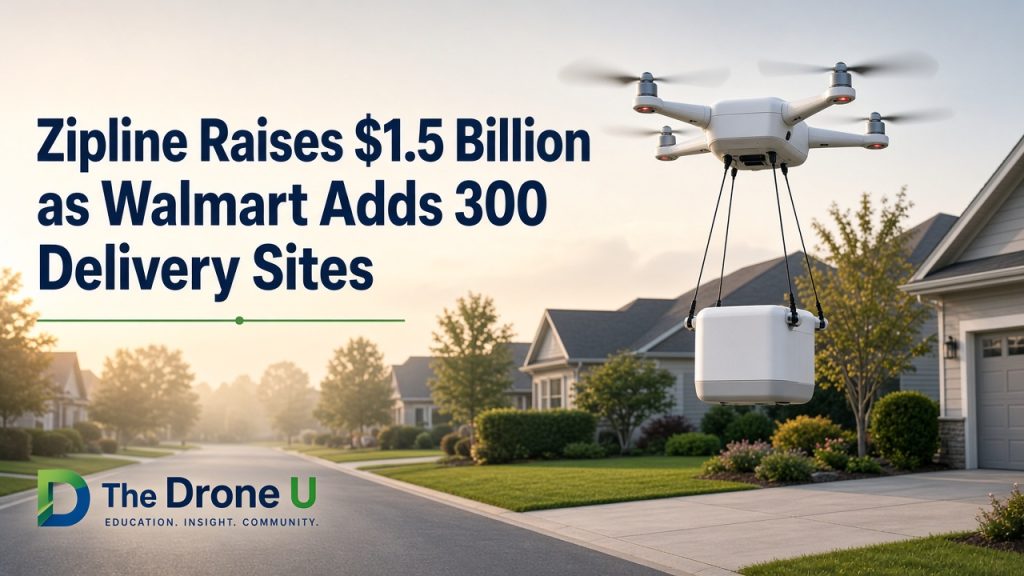
Zipline just put another nine-figure stamp on the idea that drone delivery is leaving the pilot phase. On November 5 the company announced a $1.5 billion funding round at a $21.5 billion post-money valuation, while Walmart said it will add 300 Zipline sites under a new multiyear agreement. Uber is also in the round and says it wants one million Zipline deliveries a day by the end of 2029.
DroneLife flagged the raise the same day. The primary details come from Zipline’s own newsroom post and Walmart’s corporate release.
Paradigm, WCM Investment Management and Layer Global led the round. Uber, Fidelity Management & Research Company, Valor Equity Partners, Tiger Global, J.P. Morgan, ARK Invest and Salesforce Ventures also participated. Zipline says it will use the capital to expand U.S. manufacturing and hiring as it builds toward a nationwide network. In January 2026 the company had announced more than $600 million at a $7.6 billion valuation — so the new price tag is a sharp step up in less than a year.
Walmart, which calls its program the nation’s largest retail drone delivery operation, says it has already completed more than two million drone deliveries and has worked with Zipline since 2021. The new deal adds 300 Zipline sites nationwide, with room to grow further. Eligible customers order through the Walmart app or Walmart.com and can get everyday items in as little as about 30 minutes where the service is live. Walmart notes that roughly 90 percent of Americans live within 10 miles of one of its stores — the footprint it wants to leverage for more drone pads.
“Five years ago, Walmart and Zipline made our first deliveries together,†Zipline CEO and co-founder Keller Cliffton said in Walmart’s release. “Today, customers order from us multiple times a day… Now, with Walmart, we’re going to expand this tech to homes throughout the country.â€
Uber’s investment comes with an integration plan: Zipline deliveries into Uber Eats, starting in existing markets before new cities. Zipline also published results from a cohort of its longest-tenured restaurant partners. Between March and October, Zipline’s share of those restaurants’ delivery revenue rose from 10.8 percent to 34.9 percent. The restaurants saw a 26 percent jump in delivery gross merchandise value, and Zipline says 80 percent of that increase came from its orders — framed as incremental demand rather than sales stolen from other platforms.
Operationally, Zipline reports more than one million deliveries inside the Dallas–Fort Worth metroplex in 2026 alone. October’s median order arrived 19 minutes after checkout; bakery orders with quick prep hit a 10-minute median. The company also points to sound-optimized dynamic flying and a next-generation aircraft meant to fly higher and quieter with heavier loads — the same community-acceptance themes that have collided with local zoning fights elsewhere this fall.
A national Walmart and Uber push does not automatically create Part 107 jobs at every store, but it does raise the stakes for local airspace, noise and hub siting. Delivery networks still need remote pilots, visual observers during waivered ops, maintenance techs and managers who can brief city councils. Knowing where Part 107 ends and Part 108 or waivered BVLOS begins is becoming table stakes for anyone who wants work around these sites.
If you are building that foundation now, Drone U’s Part 107 test prep course covers the airspace and operations knowledge delivery and retail drone programs expect, and students have been known to complete it in three days and pass the test.
Sources: Zipline newsroom; Walmart corporate news; DroneLife
 0
