

China’s Six-Seat SKYLA V30 Tiltrotor Air Taxi Heads Toward a Year-End First Flight

November 16, 2026
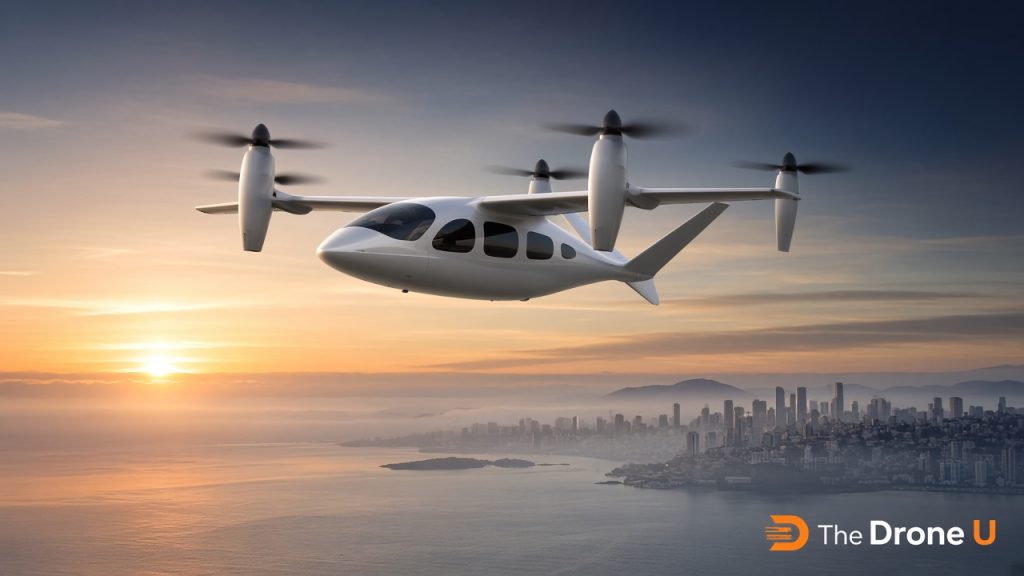
Most U.S. coverage of air taxis focuses on Joby and Archer. In China, a newer player is going after a bigger cabin. Blue Vector, the company behind the SKYLA brand, is preparing its six-seat, all-electric SKYLA V30 tiltrotor for a first flight before the end of 2026. The aircraft has been getting attention since it appeared at a major trade expo in Hangzhou, and HoverNews highlighted it in a piece last week. One correction to that coverage: the full-size V30 has not flown yet.
According to the company, the V30 is a six-seat tiltrotor eVTOL in the roughly two-ton class. It is designed for intercity trips, especially routes that are cut off by mountains or water, where a short flight can replace a long drive. Like other tiltrotors, it takes off and lands vertically like a helicopter, then tilts its rotors forward to cruise on a wing like an airplane. Published specifications include:
At the 5th Global Digital Trade Expo in Hangzhou in late September, a Blue Vector marketing staffer told a Chinese reporter that a trip from Shanghai to Ningbo, which takes three to four hours by car, would take about 40 minutes in the V30. Treat that as a design goal, not a demonstrated result.
The company’s own timeline describes steady progress:
This is an early-stage program. A rolled-out demonstrator still has to fly, transition between modes safely and then go through a full certification process with Chinese regulators before it carries a paying passenger. Yicai Global reported that executives at the Hangzhou show repeatedly said safety and certification come before commercial service.
Chinese companies are moving quickly from one- and two-seat multicopters to larger aircraft that can carry enough people to make the economics work. More seats spread the cost of a pilot, batteries and vertiport fees over more fares. Tiltrotors go faster and farther than pure multicopters but are harder to engineer, especially in the transition between hover and cruise. Whether Blue Vector hits its year-end first flight is worth watching as a sign of how fast China’s advanced air mobility sector is maturing.
Passenger eVTOLs and your quadcopter are related technology. Both rely on distributed electric propulsion, fly-by-wire control and battery management, and the people who will operate, maintain and supervise air taxis are coming out of today’s drone industry. Low-altitude airspace is also getting busier, and as eVTOL routes are approved here, drone pilots will need to understand how vertiports, air traffic and their own operations fit together. That starts with the airspace system covered on the Part 107 test. Drone U’s Part 107 test prep course walks you through it, and students have been known to take the online course in 3 days and pass the test.
Sources: SKYLA, SKYLA V30 A/C01 Rolls Off the Production Line; SKYLA, SKYLA V30 Wins First Prize at the 11th “Maker China” competition; Yicai Global, Chinese eVTOL Makers Unveil New Models at Hangzhou Event; Modern Express via Sohu; HoverNews.
 0