

Red Cat Pulls Its 2026 Revenue Target as Defense Drone Orders Lag

November 19, 2026
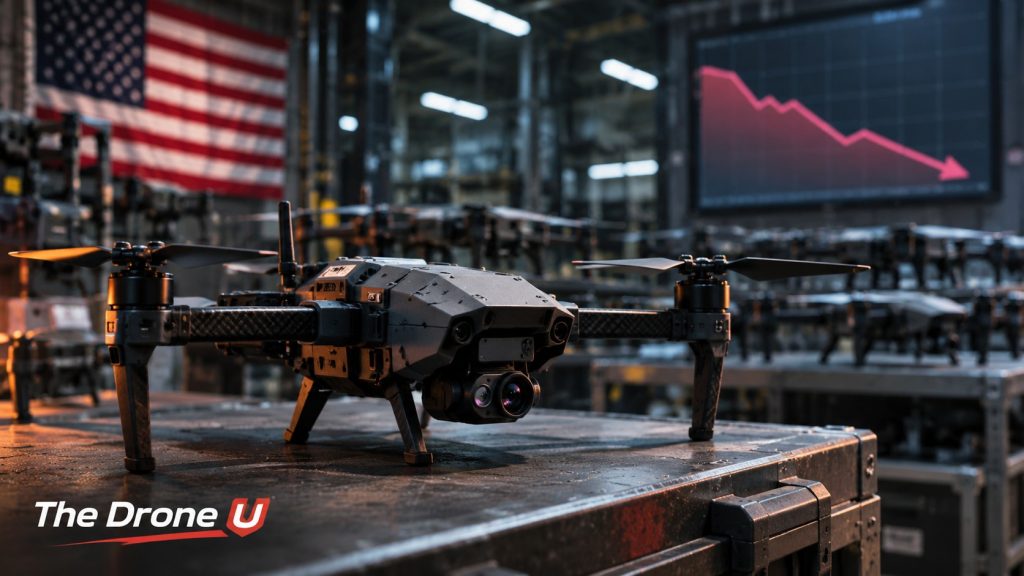
One of the best-known U.S. military drone makers just showed how hard it is to turn Pentagon enthusiasm into actual orders. Red Cat Holdings, parent of Teal Drones and FlightWave Aerospace, has withdrawn its full-year 2026 revenue target. In its third-quarter results release on Nov. 16, the company said funding and contract awards have moved more slowly than expected and that the outcome of the Pentagon’s Drone Dominance Gauntlet II competition “removed an anticipated contributor” to near-term revenue. DroneLife reported the move on Nov. 18.
Red Cat reported third-quarter revenue of $11.8 million, up 22% from a year earlier, and $47.4 million for the first nine months of 2026, up 227%. As recently as August, in its second-quarter release, the company reaffirmed a full-year target of $150 million to $180 million. Hitting even the low end would have required more than $100 million in fourth-quarter revenue, nearly nine times what it booked in the third quarter.
The company isn’t short on cash. It ended September with $242.7 million in cash, $117.2 million in inventory and $486.5 million in total assets. Red Cat said uncertainty around defense funding, procurement decisions, customer acceptance and delivery schedules makes it hard to predict when revenue will land, and that its focus is on “converting opportunities into funded orders.”
The Pentagon’s Drone Dominance Program is meant to buy large numbers of low-cost, U.S.-made small drones through a series of competitive “Gauntlet” rounds, where military operators fly the aircraft and the best performers earn production orders. Red Cat’s release doesn’t say how its entries fared in Gauntlet II, only that the result took away expected near-term revenue. For companies that build inventory and factory capacity ahead of orders, a single missed round can reshape a year.
The program has kept moving. Its reusable bomber round, Gauntlet 2.5, opened Nov. 13 at Camp Grayling, Michigan, with eight finalists, none of them Red Cat. Separately, the Army’s new Manufacturing Rodeo is asking industry for 400 FPV attack drones at up to $3,000 each by March 2027.
Red Cat listed a long run of business moves in the quarter. It combined Teal Drones and FlightWave into a single unit called Red Cat Aerial. Its Blue Ops maritime division received its first U.S. government purchase order for B-26 uncrewed surface vessels and signed autonomy and testing partnerships with HavocAI, Sine Engineering and Florida Atlantic University’s Harbor Branch Oceanographic Institute. It launched a public purchase offer for Austrian engine maker Steyr Motors. The release also highlights that Apium’s collaborative autonomy software advanced to Crucible 4 of the Department of War’s Swarm Forge effort as part of Anduril’s team, with further demonstrations beginning in January 2027.
“Our focus is now on converting this expanded portfolio and customer engagement into orders, deliveries and improved financial performance,” chairman and CEO Jeff Thompson said.
Red Cat’s Black Widow is one of the small drones built for U.S. military reconnaissance, and the company is often named as a domestic alternative to Chinese aircraft. Its forecast reset is a reminder that “Buy American” momentum doesn’t automatically translate into steady orders, and that U.S. drone makers’ finances can swing on a single government decision. For commercial and public safety pilots weighing a switch away from DJI, it’s worth asking about a manufacturer’s financial footing, parts supply and long-term support, not just specs and price.
For pilots, the defense boom is creating demand for people who can fly, test, train others and maintain systems. A Part 107 certificate is often the baseline credential. Drone U’s Part 107 course can get you there.
Sources: DroneLife (Miriam McNabb, Nov. 18, 2026); Red Cat Q3 2026 results release (Nov. 16, 2026); Red Cat Q2 2026 results release (Aug. 2026).
 0
