

The Best Drone Investment This Black Friday Isn’t a Drone. It’s You.

November 20, 2026
Why the DJI restrictions, FCC uncertainty, and changing drone industry make professional training more valuable than ever.
Every Black Friday, drone pilots across America start looking for the next great deal.
A new drone. A better camera. Another battery. Maybe that fancy piece of equipment they’ve been eyeing for six months.
And look, I get it. I love drones. I’ve spent my career flying them, testing them, breaking them, fixing them, and figuring out how to get more out of them.
But this Black Friday, I’m going to challenge you to think differently.
The best investment you can make in the drone industry right now isn’t another drone. It’s yourself.
And considering what’s happening with DJI, the FCC, and the future of the American drone industry, I would argue that investing in your own capabilities has never been more important.
Not just any investment in education, either.
The right investment.
Because there’s a massive difference between buying information and actually developing the skills that will make you money.
Let’s talk about the elephant in the room.
On December 22, 2025, the FCC added foreign-produced drones and certain critical components to its Covered List, creating significant restrictions on new equipment authorizations. In January 2026, the FCC clarified exemptions for certain categories of aircraft and components, while DJI filed a petition challenging the agency’s action.
And the situation hasn’t exactly gotten simpler.
Throughout 2026, additional FCC proceedings have raised questions about equipment authorizations, importation, marketing, and the future availability of certain aircraft. DJI has continued fighting the restrictions, including taking its dispute into federal court.
Importantly, this is not a blanket prohibition on flying DJI drones that Americans already legally own. Existing previously authorized aircraft have not suddenly become illegal to operate simply because of the Covered List action.
But that doesn’t mean business as usual.
The regulatory uncertainty surrounding future aircraft, components, and equipment availability is real.
And what does that mean for you?
It means that the drone industry is changing. The aircraft you know today might not be the aircraft you’re flying tomorrow.
You may find yourself transitioning between manufacturers, learning entirely different flight-control systems, operating without the familiar automation you’ve come to rely on, or being asked to fly aircraft with significantly different capabilities.
And when that happens, what will separate the professionals from everyone else?
Fundamental flight skills. Situational awareness. Risk management. Decision-making. And the ability to perform under pressure.
Those aren’t things you automatically get when you buy a more expensive drone.
They’re things you learn through experience and the right instruction.
Let’s get something straight.
Having your FAA Part 107 certification doesn’t make you a professional drone pilot.
It means you’ve demonstrated the aeronautical knowledge required to obtain a remote pilot certificate.
That’s important. It’s necessary for most commercial drone operations. But it’s only the beginning.
Students have been known to take Drone U’s online Part 107 course in 3 days and pass the test.
Passing a written examination doesn’t mean you know how to operate an aircraft in difficult conditions.
It doesn’t mean you know how to recover from orientation loss.
It doesn’t mean you understand how to identify a failing battery before it becomes an emergency.
It doesn’t mean you can operate safely around infrastructure, manage a complicated flight operation, or deliver professional work when a client is standing over your shoulder wondering why you’re taking so long.
And it certainly doesn’t mean you know how to build a profitable drone business.
Here’s something I’ve learned after years of working in this industry:
The pilots who make serious money aren’t necessarily the pilots who own the most expensive drones. They’re the pilots who have the highest attention to detail, make good decisions, and consistently deliver results.
Those habits come from training, repetition, standards, and mentorship.
Not from passing a test.
This might upset a few people, but frankly, it needs to be said.
Just because someone has a YouTube channel and knows how to operate a drone doesn’t mean they’re qualified to teach you how to become a professional pilot.
There’s an enormous difference between someone who can explain what a button does and someone who can teach you what to do when everything starts going wrong.
You don’t need an instructor who’s simply reading out of a manufacturer’s manual.
You don’t need someone who learned a few camera settings last month and now wants to sell you a masterclass.
And you certainly don’t need someone who’s never faced real-world operational pressure trying to tell you how to handle it.
You need an instructor who’s actually lived the drone life.
Someone who’s flown in different environments, under different circumstances, using different aircraft.
Someone who’s worked with demanding clients, completed real commercial jobs, dealt with equipment failures, and made difficult decisions when the stakes were high.
Someone who’s experienced adversity and understands how quickly a seemingly simple drone operation can become complicated.
But there’s another part of this equation that’s equally important.
That person needs to be a great educator.
Because being a great pilot doesn’t automatically make you a great instructor.
The best instructors are outstanding communicators. They understand how people learn. They know how to break down difficult concepts and make them understandable.
They create sayings, routines, procedures, and exercises that stick in your head.
Why does that matter?
Because when you’re standing in the field, the wind is picking up, something isn’t behaving correctly, and your brain starts getting overloaded, you don’t need to remember a 45-minute YouTube video.
You need to remember a simple principle that helps you make the right decision immediately.
That’s the difference between consuming information and developing operational competence.
At Drone U, we’ve trained more than 10,000 people in person.
Think about what that means.
When you’ve trained that many people, you start recognizing patterns that most instructors will never see.
You learn where people struggle.
You learn why they struggle.
You learn how to correct mistakes before those mistakes become expensive.
You learn which explanations work and which ones don’t.
You learn how to make a complicated skill feel simple without compromising the seriousness of the operation.
And most importantly, you learn how to dramatically shorten the learning curve.
That’s something an instructor who’s only worked with a handful of students simply cannot replicate.
It’s the benefit of thousands upon thousands of real-world interactions, teaching moments, mistakes, corrections, and successful outcomes.
And that’s exactly what you should be paying for when you invest in professional education.
Not a collection of videos.
Not a personality.
Not a slick website.
You’re investing in experience that would otherwise take you years to acquire on your own.
Here’s a challenge for anyone shopping for drone training this Black Friday.
Before you buy another course, start asking better questions.
Can your instructor teach you how to perform a meaningful battery test before takeoff?
Can they explain what to do when you experience orientation loss and your aircraft no longer responds the way your brain expects?
Can they teach you how to recognize a developing emergency before it becomes an accident?
Can they explain how to manage risk when operating around utility infrastructure?
Can they teach you to fly with precision, maintain spatial awareness, and operate when your aircraft’s automated systems aren’t going to save you?
Can they show you how to manage a client, price a job, deliver professional data, and turn your flying skills into consistent income?
And perhaps most importantly:
Have they actually done these things themselves?
Not simulated them for a video.
Not read about them.
Actually done them.
Because specificity matters.
Anyone can tell you to be safe.
A real instructor can tell you exactly what safe looks like, how to measure it, and how to repeat it.
Anyone can tell you to practice.
A real instructor can give you a structured series of exercises designed to develop specific skills, measure your improvement, and identify your weaknesses.
Anyone can tell you to start a drone business.
A real mentor can explain the problems you’re going to face before you encounter them, because they’ve already been through them.
That’s what professional training should look like.
There’s a reason organizations operating in high-consequence environments take training so seriously.
When you’re working around electrical infrastructure, critical facilities, expensive equipment, or complicated industrial environments, mistakes have consequences.
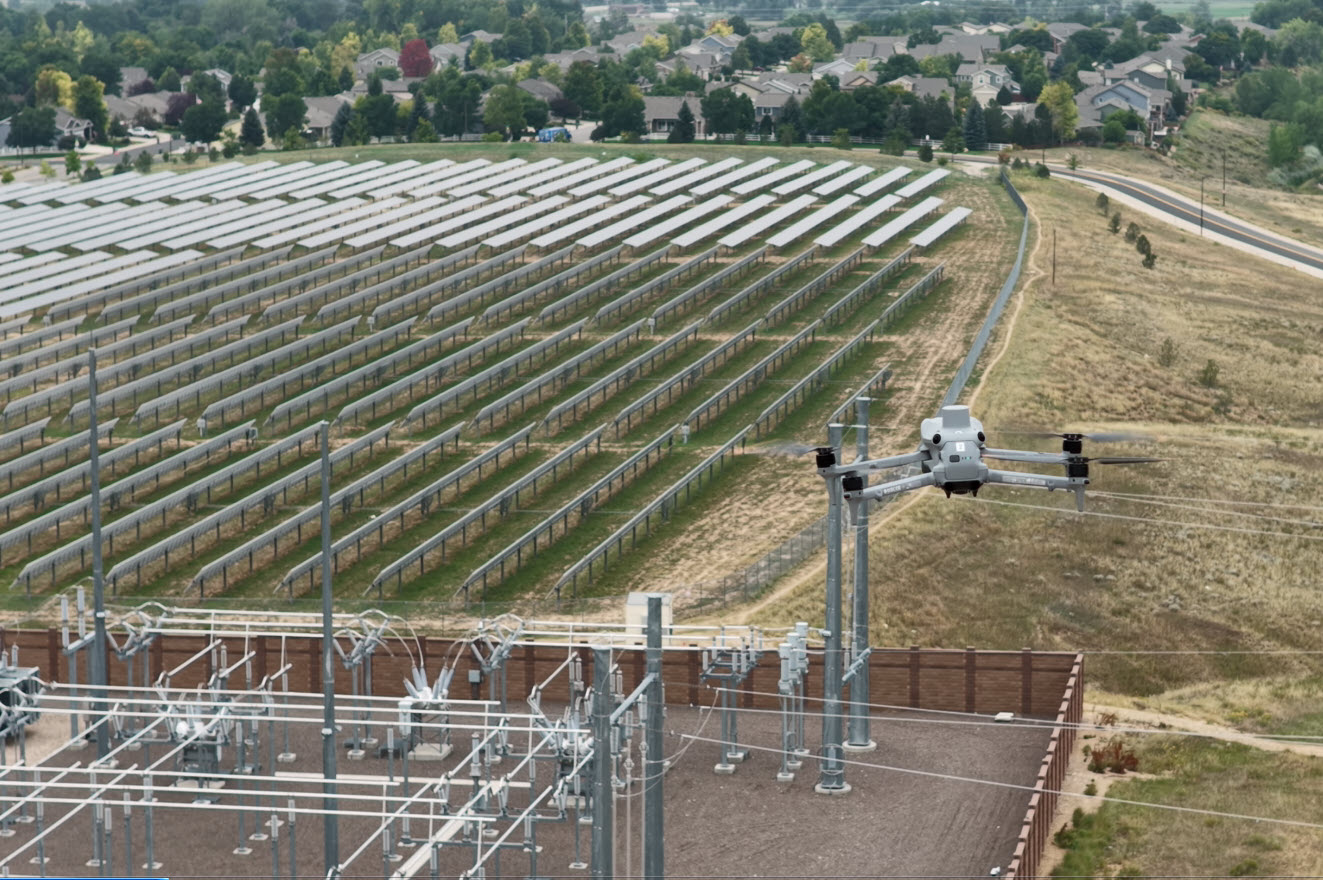
These organizations don’t just need someone who can launch a drone and collect imagery.
They need people who understand operational discipline.
They need pilots who follow procedures, communicate clearly, recognize hazards, and consistently demonstrate proficiency.
And they need training systems that can develop those capabilities across large groups of people.
That’s where Drone U has built its reputation.
We’ve spent years developing drone programs, working with utilities, training professional operators, and creating structured systems for developing safe, capable pilots.
We’ve worked with small drone programs trying to get off the ground and large organizations trying to standardize operations across numerous pilots and locations.
We’ve seen what works.
We’ve seen what fails.
And we’ve used those lessons to continually improve how we train people.
Our Flight Mastery programs aren’t built around watching someone else fly.
They’re built around you actually flying.
Performing exercises.
Making decisions.
Learning to recognize mistakes.
Developing spatial awareness.
Improving your precision.
Understanding your aircraft.
And demonstrating that you can perform, not merely that you attended.
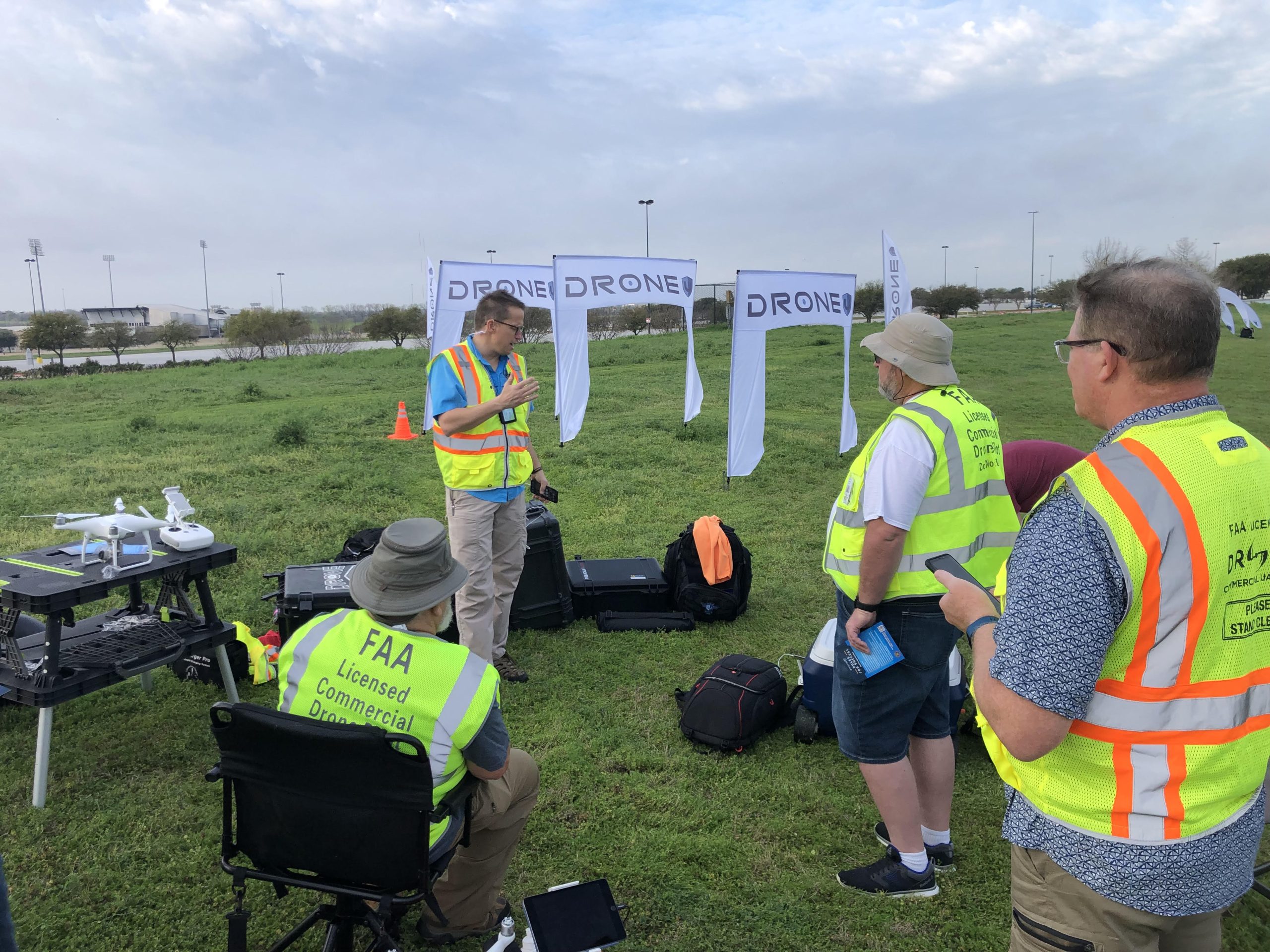
We integrate structured flight exercises, practical emergency procedures, and measurable performance standards because that’s how you create consistent capabilities.
And those same principles apply whether you’re an individual trying to get your first professional drone job or an enterprise organization responsible for dozens of pilots.
The standard doesn’t change just because the size of the customer changes.
That’s one of the biggest differentiators between professional training and the endless supply of online content.
We’re not just teaching people what drones can do.
We’re teaching them how to operate professionally.
I firmly believe that great pilots are developed through experience, repetition, and adversity.
You can learn a lot when everything goes right.
But you learn even more when things go wrong.
When the wind changes.
When your aircraft doesn’t respond as expected.
When you lose your orientation.
When your original flight plan no longer makes sense.
When you’ve got a client expecting a deliverable and you have to make the professional decision to stop flying.
That’s where judgment comes from.
And good training should expose you to controlled challenges that develop that judgment before you encounter a real emergency.
I’ve said this for years: the goal isn’t simply to make drone flying easier.
The goal is to make pilots better.
That’s why we emphasize hands-on exercises, operational discipline, and the development of repeatable skills.
Because the real world doesn’t care how many hours of online training you’ve watched.
It cares whether you can perform.
And your clients care about exactly the same thing.
One of the biggest problems in the drone education industry is how easy it has become to look like an expert.
Build a website.
Create some videos.
Put together a few courses.
Talk about professional training, safety, and enterprise operations.
Suddenly, you’re an authority.
But are you?
I’ve watched training concepts, terminology, and approaches that Drone U has spent years developing show up across the industry.
And that’s fine. Good ideas spread.
But copying the language of a training program isn’t the same as understanding how to deliver its results.
That’s why I encourage you to do your homework.
Look at the instructors.
Look at their operational backgrounds.
Look at the work they’ve actually performed.
Look at the companies they’ve helped.
Look at their training methodology.
Look for measurable outcomes.
And find out whether they can actually explain the details behind the promises they’re making.
Don’t confuse effective marketing with effective instruction.
There are excellent educators creating online content, and online education absolutely has a place in the learning process.
But watching someone perform a difficult maneuver isn’t the same as having an experienced instructor standing beside you, observing your mistakes, correcting your technique, and helping you master that maneuver yourself.
That distinction is everything.
You don’t need someone who’s good at selling you the dream. You need someone who knows how to help you achieve it.
Here’s the philosophy that should guide every dollar you spend on drone education:
Outcomes lead to incomes.
It’s really that simple.
If you’re investing in education, ask yourself what that education is actually going to help you accomplish.
Will it make you a safer pilot?
Will it make you more capable?
Will it give you a skill that employers actually value?
Will it help you complete jobs faster, more accurately, and more profitably?
Will it open the door to higher-paying opportunities?
Will it help you build a business that customers trust?
Because those are the outcomes that matter.
A new drone might give you a better camera.
A new sensor might expand the types of work you can perform.
But professional training can improve your ability to use every aircraft and sensor you own.
And that value compounds over time.
The skills you develop today can serve you through multiple generations of aircraft, different manufacturers, changing regulations, and entirely new business opportunities.
Think about that for a second.
Your favorite drone today may be obsolete in a few years.
But your ability to manage risk, fly precisely, communicate professionally, and deliver excellent work can remain valuable for decades.
That’s an investment worth making.
The drone industry is at an inflection point.
Regulatory uncertainty is changing the equipment landscape.
Enterprise customers are demanding greater professionalism.
And as the industry matures, the difference between a person who owns a drone and a person who can professionally operate one is becoming increasingly important.
So before you spend another thousand dollars on a drone, ask yourself a question.
Would that money create more value if you spent it becoming a better pilot?
Would you benefit more from another aircraft sitting in your equipment case, or from learning how to generate more revenue with the aircraft you already own?
Would a new accessory improve your career more than having a professional instructor identify the mistakes holding you back?
For a lot of people, the answer is obvious.
And I want to leave you with one more thought.
The day we stop learning is the day we start falling behind.
I’ve spent years in this industry, and I’m still learning.
New aircraft. New applications. New regulations. New workflows. New challenges.
That’s part of what makes this industry so exciting.
But it also means that standing still isn’t really an option.
So this Black Friday, don’t just invest in equipment.
Invest in becoming the kind of pilot that companies want to hire, clients want to work with, and other pilots respect.
Invest in an education built on real-world experience.
Invest in instructors who have already faced the challenges you’re preparing to encounter.
Invest in skills that transfer from one aircraft to another, one job to another, and one opportunity to the next.
Because at the end of the day, your greatest asset isn’t your drone.
It’s your ability to use it.
And that’s something no FCC ruling, manufacturer restriction, or technological change can take away from you.
Invest in yourself. Invest in real skills. Invest in outcomes that lead to income.
That’s what we believe at Drone U.
And that’s exactly what we’ve built our training programs to deliver.
More Black Friday reading from Drone U: Best Black Friday 2026 Drone Deals: Learn Your Aircraft This Year, How to Treat the Drone Pilot in Your Life This Black Friday, and Best Drone Training Black Friday Deals: Pilot Institute vs. DroneU.
At Drone U, we don’t believe professional training should stop at passing an exam.
From FAA Part 107 preparation and hands-on Flight Mastery to advanced mapping, 3D modeling, aerial photography, and enterprise drone operations, our programs are designed to help pilots turn knowledge into measurable capabilities.
Whether you’re just starting your journey, trying to build a profitable drone business, or looking to advance your career in professional drone operations, we want to help you reach the next level.
Explore Drone U training and invest in the skills that will move your career forward.
Because the best Black Friday investment isn’t what you buy. It’s who you become.
 0
