

Badland Batteries Opens UAS Battery Plant in Fargo: Why Domestic Packs Matter

October 14, 2026
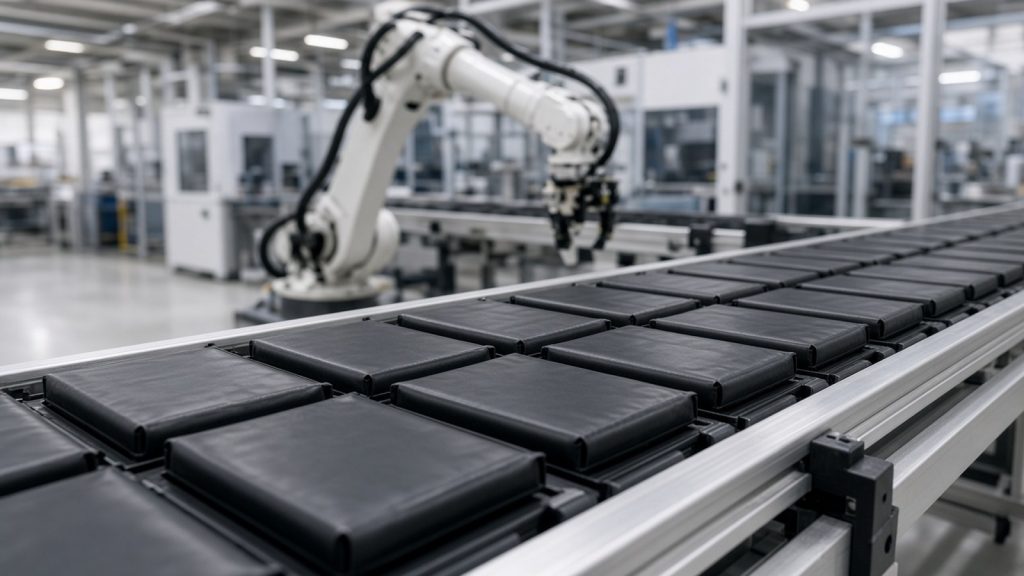
American-made drones need American-made cells. Badland Batteries says it just opened a plant built for that problem: an 80,000-square-foot UAS battery plant in Fargo, North Dakota—lithium-ion pouch cells aimed at unmanned aircraft, defense platforms and other autonomous systems.
The company held its grand opening on October 8. DroneLife and local coverage picked the story up this week, and the timing matters for pilots and program managers who are already shopping past Chinese airframes and parts.
According to Packet Digital, Badland Batteries’ parent messaging, the new plant combines automated and manned lines to manufacture lithium-ion pouch cells. Once cells are finished, packs are assembled at a nearby manufacturing site about a mile away. The company says the facility can scale past 15,000 cells per day as demand grows.
CEO Terri Zimmerman framed the opening as a supply-chain move, not just a ribbon cutting: America should build its own batteries for the autonomous systems that matter to national security. Sen. John Hoeven, who attended the event, said he has secured more than $50 million in federal funding over six years to advance Packet Digital’s battery work in North Dakota—$52.6 million from the U.S. Navy in his own press release—and called the plant the first battery cell factory in the Upper Midwest and the largest UAS-specific cell factory in the nation.
Those are company and congressional claims. Treat capacity and “largest” language as self-reported until independent production figures are public.
Badland Batteries says more than 80% of the batteries and critical materials used in autonomous systems are made overseas. That figure is the company’s, and it tracks the same concern driving Blue UAS lists, NDAA restrictions and the FCC’s Covered List actions against certain foreign drone producers.
For Part 107 operators, the battery story usually shows up as a procurement headache:
A U.S. cell plant does not rewrite Part 107. It does change what “American-made” can mean when a sheriff, utility or inspection company writes a purchase order.
Procurement rules are shifting faster than the flight rules, but the flight rules still start with a solid Part 107 foundation. Our Part 107 online course keeps the operating side clear while the hardware supply chain keeps moving.
Badland Batteries’ Fargo plant is a concrete bet on domestic UAS energy storage: pouch cells for drones and defense, assembled nearby, aimed at customers who can no longer treat foreign batteries as a default. Whether it changes your next aircraft buy depends on price, performance and certification paths—but the factory itself is no longer a slide deck. It is open.
Sources: Packet Digital / Badland Batteries announcement; Sen. John Hoeven press release; DroneLife
 0
0
