
The Best Underwater Drones in 2026: ROV and UUV Buyer’s Guide

June 6, 2026
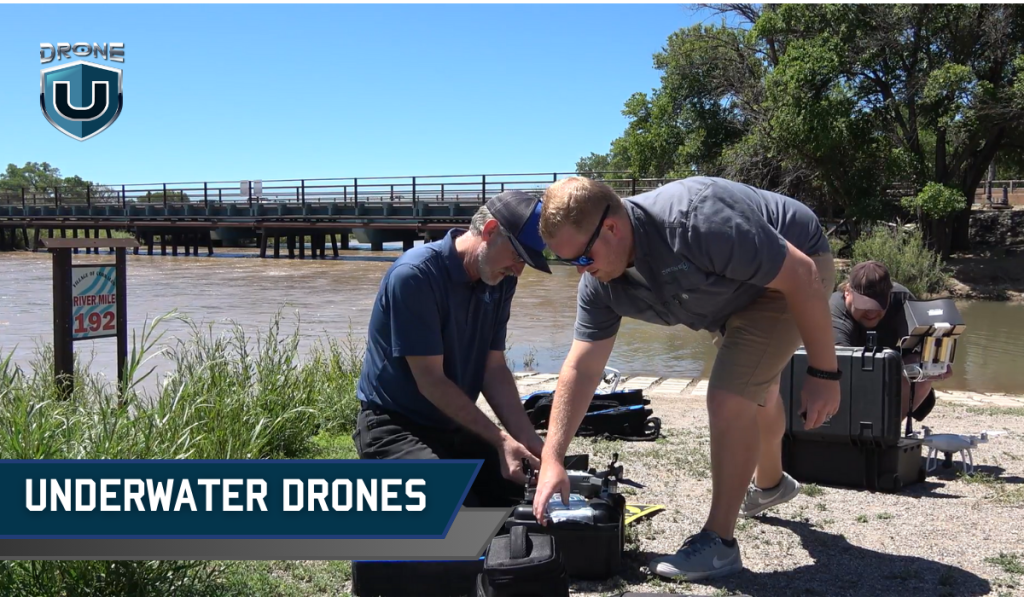
Quick Answer: Best Underwater Drones in 2026An underwater drone, also called an ROV (Remotely Operated Vehicle) or UUV (Unmanned Underwater Vehicle), is a remotely controlled submersible that transmits live video from below the water surface. It navigates using thrusters and stays connected to the surface via a tethered cable. Best overall value: CHASING M2 Pro (~$3,500 to $5,500 depending on package): 150m depth, 8 vectored thrusters, Sony 4K camera, swappable battery Best for beginners: CHASING Dory (~$299): compact, smartphone-controlled, 15m depth Best for professionals: QYSEA Fifish PRO W6: 350m depth, 4K HDR, sonar, robotic arm Best budget: CHASING Gladius Mini S (~$649): 100m depth, 4K camera, 2-hour battery Best for fishing: PowerVision PowerRay Wizard: sonar fish finder, bait drop, 4K camera Note: Tether management is the most common frustration for new underwater drone users. Always deploy and retrieve the tether slowly and avoid operating near structures where the cable can snag. |
An underwater drone is a remotely controlled submersible vehicle that transmits live video from below the water surface. Unlike aerial drones, underwater drones navigate using thrusters and maintain connection to the operator via a tethered cable.
In 2026, consumer models reach depths of 100 to 200 meters while professional platforms exceed 1,000 meters.
Autonomous Underwater Vehicle (AUV) development began in the 1950s and has seen continuous advancements. Here’s a timeline of some key milestones:
The first AUV, classified as an unmanned underwater vehicle (UUV), emerged in the United States in 1957. The University of Washington designed the Special Purpose Underwater Research Vehicle (SPURV) to gather oceanographic data in Arctic waters.
The 1980s witnessed the merging of ROV (Remotely Operated Vehicle) technology with AUV capabilities. In 1983, ISE Ltd. and International Submarine Engineering collaborated to create the Autonomous and Remote Controlled Submarine (ARCS).
The 1990s marked a shift towards longer-term underwater exploration with the introduction of solar-powered AUVs. The credit goes to the Russian Institute of Marine Technology Problems, which introduced the Solar Autonomous Underwater Vehicle (SAUV) in 1987. Furthermore, the development of gliders in 1995 revolutionized AUV technology by allowing underwater submergence for weeks or even months at a time, thanks to extended battery life.
The 2000s saw a surge in AUV usage beyond mere testing tools. The growing international user base and increased funding for AUV development led to commercial sales. This shift expanded the scope of AUVs from research-based applications to industrial and commercial uses.
In recent years, a renewed focus has been placed on the military applications of AUVs. Following the successful use of unmanned surface vehicles (USVs) by Ukraine in the Black Sea in 2022, the Ukrainian Navy adopted the Toloka TLK-150, a small robotic submarine, in early 2023.
In April 2024, Ukraine announced testing of an “unmanned submarine” capable of carrying divers, torpedoes, and missiles, and featuring extended range and endurance.
Unmanned underwater vehicles (UUVs) are uncrewed underwater robots that navigate and operate without requiring a human pilot on board.
These powerful vehicles come in two main categories: remotely operated underwater vehicles (ROVs) and autonomous underwater vehicles (AUVs).
ROVs are connected to a control station or ship by a cable. This cable supplies power, allows for communication, and even transmits a live video feed to the operator. This tether allows for precise human control over the ROV’s movements and actions, making ROVs ideal for situations requiring real-time decision-making such as pipeline inspection and underwater search and rescue.
AUVs are self-directed vehicles. They operate on their own, without a cable linking them to the surface. They are pre-programmed with specific mission instructions and rely on built-in sensors and computer systems to navigate, collect data, and complete tasks autonomously.
AUVs are valuable for gathering data over large areas or for venturing into deep or hazardous environments where human operation might be impractical or risky. They are increasingly being used for tasks like oceanographic mapping, environmental monitoring, and underwater exploration.
Underwater drones move through water using electric thrusters, which are small propeller-driven motors that can be positioned to push the drone in any direction. Some drones also use buoyancy engines that inflate or deflate to control depth without relying solely on thruster power.
Navigating and controlling an underwater drone is a complex task due to the challenges posed by the marine environment. Underwater drones employ a range of sensors to gather data about their surroundings and position, including:
This sensor data is processed by onboard guidance systems, which use advanced algorithms and control systems to determine the drone’s position, plan its path, and issue commands to the propulsion systems.
Radio waves do not travel well underwater. Instead, drones use acoustic modems that convert information into sound waves for transmission. Acoustic modems work over long distances but have lower bandwidth than radio-based systems.
For applications requiring a reliable, high-bandwidth connection, tethered cables provide stable power and communication. The trade-off is reduced operational range.
Underwater drones can be equipped with various payloads and instruments to perform specific tasks and gather data.
Common payloads include:
These payloads can be customized and integrated into the drone based on the specific mission requirements, enabling a wide range of applications in various domains.
Here are the eight best underwater drones in 2026, covering professional, prosumer, and beginner platforms.
 Credit: Deep Treker
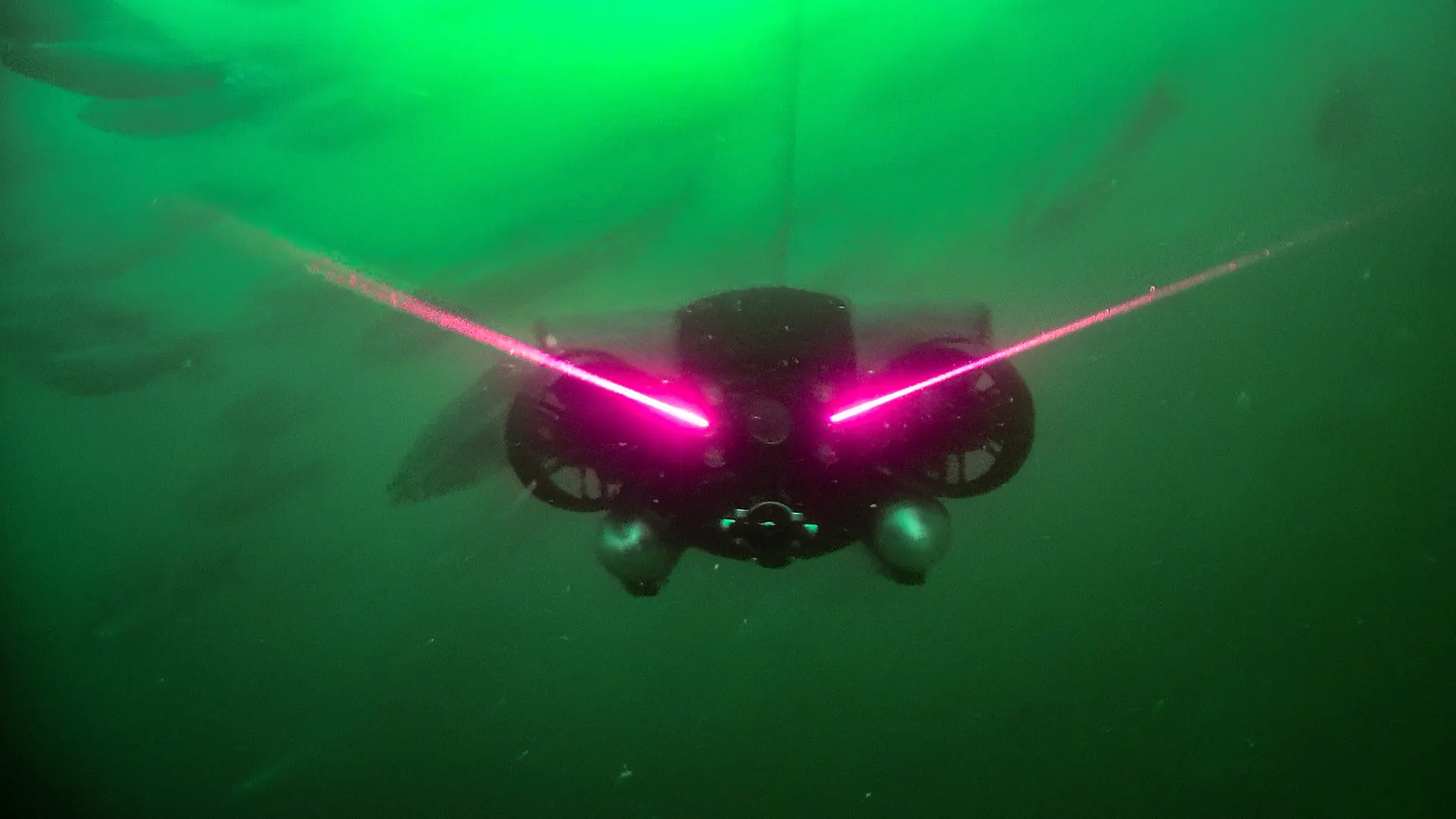
Deep Trekker’s REVOLUTION ROV is the ultimate deep-water explorer designed for underwater inspections and surveys, delicate target retrieval missions, and heavy-payload transportation under harsh conditions.
 Credit: Chasing
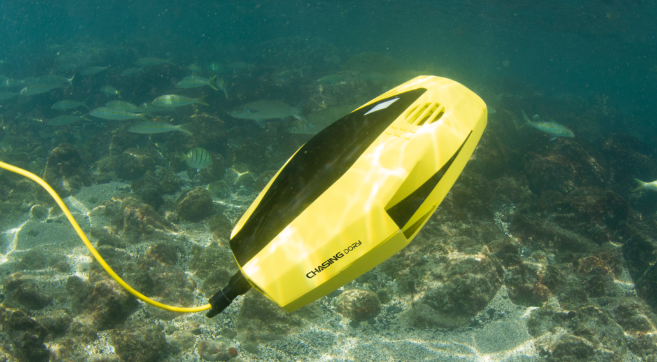
The CHASING Dory is a compact, beginner-friendly underwater drone designed for shallow recreational exploration. This drone dives deep, letting you see a whole new world with its high-resolution camera. Powerful LED lights illuminate the underwater environment, bringing the vibrant details to life in stunning footage.
Source: CHASING Innovation
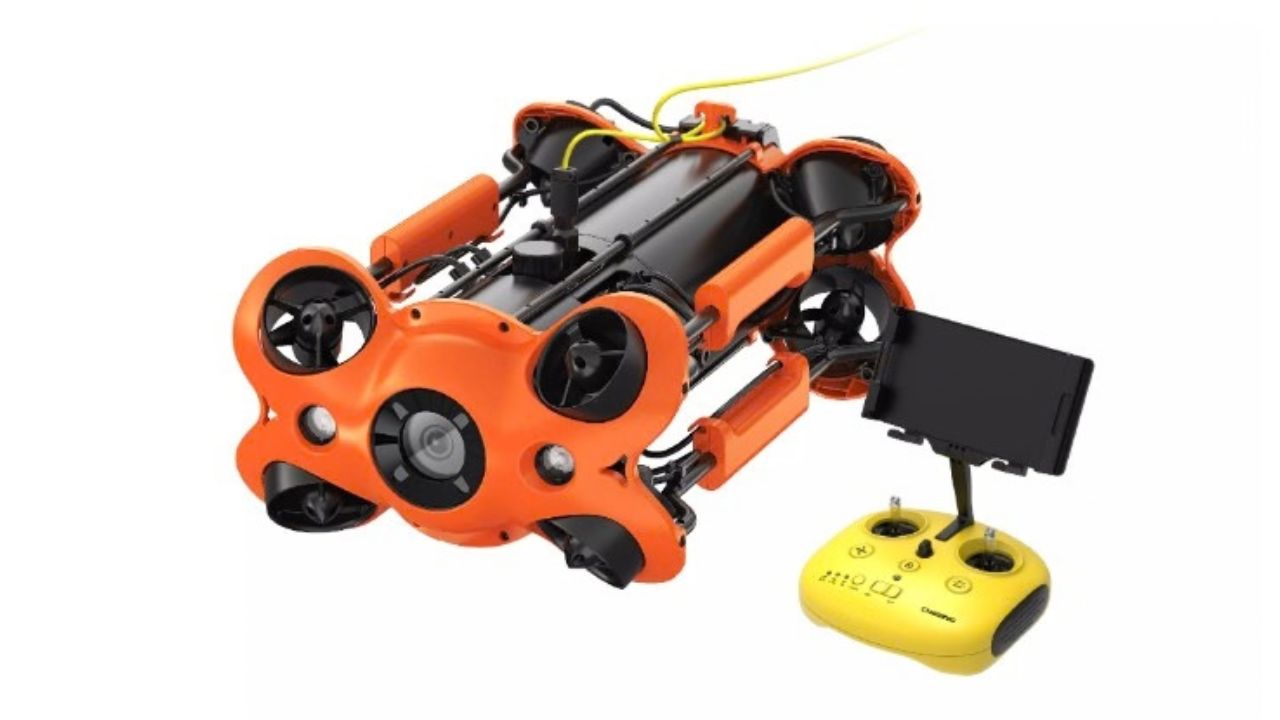
The CHASING M2 Pro sets a new standard in professional underwater drones, offering unparalleled performance, versatility, and ease of use. It is a light industrial ROV built for professional users who need more capability than consumer drones but do not need the expense of a full industrial platform.
Compared to the standard CHASING M2, the M2 Pro motor has been upgraded by 50%, with a maximum speed of 4 knots and a depth rating of 150 meters. The aluminum alloy compact body weighs less than 6 kg (13 lbs), allowing single-person operation and quick deployment in under 3 minutes.
For hull inspection, aquaculture monitoring, dam inspection, and scientific research, it is the most practical professional ROV available at this price point.
 Credit: QYSea
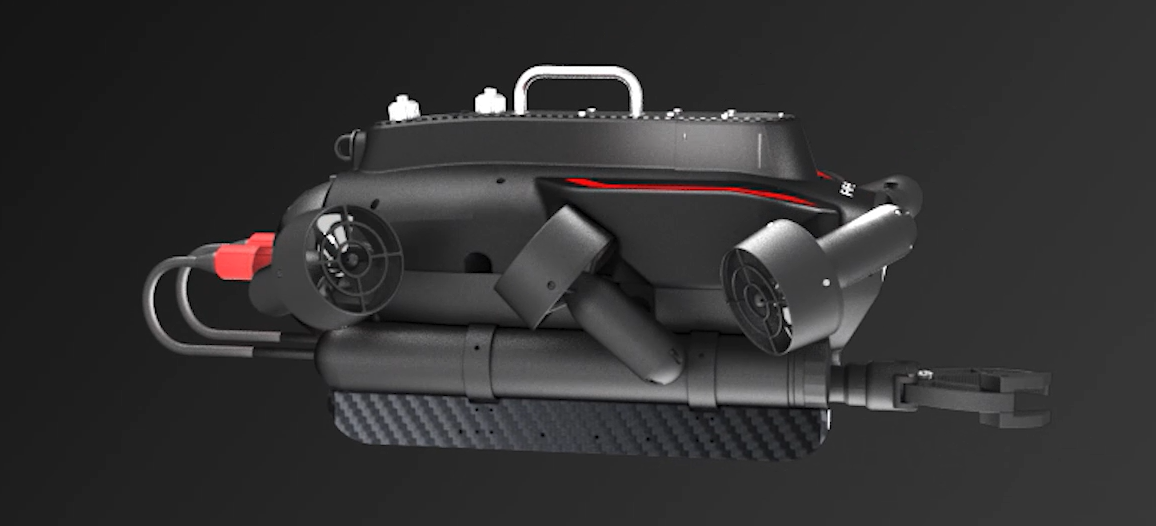
This industrial-grade ROV (Remotely Operated Vehicle) is built for professional use, capable of diving an impressive 1,148 feet (350 meters) underwater.
The Fifish PRO W6 is equipped with a high-tech 4K HDR camera, boasting a wide 166-degree field of view. Capture stunning, detailed footage of the underwater world in vibrant colors.
An advanced sonar system allows for 3D mapping and object detection, providing valuable data and a clear picture of your underwater environment.
 Credit: Powervision
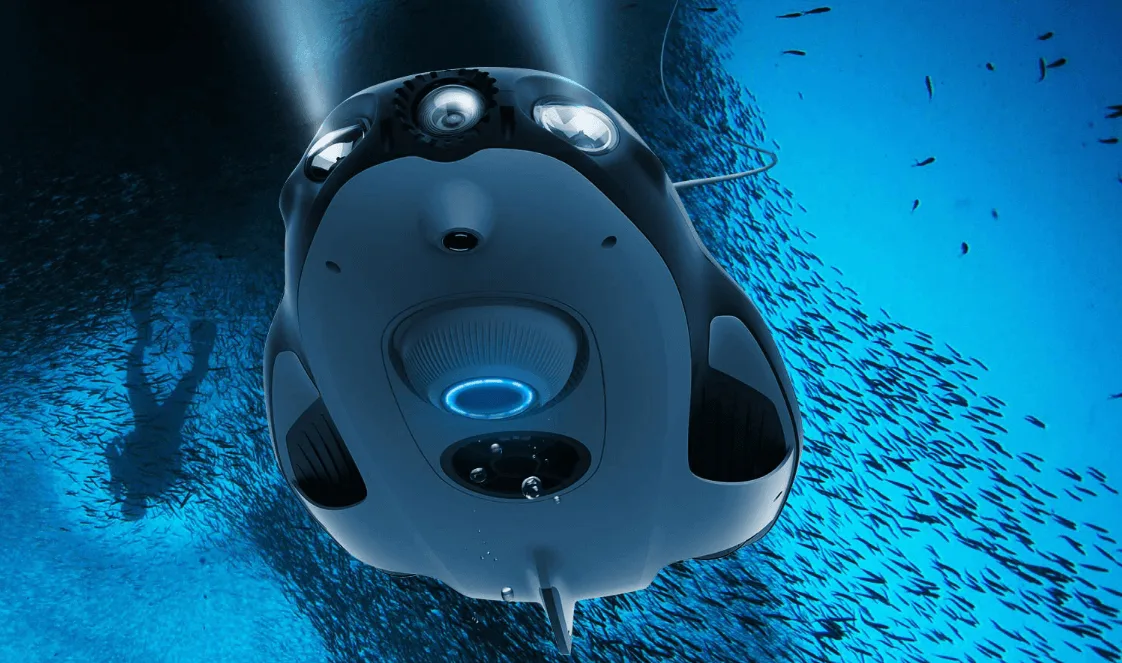
The PowerVision PowerRay Wizard is an underwater drone built specifically for fishing, combining sonar fish-finding capability, bait drop functionality, and 4K video in one platform.
This easy-to-use drone dives deep, letting you explore and see what lurks beneath the surface with its stunning 4K UHD camera.
The PowerRay Wizard has a built-in sonar fish finder, making it easier to locate schools of fish. Plus, it comes with a bait drop line, letting you deploy bait directly from the drone, setting the perfect trap.
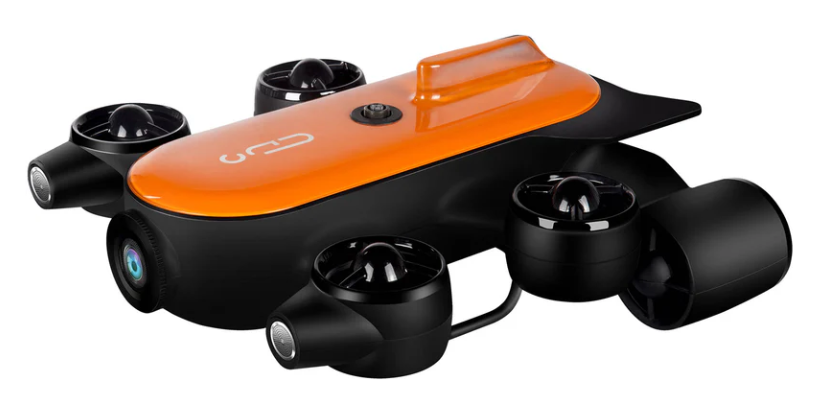
The Geneinno Titan is a mini-ROV (Remotely Operated Vehicle) designed for recreational and light professional use. This drone is a good option for underwater photography and videography. It has a 4K HDR camera with a 162-degree field of view, as well as a gimbal that helps to stabilize footage. It can also dive up to 100 meters (328 feet).
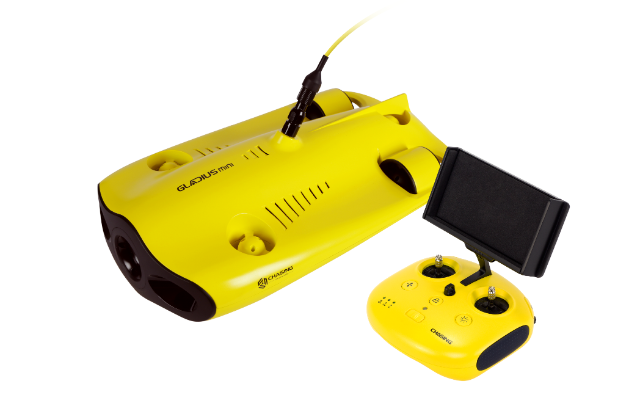
The CHASING Gladius Mini S is the current 2026 version of the Gladius Mini. It replaces the original Gladius Mini with improved thrusters and updated camera specifications.
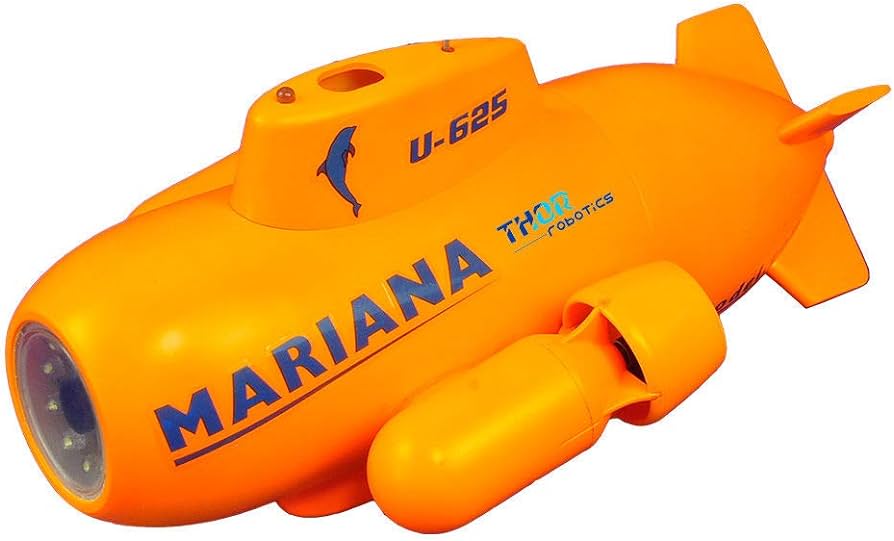
Compared to many underwater drones, the Mariana is a budget-friendly option. This makes it attractive for hobbyists or those new to exploring the underwater world.
The ThorRobotics Mariana is a mini Remote Operated Vehicle (ROV) designed for recreational use. It’s a good choice for casual exploration and underwater videography.
It boasts a 1080p HD camera, perfect for capturing crisp underwater footage. Infrared LED spotlights improve visibility in low-light underwater conditions. Two vector propellers provide good maneuverability, meaning you can navigate around reefs, wrecks, or other underwater structures with ease.
Here is a summary to help you choose the perfect underwater drone based on your exploration needs:
Deep Trekker’s REVOLUTION ROV: Best drone for underwater inspections and surveys, delicate target retrieval missions, and heavy-payload transportation.
CHASING M2 Pro: Best professional ROV for hull inspection, aquaculture monitoring, and industrial applications. 150-meter depth, 8 vectored thrusters, Sony 4K camera with EIS, and swappable battery system.
CHASING Gladius Mini S: A great all-rounder for capturing high-quality footage. The 2026 updated model with improved thrusters, suited for detailed recreational and light professional exploration.
Geneinno Titan: This option is ideal for professional use or serious underwater enthusiasts with its impressive depth capability.
PowerVision PowerRay Wizard: A top-of-the-line choice for stunning visuals, featuring a 4K camera and powerful lights to navigate even murky waters.
QYSEA Fifish PRO W6: Best professional platform for industrial inspection, scientific research, and deep water work up to 350 meters. Includes sonar, 3D mapping, and a robotic arm.
CHASING Dory: A user-friendly option with a good balance of features and affordability, perfect for beginners or casual explorers.
ThorRobotics Mariana: Best budget option for pools, ponds, and calm shallow water. Limited to 10 meters depth but ideal for first-time buyers entering the hobby.
Consider the depth you want to reach, the type of footage you desire, and your piloting experience to make your choice. With the ever-evolving technology in this field, underwater drones promise to open even more doors to exploration and discovery in the years to come.
 2
2
Add Your Comment