

Drone First Responder Programs: How DFR Works and How to Start One (2026)

January 16, 2025
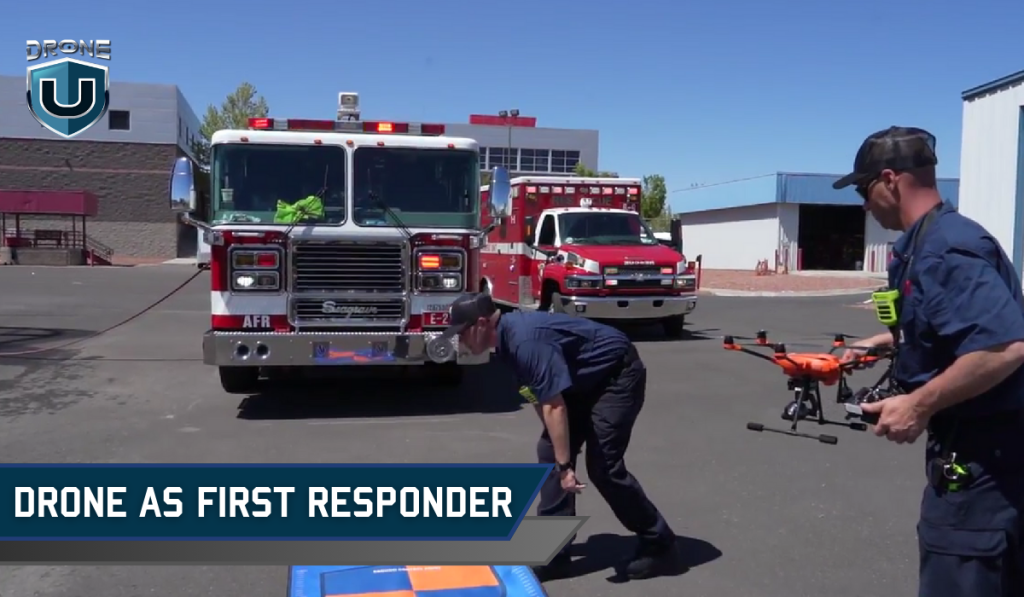
Updated October 2026. A 911 call comes in about a person with a weapon outside a convenience store. Before the first patrol car leaves the station, a drone lifts off a rooftop, flies straight to the address and streams live video to dispatchers and responding officers. In some cases, the drone shows there’s no threat at all, and nobody has to drive there.
That’s the idea behind the drone first responder program, usually called Drone as First Responder (DFR). This guide explains what DFR is, how these programs work day to day, what hardware and staff they need, what results agencies have actually reported, and how to start one.
If you’re looking for the regulatory detail on BVLOS waivers, COAs and the pending Part 108 rule, read our companion guide: DFR, BVLOS Waivers and Part 108: A Guide for Public Safety Drone Programs.
A drone first responder program sends a drone to emergency calls as they happen, often before ground units get there. That’s different from the traditional public safety drone, which an officer or firefighter carries in a vehicle and launches after arriving.
The concept was pioneered by the Chula Vista Police Department in California. Its program began flying to 911 calls on October 22, 2018 as part of the FAA’s UAS Integration Pilot Program.
Most programs follow the same basic workflow:
Because the aircraft flies beyond the remote pilot’s sight, DFR needs FAA authorization beyond standard Part 107 rules. Agencies have used Part 107 BVLOS waivers or public aircraft Certificates of Authorization (COAs). We cover those approval paths step by step here.
The best public data comes from Chula Vista, which publishes its flight logs. As of May 8, 2026, the department reported more than 25,000 DFR missions, including:
That last number is the one budget committees notice. Roughly one in five missions ended without a patrol car being sent, which frees officers for higher-priority calls.
The model is spreading. In San Diego County alone, El Cajon and Oceanside have started DFR programs and Carlsbad has been testing one, and agencies across the country are launching their own. Fire departments are also adding DFR for structure fires, brush fires and hazmat calls, where a quick aerial view helps the incident commander place resources.
Drones aren’t held up by traffic, stoplights or road layout. A drone flying a straight line from a central rooftop can often reach a call before a patrol car, especially in dense areas.
Officers who know ahead of time whether a suspect is armed, where they are, or that a “suspicious person” is actually a resident can approach more carefully. Firefighters can see hot spots and structural problems before they commit crews.
Many agencies are short on staff. If a drone can clear a false alarm or a call that has already gone away, that unit stays available for the next emergency.
Thermal cameras can pick up heat signatures in the dark, in brush or across open water. That helps find missing children, people with dementia who have wandered off, or suspects hiding after a pursuit.
Recorded flights document scenes as they happened. Chula Vista publishes a flight map for each mission, which has helped build community trust.
A DFR program is a system, not just an aircraft. Most include:
Procurement deserves extra care. Federal restrictions on certain foreign-made drones and components affect what many agencies can buy with grant money. Read our explainer, Is DJI Banned in the US?, before you choose a platform, and check your state’s own rules.
Today, every DFR program flies under an individual FAA approval. The FAA’s proposed Part 108 rule for routine beyond-visual-line-of-sight operations was published as an NPRM on August 7, 2025. As of late October 2026, the final rule is still under White House review and hasn’t been published. The FAA has said it hopes to publish by the end of 2026, but there’s no firm date. Until Part 108 is final and in effect, plan on today’s waiver and COA process. We track what Part 108 could mean for DFR in our companion guide.
A drone first responder is a drone sent to an emergency call, usually from a fixed launch site or dock, so it can reach the scene and stream live video before ground units arrive.
Regular public safety drones are launched on scene within the pilot’s line of sight. DFR drones are launched remotely and flown beyond visual line of sight to the call, which takes extra FAA authorization.
Chula Vista reports an average of 96.98 seconds on calls where its drone was first on scene, as of May 2026. Results depend on how many launch sites a program has and the size of the area it covers.
Programs flying under Part 107 need certificated remote pilots. Agencies flying under a public aircraft COA can self-certify their pilots, but many still require Part 107 as a training baseline. The Drone U Part 107 course covers everything on the exam.
No. As of October 2026, the final rule hasn’t been published. DFR programs still need a BVLOS waiver or COA.
Every successful drone first responder program starts with well-trained pilots. Get your team ready with the Drone U Part 107 course, then use our DFR BVLOS waiver guide to plan your next step.
 1
Add Your Comment