
Drone-in-the-Box Systems in 2026: Deep Dive and Buyer’s Guide

June 27, 2026
Quick Answer: What is a Drone-in-the-Box System?A Drone-in-the-Box (DIB) system is a fully autonomous drone platform that launches, flies missions, lands, charges, and uploads data without an on-site operator. Best US-made (NDAA): Skydio Dock: AI navigation, federal and defense approved Best for 24/7 battery swapping: Hextronics Global: under 90-second battery swap, DJI compatible Best enterprise inspection: Percepto Air Max: BVLOS-approved, 15+ countries deployed Best for defense/military: Easy Aerial SAMS-T: tethered and untethered, MIL-STD-810 tested Best for smart cities (EU): DroneMatrix YACOB: U-Space ready, Belgian police deployed Best commercial value: DJI Dock 3: starts at $15,890, pairs with Matrice 4D/4TD, managed via FlightHub 2 Cost range: $10,000 (Sunflower Labs) to $250,000+ (enterprise Percepto) BVLOS: Requires FAA waiver. Percepto has received one of the few approvals. |
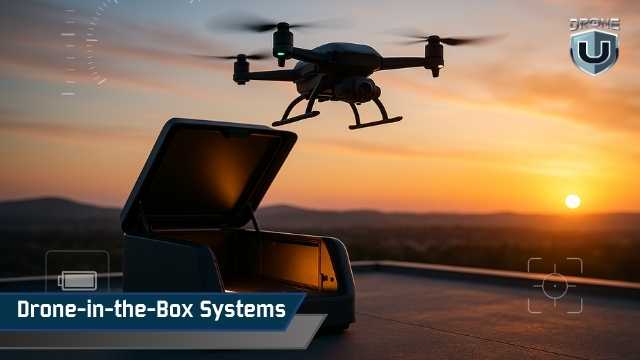
As drones have improved, their autonomous capabilities have reached a new level. Today, you can have one (or a swarm of drones) launch itself from a sealed rooftop station, scan a transmission line for damage, return to its box, and upload the data while recharging. These are known as Drone-in-the-Box (DIB) systems.
In the real world, they enable utility giants like Florida Power and Light (FPL) to transform infrastructure inspections.
In 2026, DIB systems are reshaping how we approach surveillance, inspections, and incident response, from remote oil fields to city utilities. Autonomous platforms slash labor costs and response time by removing the need for human pilots.
As of 2026, Coherent Market Insights projects the global DIB market to reach $3.38 billion by 2032 at an annual growth rate of 13.7%. As of 2026, thermal imaging leads the pack with 28.9% of the market share and is a clear indicator of the demand surge for industrial-grade, autonomous drones.
Adoption of this technology remains an issue, though. Regulations like FAA’s Part 107 restrict Beyond Visual Line of Sight (BVLOS) operations without waivers (though there are efforts to fast-track BVLOS opportunities with proposals like the LIFT Act).
Additionally, hardware capabilities are not standardized across manufacturers, and security concerns abound, complicating procurement.
Choosing the right DIB system allows you to balance autonomy, compliance, integration, and ROI. In this guide, we’ll break down:
A DIB system refers to a fully autonomous drone designed for industrial-grade operations. Unlike traditional drones that need pilots, DIBs operate from a weatherproof docking station (the box), which houses, charges, and communicates with the drone.
Each DIB system typically has three main components, composed of the drone itself, the dock/base station, and the software managing all aspects of the mission.
After installation, a DIB system can carry out scheduled missions or respond to triggers, like motion sensors, alarms, or weather events, without a human director. These systems are used across industries for perimeter security, asset inspection, emergency response, and mapping.
Unlike traditional operations that require certified pilots, visual line of sight, and manual takeoff and landing, DIB systems automate the workflow, making it remote, repeatable, and enabling Beyond Visual Line of Sight missions.
Here is how a typical DIB workflow operates.
When a mission is triggered, the system begins by running automated checks on the battery and system health, GPS and network connectivity, and weather and airspace data.
Missions are pre-configured using a dashboard that shows the important parameters, including flight paths, areas of interest, and no-fly zones, and the payload behaviors (thermal scan zones, camera angles, etc.).
After validation, the dock opens and the drone launches autonomously.
The drone is guided by a programmed route while collecting real-time data using onboard sensors to adjust itself accordingly mid-flight. If it detects intruders, hazards, or defects, it can capture additional footage, change course, and send real-time alerts to the command center.
Once the mission is done, the drone flies back to the dock using precision landing systems (RTK and visual markers). It lands, shuts down, and automatically starts recharging to be ready for subsequent missions.
During or after charging, the drone offloads mission data (maps, photos, logs, video) to a local server or cloud platform. The teams in charge can review footage live or after the fact for documentation, reporting, or real-time decision-making.
A DIB system, as we mentioned, combines drone hardware, intelligent docking infrastructure, and mission control software. Here is what each component does.
The autonomous drone is the first step and is typically a rugged, multi-motor UAV built for repeatable missions in specific environments. Its key features include:
Advanced models are capable of logging thousands of flight hours with minimal human involvement.
Sometimes called the nest or base station, this piece of infrastructure automates the drone launch, recovery, battery management, and more. Some of its main abilities include:
The docks, depending on their capabilities, can be installed on rooftops, vehicles, or remote sites.
The software stack is the brain of the operations and is responsible for route planning, data analysis, and remote control. The core functions enabling this include:
Most DIB systems use Wi-Fi, LTE, or 5G to stay connected. With an enterprise-grade platform, you may get radio and satellite uplinks for more remote or closed-off environments.
Some vendors may provide AI features to detect objects in real time, tag intruders, or help predict maintenance, further enhancing autonomous UAV operations.
| System | Country | Autonomy | NDAA/CCP Compliance | Payloads | Connectivity | Ideal For |
| Skydio Dock | USA | Full | ? NDAA | 4K RGB, thermal, 8K zoom, multi-camera array | LTE, Wi-Fi, secure mesh: offline-capable | Critical infrastructure, defense, utilities, campus security. |
| Hextronics Global | USA | Full | ? NDAA
? CCP Act |
Modular, RGB, thermal | LTE, Wi-Fi, optional Sat | Industrial inspection, enterprise security. |
| Sunflower Labs Beehive | USA | Event-triggered and schedules missions with sensor fusion. | ? NDAA
?CCP Act |
1080p stabilized cam, IR, basic object tracking | Wi-Fi, LTE (opt.), edge + cloud | Smart security, campuses, early-stage UTM pilots |
| Percepto Air Max | Israel | Full | ?NDAA
?CCP Act |
RGB, thermal, AI analytics | LTE, 5G, private networks | Critical infrastructure, utilities |
| Easy Aerial SAMS-T | USA | Full | ?NDAA
?CCP Act |
RGB, IR, EO/IR gimbals | Mesh, LTE, SatLink | Military, perimeter security |
| Dronematrix YACOB | Belgium | Full | ? NDAA
?CCP Act |
RGB, thermal, LiDAR | Wi-Fi, LTE | Smart cities, emergency response |
| H3 Dynamics DBX G7 | Singapore/France | Semi | ?NDAA
?CCP Act |
Custom pods incl. hydrogen | 4G/5G, LoRa, Wi-Fi | Environmental inspections, airports |
| DJI Dock Series (Dock 2 / Dock 3) | China | Full (limited regionally) | ? NDAA
? CCP Act |
RGB, thermal (4TD), laser range | LTE, Wi-Fi, Ethernet | Commercial inspection, utilities, non-federal deployments |
Key:
NDAA: Meets US procurement security standards.
CCP Act: US Federal legal compliance for defense and public safety applications.
“Autonomy” means a drone that can launch, land, recharge, and share data without on-site operators.
Here is a closer look at each system.
Skydio Dock X10
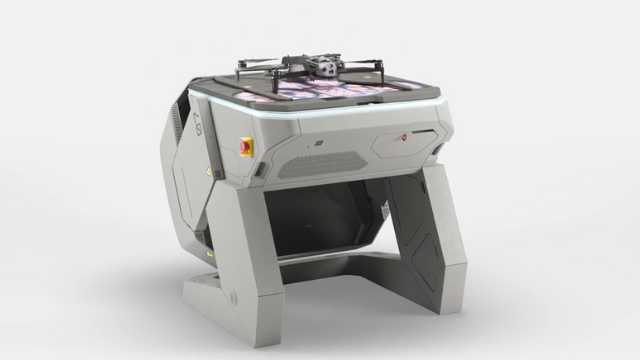
Skydio Dock is what happens when you combine powerful AI flight autonomy with compact remote deployment. The platform is built around Skydio’s renowned vision-based navigation technology with a tightly integrated system (that includes the dock) aimed at perimeter checks, commercial inspections, and remote monitoring, especially for customers with strict US-origin or NDAA-compliance requirements.
Skydio sets itself apart by making the dock less about drone housing and more about enabling AI-powered autonomy in a seamless and scalable box.
Another part of Skydio that makes it appealing is the software stack, which includes:
Skydio itself highlights that this is the most advanced autonomous drone dock ever built, with a tight U.S. regulatory and security posture for enterprise and government, and that it integrates with a wider ecosystem, including 3D Scan, Remote Ops, and Skydio Cloud.
Hextronics Global
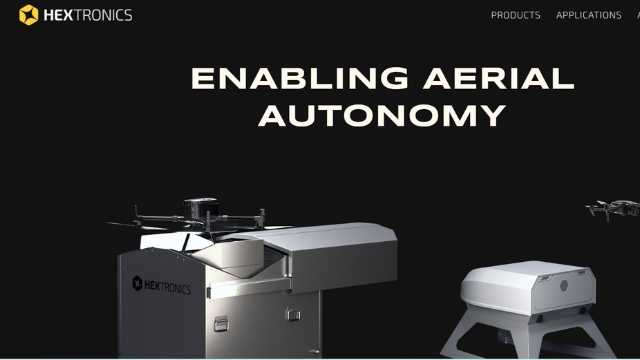
Hextronics Global is known for its hardware-first engineering approach and versatility. At the core of its offering is a robotic arm capable of swapping out batteries for you, drastically reducing downtime compared to traditional recharge-based stations.
Hexatronics points to several key points as particularly unique, including that the system has:
Instead of building its own aircraft, Hextronics takes an ecosystem-friendly approach. The Global station is compatible with a range of DJI drones (Mavic 2, Mavic 3 Enterprise, and M30 Series- using special mounts).
This allows you to add other sensors and operate flexibly while tapping into DJI’s trusted flight systems and camera technology.
The open architecture, with its APIs and SDKs, allows users to integrate the dock into custom software stacks, automate flight missions, ingest telemetry, and even trigger flights via external systems such as alarms, sensors, or scheduling platforms.
It is also compatible with FlightOps.io, a cloud-based autonomous flight management platform that handles BVLOS workflows, multi-dock orchestration, real-time video streams, and airspace awareness, making the station enterprise-ready at an affordable price.
Sunflower Labs Beehive
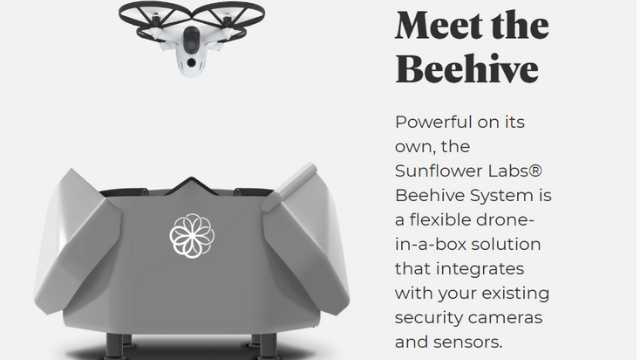
Sunflower Labs’ Beehive system brings a unique approach to the autonomous aerial security arena. It positions itself at the intersection of smart home technology, AI-powered surveillance, and lightweight, responsive drone operations.
While it is still an emerging player compared to the industrial giants, Sunflower Labs has gained recognition by focusing on smart perimeter awareness, responsive autonomy, and ease of deployment, especially in private estates, municipal projects, and commercial properties.
The compact dock and lightweight drone make the system attractive to key partners, including Airspace Link, as they explore scalable UTM-integrated deployments.
Some of the standout features of the Sunflower Labs product include:
The company uses:
You will experience this in the form of:
The battery recharge takes 30 to 40 minutes. Swappable batteries are not supported, and on that charge, you can only run short-duty cycles.
Sunflower Labs likes to emphasize that it is “the world’s first residential drone security system. Even though it does not come with autonomous battery swapping tech, it includes a ground-based sensor that ensures it only flies when triggered.
Easy Aerial SAMS-T
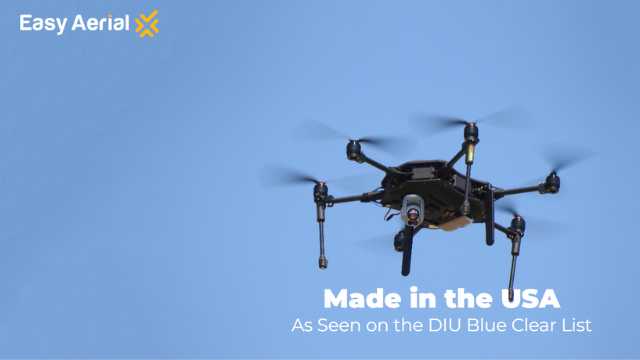
The Easy Aerial’s Smart Aerial Monitoring Systems – Tethered is engineered for defense, emergency response, and industrial security missions where compliance, durability, and autonomy matter. Unlike most DIB platforms, Easy Aerial builds both the drone and the dock to ensure tight system integration and performance predictability.
SAMS-T is built for ruggedness and easy deployment. It can be mounted on rooftops, trailers, trucks, and ground installations and is one of a few docked offerings rated for use in moving vehicles or rapid, redeployable field kits.
It is also:
The SAMS-T appeals to users because of its:
Percepto Air Max
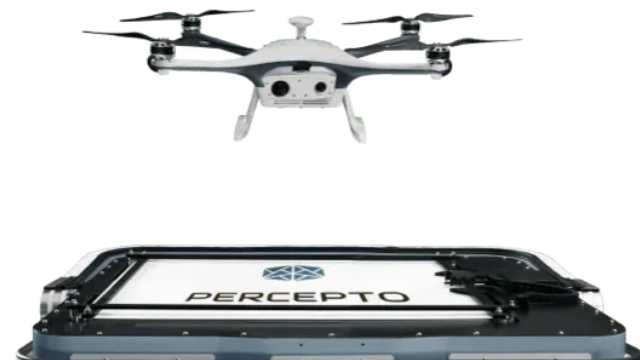
Percepto’s field-tested DIB system is widely regarded as one of the most enterprise-ready options you can get. It is known for its deep integrations, a strong compliance framework, and AI-powered autonomy, which make it perfect for industrial-grade remote operations at scale.
Going beyond the drone or box, Percepto provides a full-stack inspection and monitoring platform trusted by multinationals in energy, utilities, mining, and heavy industry.
For industry buyers, here is what stands out:
Percepto is one of the first companies to get FAA waivers for remote BVLOS operations without ground observers. This gives them a significant competitive edge. Additionally, it is built around global compliance regulations, as evidenced by its deployment in over 15 countries with regulatory alignment tools baked into its Percepto AIM software.
Their proprietary software platform, Percepto Autonomous Inspection & Monitoring (AIM), is perhaps the most valuable part of this DIB suite. It turns data into insights in the following ways:
By combining all these capabilities with the integrations, cloud, and digital twin platforms, Percepto delivers a powerful product with proven experience.
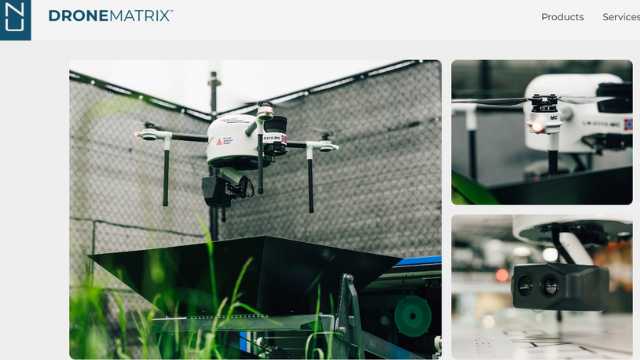
DroneMatrix YACOB
The DroneMatrix YACOB (Yet Another Cell On the Box) is a compact, modular drone docking system designed with public safety, smart cities, and European airspace integration in mind. It is developed in Belgium and is built from the ground up to focus on emergency response, first-responder support, and compliance with European U-space standards.
While it is less known globally, European municipalities and airport authorities looking for rapid deployments for surveillance, crowd safety, and traffic monitoring tools have adopted it.
The YACOB is a small-sized fully autonomous drone that can perform many of the same missions its larger brother, the YETI, including inspection, mapping, surveillance, transport, and logistics.
The YETI is the medium-sized fully autonomous version of the YACOB, designed to be larger in all aspects, with the same trusted internals of the YACOB DIAB system. The YETI DIAB system includes the YETI drone and the YEDO docking station.
The YEDO is an air-conditioned box that protects from the weather and environmental wear. It can also upload data, charge the drone wirelessly, and house the drone in stand-by mode, ready for mission triggers.
It is built with an extendible funnel featuring a special shape and location beacon to allow for smooth takeoff and landing.
YADO is much the same and is connected to a weather station and fog sensors to check if flights can be conducted safely.
The Aerial Robotic Work System is the software environment within which you can interact with the drones and make sense of the data they send back. It acts as a mission control center where orders can be input, information gathered, and communication supported for both the user and the UTM.
DroneMatrix drones are made to be customizable and capable of carrying sensors in different configurations. These include:
The platform can also integrate with compatible off-the-shelf UAVs depending on local policy.
The DroneMatrix is U-Space ready with deep integration with European UTM frameworks and digital flight approval systems. It is developed in line with European airworthiness and risk-based regulations and with 5G, LTE, and edge computing features, allowing real-time connection to command centers or public safety networks.
The drone is built for law enforcement and event monitoring. It is used by Belgian police and municipalities for crowd oversight and traffic control. Fire and rescue crews can deploy it during building inspections and support scene commanders with aerial views.
It was also used at Brussels Airport as part of drone-integration pilot programs.
Its modular, open architecture supports rapid upgrades and policy shifts, allowing users to future-proof their investment and get the best ROI.
The website states that DroneMatrix is Europe’s leading end-to-end autonomous DIB solution deployable across Europe within 30 days.
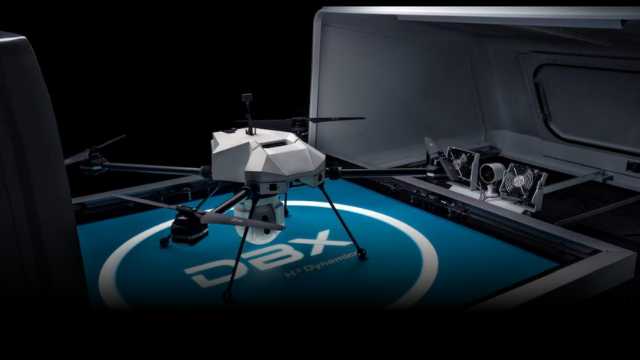
H3 Dynamics DBX G7
This is a flexible DIB platform designed for industrial-scale operations and capable of accommodating a range of drone types and sensor payloads. The intention behind its design is to offer users an automated on-site drone pilot, ideal for remote, harsh, or evolving environments.
The onboard edge-computing capabilities provide local data processing, minimizing latency before forwarding analytics or video streams.
You get live video at 1080p, 720p, or 480p resolutions, pre-processing of imagery and sensor data for AI models, and bidirectional data transmission to cloud or on-premise video management workflows.
The system is well-prepared to communicate and uses the following technologies to achieve this:
The DBX-G7 is often described as the most advanced autonomous drone system in its class. The modular, scalable design and compatibility with various drones make it a future-proof choice for most enterprise or organization needs.
Additionally, the DBX G7 team works with SAP for automated repair work orders and THALES for real-time airspace integration, showing a strong and reassuring commitment to scalable enterprise solutions.
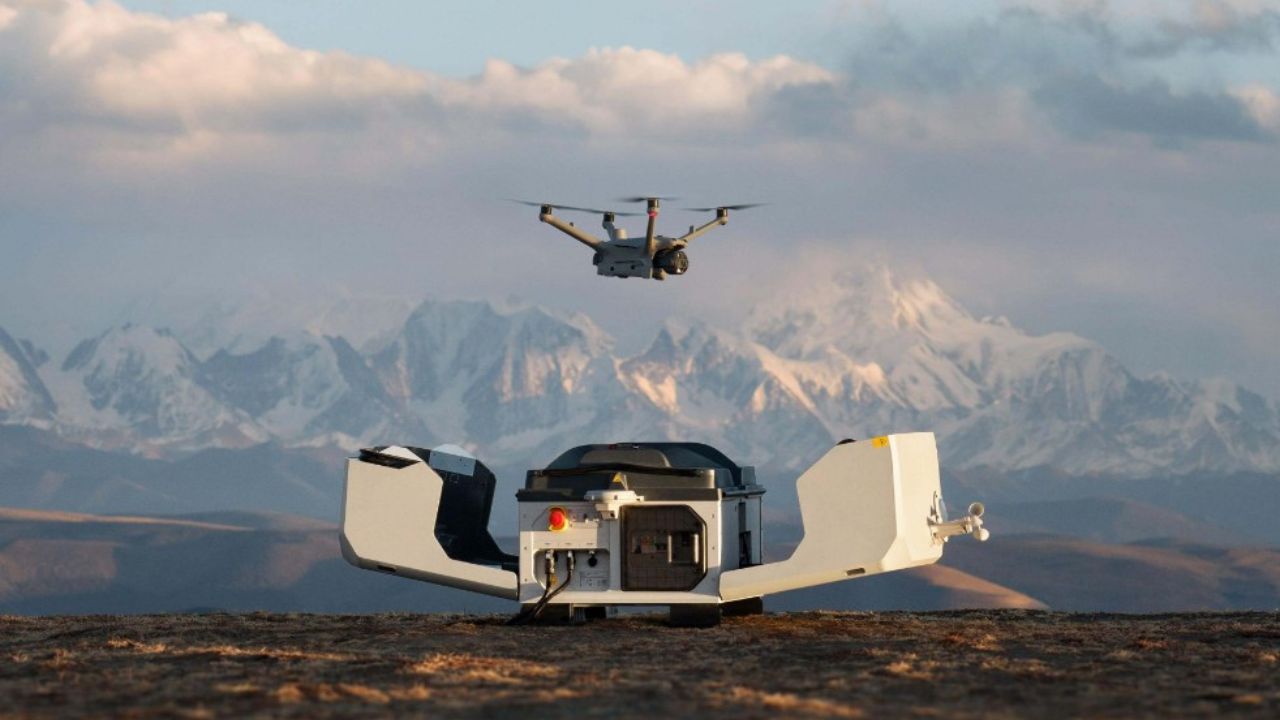
DJI’s third-generation Dock 3 starts at $15,890 (dock only) and pairs with the Matrice 4D or 4TD. It is the recommended choice for any new autonomous program in 2026. The Dock 2, paired with the Matrice 3D or 3TD, remains a cost-accessible entry point for existing fleets. The entire Dock series is subject to CCP Act restrictions for US federal contracts.
DJI doubles down on vertical integration. Each dock is custom-built for its paired drone, ensuring tight coordination from landing to payload control.
The Dock 3 carries an IP56 rating and operates in temperatures from -30°C to 50°C. It achieves a 10-second takeoff with advanced GNSS standby. It also supports vehicle-mounted deployment for the first time in DJI’s dock line, useful for urgent operations and long-distance inspections.
The Dock 2 weighs 34kg, carries an IP55 rating, and charges the Matrice 3D or 3TD from 20% to 90% in 32 minutes. A built-in backup battery keeps it running for over five hours during power outages.
The Matrice 4D suits high-precision mapping and surveying. The Matrice 4TD adds a 640×512 thermal camera and NIR auxiliary light for inspection, search and rescue, and public safety. Both deliver 47 minutes of flight time and an 18-minute operational window at a 10km radius.
The Dock 3 charges from 15% to 95% in 27 minutes. Emergency power backup lasts over five hours. Maintenance is required approximately every six months.
The DJI Dock series is not approved for US federal contracts. It is subject to CCP Act restrictions. It remains widely used in commercial and utility operations across Latin America, Asia, and parts of Europe. US buyers should verify current CCP Act status with their procurement team before purchasing.
DIB systems are now standard tools for fast and reliable aerial missions. Choosing the right one for you depends on your missions, technical needs, and security requirements. For example, if you operate in public safety or infrastructure sectors, prioritize NDAA compliance.
Choose a DIB system that fits your workflow, compliance requirements, and budget.
Become a DroneU member or talk to our drone experts to learn about the latest DIB systems.
 5
5