

FCC Opens 800 MHz Cellular Band to Drones in 3-0 Vote, With 450 MHz Data Links and Counter-Drone Radar Up Next

November 2, 2026
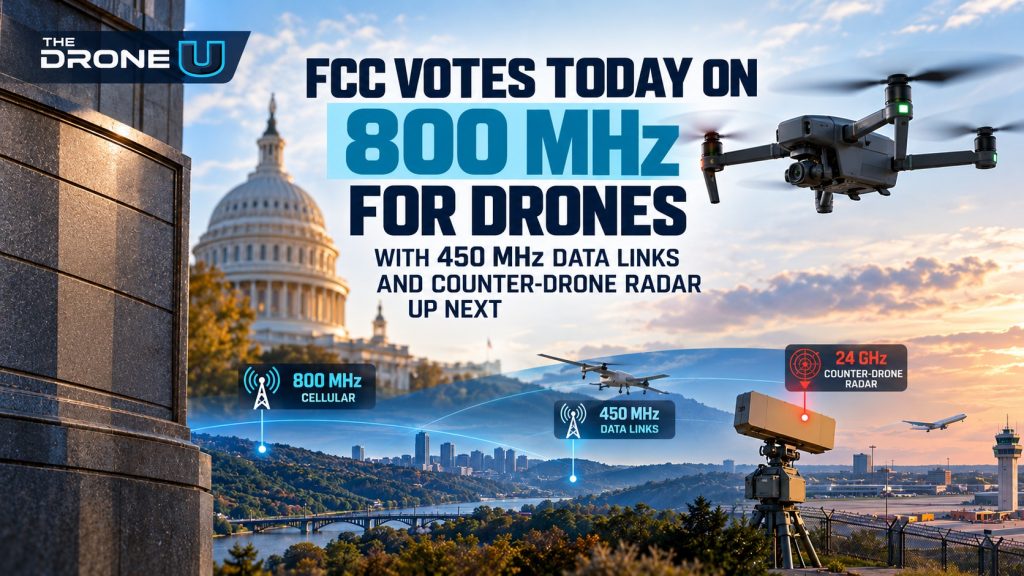
It’s official. At its October 29 open meeting, the Federal Communications Commission voted 3-0 to let drones use the 800 MHz cellular band. The Report and Order (FCC 26-72) removes a 1991 rule against airborne use for uncrewed aircraft and opens 50 megahertz of licensed, nationwide, low-band spectrum for drone command, control, communications and payload links. Chairman Brendan Carr, Commissioner Anna Gomez and Commissioner Olivia Trusty all voted yes, and Carr and Trusty issued separate statements. The FCC released the final text on October 30, and the next drone spectrum votes are set for November 19.
The 800 MHz cellular rules had banned “airborne” use since 1991 to keep phones on airplanes from interfering with towers on the ground. The new order finds that this restriction is no longer needed for unmanned aircraft systems, because modern wireless networks use advanced technology to keep drones from interfering with them. It covers 824–849 MHz and 869–894 MHz and puts the band on par with other flexible-use bands where drones can already operate.
The rules take effect 30 days after the order is published in the Federal Register. The FCC hasn’t announced a firm effective date yet. Even after that, whether you can use 800 MHz on a flight depends on your carrier and its service terms.
The FCC’s November 19 open meeting has two more items that matter to drone pilots:
None of those are final until the full Commission votes.
Better links don’t replace a certificate. Students have been known to finish Drone U’s online Part 107 course in three days and pass the test, and it covers the airspace and operating rules for every flight, whatever link the aircraft uses.
Sources: FCC: FCC Opens More Cellular Spectrum for Drones (Report and Order FCC 26-72, news release, and Carr and Trusty statements); FCC October 2026 Open Meeting; FCC news release on November items, October 28, 2026
 0
