

FCC Makes It Official: Drone and Electronics Testing Must Leave Mainland China by December 2028

November 2, 2026
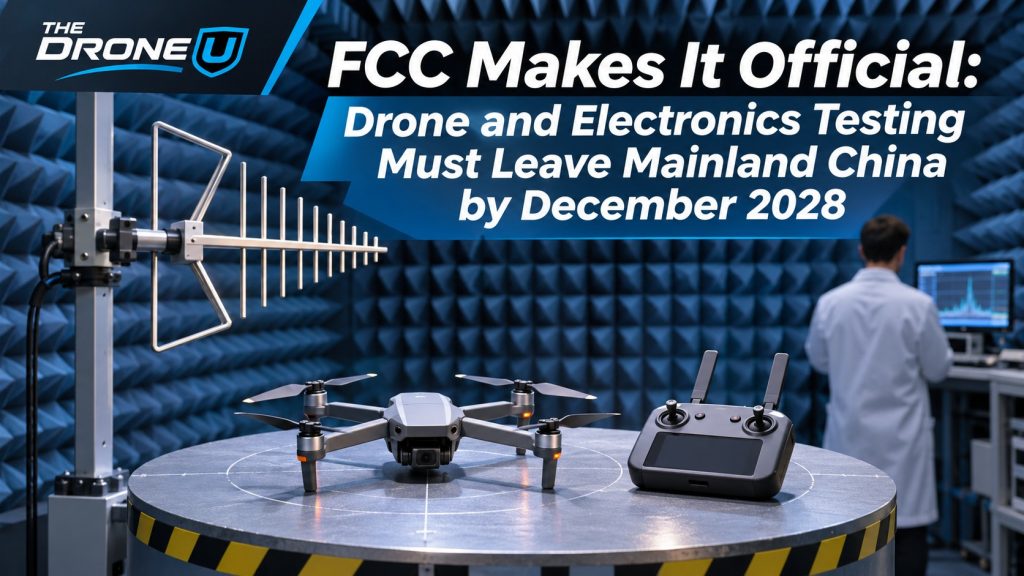
It’s official. At its October 29 open meeting, the Federal Communications Commission voted to stop recognizing electronics test labs located in countries that don’t recognize American labs in return. Mainland China is the main target. The order is FCC 26-73, a Third Report and Order in ET Docket No. 24-136, and it was released October 30. The cutoff is December 1, 2028. A day later, China’s Commerce Ministry demanded that the U.S. reverse the rule.
For drone pilots, this matters because almost every drone, controller, goggle set and video transmitter sold in the U.S. needs FCC equipment authorization. That process starts with testing at an FCC-recognized lab.
According to the FCC’s news release and the full order:
The order is forward-looking. It doesn’t revoke existing equipment authorizations or require already approved devices to be retested. Applications received before the compliance date can go ahead under the current rules. Manufacturers can also keep doing design, pre-compliance and R&D testing wherever they like. Only the formal certification testing has to move. The FCC chose a uniform two-year transition instead of an immediate ban to give labs in the U.S. and partner countries time to add capacity.
This is also separate from the FCC’s Covered List actions, which already block new authorizations for foreign-produced drones and drone components on their own schedule. The test lab rule affects every electronics maker, including U.S. drone brands if they currently use labs in mainland China.
In a spokesperson Q&A posted October 30, China’s Ministry of Commerce expressed “strong dissatisfaction with and firm opposition to” the rule, in Xinhua’s translation. The ministry argued the rule will raise testing costs and slow product delivery for American companies and consumers. It urged Washington to revoke it immediately and warned that China “will take further necessary measures” if the U.S. goes ahead. China’s next steps are worth watching. Beijing’s new export-license rules for larger drone motors, speed controllers and propellers start November 18.
The FCC’s own record acknowledges the cost concerns. It cites commenters predicting higher testing bills and delays of weeks to months, while saying those estimates don’t add up to a reliable total.
Sources: FCC news release; FCC 26-73 order; China Ministry of Commerce; Xinhua
 0