

Flock Bets on Police Drones as San Francisco Weighs DFR Rules

October 14, 2026
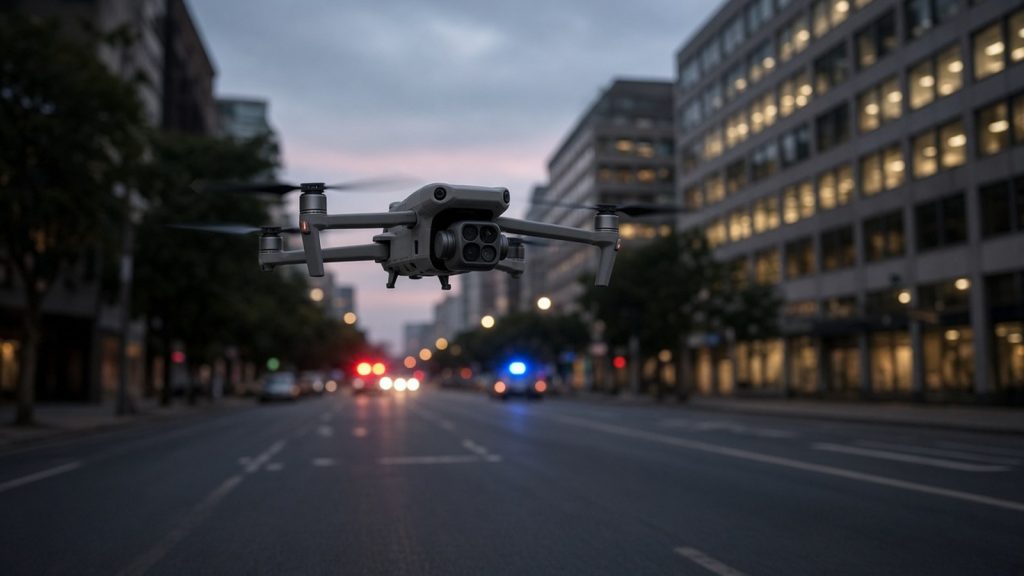
Drone as First Responder programs are scaling fast. Flock Safety now says drones are its fastest-growing business, with roughly 175 DFR customers nationwide—and San Francisco’s Police Commission was scheduled on Wednesday, October 14, to weigh a rewritten department drone order that critics say still leaves the broadest launch trigger undefined.
That combination—industry growth on one side, local privacy fights on the other—is the story public-safety pilots should watch this week.
DroneXL, drawing on Fast Company and company remarks, reports that Flock CEO Garrett Langley has called drones the company’s fastest-growing unit and expects them to approach half of future revenue. Flock, valued in that coverage at about $8.4 billion, entered the market by buying Aerodome in 2024 and sells aircraft to police departments, prisons and private customers. It plans a Georgia factory by 2027.
Retired fire chief Charles L. Werner of DRONERESPONDERS told Fast Company the FAA is issuing about 125 new DFR-related approvals a month. Separate FOIA tallies of public-safety waivers between April 2025 and February 2026 point to a similar monthly pace. The exact counters differ, but the direction is clear: public-safety BVLOS and DFR authorizations are no longer rare.
Flock’s Alpha aircraft is marketed with long-range cameras; company materials have cited plate-readable imagery from up to 2,000 feet. A Flock spokesperson told Fast Company the drones cannot run automated license-plate recognition on their own—an officer watching the feed can still read a plate and run it. That distinction matters in cities already fighting Flock’s ground-based camera networks.
SFPD’s amended General Order 10.12, as described in DroneXL’s October 13 report and earlier EFF comments, would let the department fly drones for “a public safety response,” to assist an active criminal investigation, or for training, and would let pilots clear some calls with no officer on scene. Evidentiary footage would be kept at least two years. The draft bans “general surveillance,” requires a warrant or recognized exception before intentionally focusing on the interior of a home or a yard not visible from public ground level, and generally limits non-evidentiary public footage to 30 days unless a captain or higher extends it for an open investigation.
What it still does not define, critics say, is “public safety response”—the widest green light to launch. The Electronic Frontier Foundation told the Police Commission the phrase could cover nearly every call for service. Commissioner Kevin Benedicto previously delayed a September vote after pushback from the ACLU and the Public Defender’s Office. As of Wednesday morning Eastern, we have not confirmed the commission’s October 14 outcome; check the meeting record before treating the order as final.
SFPD figures cited in the same coverage put DFR responses at about 4,000 incidents from March 2024 through early August 2026, assisting in more than 1,550 cases and more than 655 arrests. District Attorney Brooke Jenkins has publicly backed keeping the program. The department has also had data-handling problems: a May audit found hundreds of improper queries on its Flock plate-reader network, and in July live feeds from some Skydio drones were found exposed online.
Public-safety flying still sits on the same foundation as any commercial job: airspace, weather, crew resource management and a current remote pilot certificate. Our Part 107 online course covers the FAA side so you can layer agency policy on top without guessing.
Flock is pouring money into police drones while San Francisco argues over how tightly to leash nearly 100 of them. For pilots, the takeaway is operational, not political: DFR volume is rising, local rules are catching up unevenly, and the agencies that win trust will be the ones that define launch authority as clearly as they define flight paths.
Sources: DroneXL; Fast Company; EFF; EFF comment on DGO 10.12 (PDF)
 0
0
