
Drone Buying Guide 2026: How to Choose the Best Drone for Your Needs

June 27, 2026
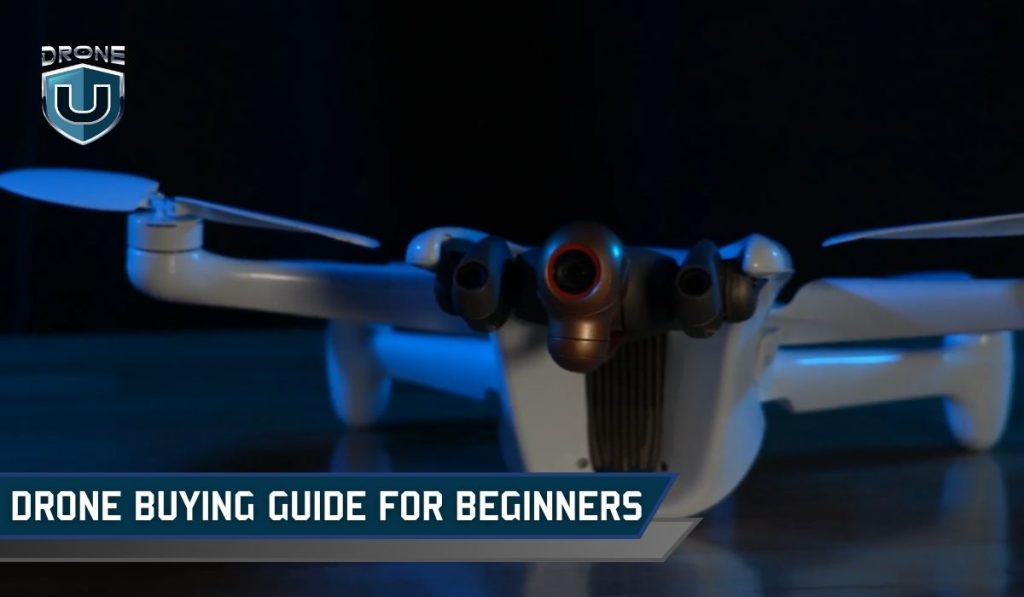
Quick Answer: How to Choose the Right Drone in 2026The best drone depends on your budget and use case. Here is a quick breakdown: Best beginner drone: DJI Mini 5 Pro ($759) or DJI Neo ($199 for absolute beginners) Best for photography: DJI Mavic 4 Pro ($2,199) or DJI Air 3 ($999) Best racing drone: DJI Avata 2 ($799) Best under $500: DJI Mini 4K ($299) or DJI Mini 2 SE ($259) Best professional: DJI Mavic 4 Pro ($2,199) or Autel EVO II Pro V3 ($2,099) Do I need a license? Yes for commercial use. Part 107 Remote Pilot Certificate required. Do I need to register? Yes if the drone is over 250g or used commercially. |
Consumer drones have grown significantly since the Parrot AR and DJI Phantom launched in 2010 and 2013.
These unmanned aerial vehicles (UAVs) are now within reach of anyone eager to use them for various purposes, whether recreational or professional.
While the excitement of flying a drone is undeniable, choosing the right one can be overwhelming.
In this comprehensive guide, we will cover everything you need to know, from different types of drones and key components to essential buying considerations and top drone accessories.
A drone, also known as an unmanned aerial vehicle (UAV), is an aircraft that operates without a human pilot on board.
Instead, a drone pilot or operator controls it remotely. Drones rely on various components to navigate and stabilize during flight, which we’ll talk about later in this article.
Initially developed for military use, drones have expanded to civilian applications and are now used for a wide range of tasks, including mapping, surveying, filming, and photography.
Here are the most common types of drones.
You can find a variety of drones in the market today. Here are the common ones:
Understanding the key components helps you compare drones more effectively.
Here are some crucial components of drones:
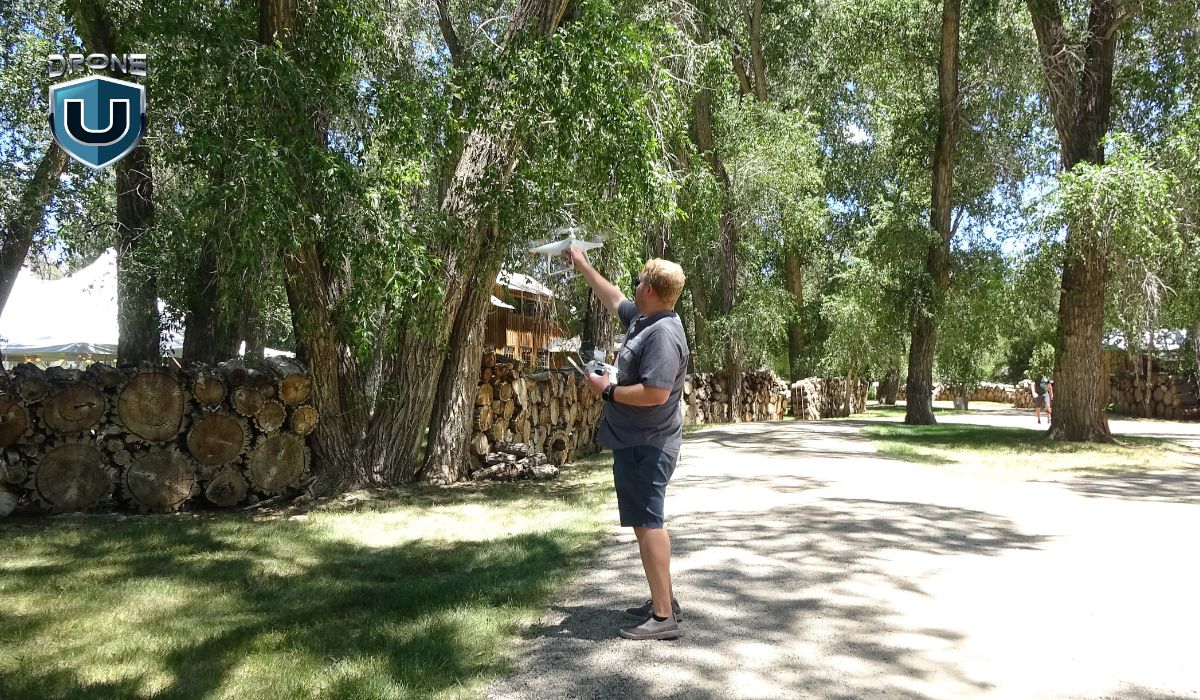
If you’re buying a drone for the first time, here’s a checklist of essential features to consider.
This will help you choose a drone that perfectly suits your needs.
Interested in casual aerial photography or videography? Then, checking for the drone camera quality is a crucial factor to consider.
Before choosing a drone, evaluate its camera specifications to confirm if it will give you the picture quality you desire. Here’s what you can look for:
Most buyers want the longest possible flight time per charge. However, that largely depends on the quality of your drone battery life.
Most consumer drones can fly from about 20 to 30 minutes on a single charge, while more advanced models offer a drone flight time of 40 minutes or more.
So, before buying any drone, check out its battery specifications (e.g. capacity and charging time) to make sure it aligns with your expectations.
The best drone for beginners should, ideally, have an obstacle avoidance system. Drones with obstacle avoidance use sensors to detect and avoid obstacles. This in turn reduces the risk of crashes.
For example, the DJI Mini 5 Pro offers omnidirectional obstacle sensing, including forward-facing LiDAR, to ensure first-time pilots fly with confidence.
Other important safety features you can look out for in a drone include:
(Pro Tip: While you should go for a drone that has robust safety features, you also need to adhere to general drone safety guidelines. The FAA provides helpful resources detailing safety rules and regulations for drone pilots.)
The drone’s range determines how far it can travel from its controller before losing the connection.
Long-range drones cover longer distances without the risk of getting lost or crashing.
A test showed that the DJI Mini 3 has a range of over 5,000 meters/about 3 miles.
(Pro Tip: Note that the advertised range of a drone may not reflect its true performance due to interference from radio waves and other environmental factors. To ensure optimal performance, you can buy a drone with a greater range than you anticipate needing.)
A lot of people use drones for video recording, photography, mapping, and more.
If you want to get the most out of your flying experience, it’s important to select a model with features tailored to your preferred use case.
Here’s a rundown of the best drones for distinct purposes:
There’s no shortage of beginner drones in the market; however, some of the best ones you can try out include:
| Drone Model | Camera | Flight Time | Range | Price | Special Features |
| DJI Neo | 4K @ 30fps | 18 min | 6.2 miles | $199 (DJI) | Palm launch, built-in prop guards, 135g, voice control |
| DJI Mini 5 Pro | 4K HDR, 50MP | 36 min | 12.4 miles | $759 (Amazon) | LiDAR obstacle sensing, 1-inch sensor, under 250g |
| Potensic Atom 2 | 4K HDR, 48MP | 32 min | 6.2 miles | $299 (Amazon) | 3-axis gimbal, AI tracking, under 249g |
| Holy Stone HS900 | 4K | 30 min | 3.7 miles | $459.99 (Amazon) | Brushless gimbal, Follow Me, TapFly |
For aerial photography and videography, camera quality and stabilization are the priority. Check out these high-flyers:
| Drone Model | Camera | Video Resolution | Flight Time | Range | Price | Special Features |
| DJI Mavic 4 Pro | 100MP Hasselblad, 4/3-inch | 6K HDR @ 60fps | 51 min | 18.6 miles | $2,199 (Amazon) | 360° gimbal, tri-camera, LiDAR |
| DJI Air 3 | 1/1.3-inch CMOS | 4K, 1080p slow motion | 46 min | 12.4 miles | $999 (Amazon) | Dual-camera, MasterShots, HyperLight |
| Autel EVO Lite+ | 1-inch CMOS 20MP | 6K | 40 min | 7.4 miles | $1,149 (Autel) | Adjustable aperture, HDR video |
| Autel EVO Nano+ | 1/1.28-inch CMOS 50MP | 4K | 28 min | 6.2 miles | $699 (Amazon) | RYYB color filter, Moonlight Algorithm |
Racing drones are built for speed, agility, and first-person-view flying.
| Drone Model | Camera | Video Resolution | Flight Time | Range | Price | Special Features |
| DJI Avata 2 | 1/1.3-inch CMOS | 4K HDR | 23 min | 8 miles | $799 (Amazon) | Acrobatics mode, Emergency Brake |
| BetaFPV Cetus X | C04 FPV | 1080p | 5 min | N/A | $142.99 (Amazon) | 360° protection, ultra-lightweight |
Note: the BetaFPV Cetus X and DJI Avata 2 are ready-to-fly. Most other FPV racing drones require assembly and are not recommended for first-time buyers.
The drones below offer solid features at under $500.
| Drone Model | Camera | Flight Time | Price | Special Features |
| DJI Mini 4K | 4K @ 30fps, 12MP | 31 min | $299 (Amazon) | 3-axis gimbal, Level 5 wind resistance, 10km transmission |
| DJI Mini 2 SE | 2.7K | 31 min | $259 (Amazon) | Lightweight, QuickShots, Panorama |
| DJI Neo | 4K @ 30fps | 18 min | $199 (DJI) | Palm launch, prop guards, 135g |
For those who demand the very best, these high-end drones offer unparalleled performance and features:
| Drone Model | Camera | Video Resolution | Flight Time | Obstacle Avoidance | Price | Special Features |
| DJI Mavic 4 Pro | 100MP Hasselblad | 6K HDR | 51 min | Omnidirectional + LiDAR | $2,199 (Amazon) | 360° gimbal, ActiveTrack 360°, tri-camera |
| Autel EVO II Pro V3 | 1-inch Sony CMOS | 6K | 40 min | 360-degree | $2,099 (Amazon) | HDR video, Dynamic Track 2.1, NDAA-compliant |
| DJI Air 3 | 1/1.3-inch CMOS | 4K | 46 min | Omnidirectional | $999 (Amazon) | Dual camera, 12.4-mile range |
Drone accessories extend what your drone can do and protect your investment.
Here are some accessories that are worth investing in:
This guide covers the key factors to compare before buying a drone in 2026.
Before making a drone purchase, conduct research, compare models, budget for accessories, and check local regulations.
Use this guide to match the right drone to your workflow, budget, and skill level.
 3
3
Add Your Comment