

LAANC Authorization Explained: How to Get Drone Airspace Approval (2026)

June 15, 2026
Quick Answer: What is LAANC Authorization?LAANC (Low Altitude Authorization and Notification Capability) is a free FAA system that lets drone pilots get near-instant airspace authorization to fly in controlled airspace near airports. Who can use it: Both Part 107-certified pilots and recreational flyers How fast: Approval is usually granted within minutes Altitude limit: Up to 400 feet in controlled airspace (with some exceptions) How to get it: Use any FAA-approved app such as Aloft, Airspace Link, or Wing Cost: Free to use Planning ahead: Part 107 pilots can request authorization up to 90 days in advance |
The US drone industry is booming, but navigating airspace regulations requires knowing which system to use and when. LAANC simplifies that process by automating airspace authorization for flights near airports.
With LAANC authorization, you can fly legally within controlled airspace, eliminating the time-consuming manual authorization process and allowing you to focus on what matters most: safe and efficient drone operations.
This guide covers what LAANC is, how it works, how to apply, and which apps to use.
LAANC, standing for Low Altitude Authorization and Notification Capability, is a joint venture between the Federal Aviation Administration (FAA) and private industry. Its primary role is to facilitate the integration of Unmanned Aircraft Systems (UAS) into the national airspace.
LAANC offers three key benefits for drone pilots:
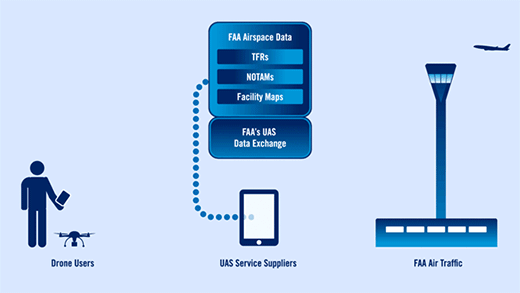
LAANC operates through the UAS Data Exchange, a system that enables the exchange of airspace data between the FAA and FAA-approved companies, known as UAS Service Suppliers (USS). These suppliers offer the necessary desktop applications and mobile apps that enable the use of LAANC services. LAANC offers a streamlined process for obtaining airspace authorizations, especially near airports.
LAANC streamlines the process of obtaining airspace authorizations by automating applications and approvals. You can submit the requests through systems provided by FAA-approved UAS Service Suppliers (USS).
These requests are then cross-referenced with various sources within the FAA UAS Data Exchange, including UAS Facility Maps, Special Use Airspace data, details on Airports and Airspace Classes, as well as Temporary Flight Restrictions (TFRs) and Notices to Air Missions (NOTAMs). Approvals are granted almost instantly.
It’s important to note that LAANC only handles airspace authorizations. Pilots are still responsible for checking NOTAMs, assessing weather conditions, and complying with all other airspace restrictions.
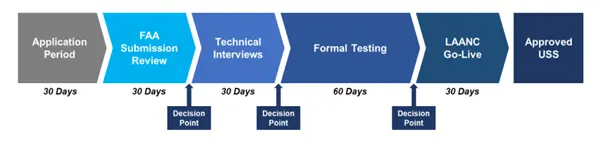 New Applicant Onboarding Process Timeline* | Source: FAA
*A slight adjustment may be made due to calendar shifts from year to year. The exact dates will be published on the LAANC website.
The New Applicant Onboarding Process for LAANC is a five-step process:
This comprehensive process ensures that all approved LAANC USSs meet the necessary standards and requirements for safe and effective operation within the LAANC framework.
 Source: EASA
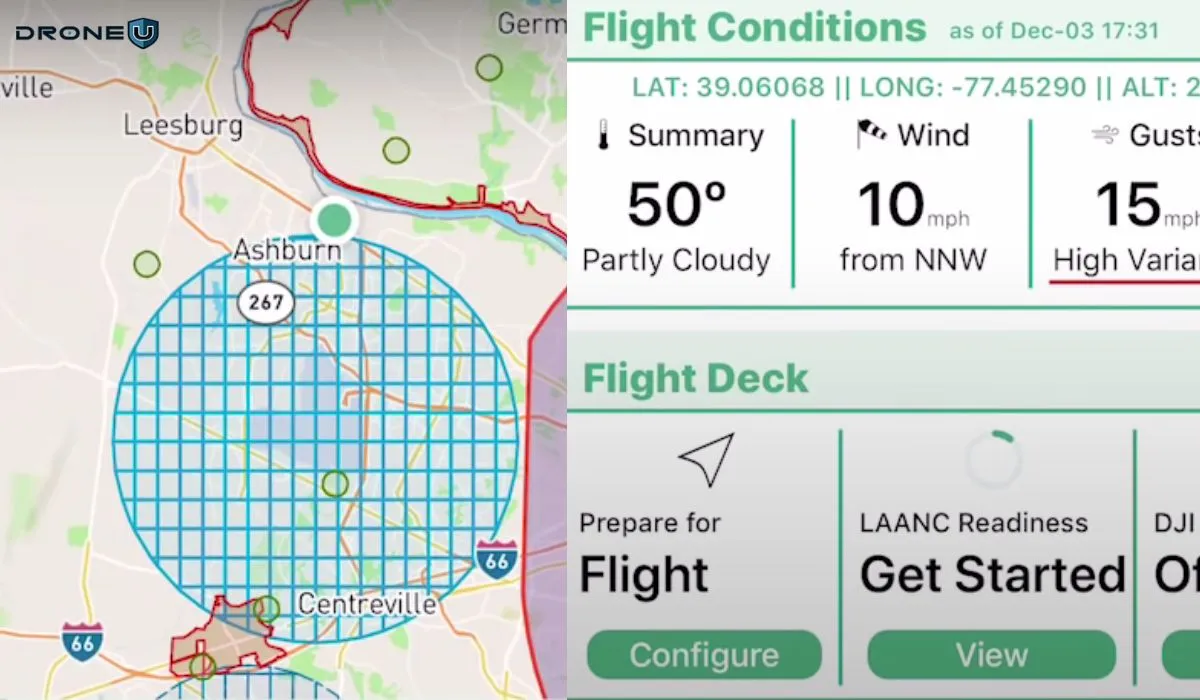 LAANC Authorization Request
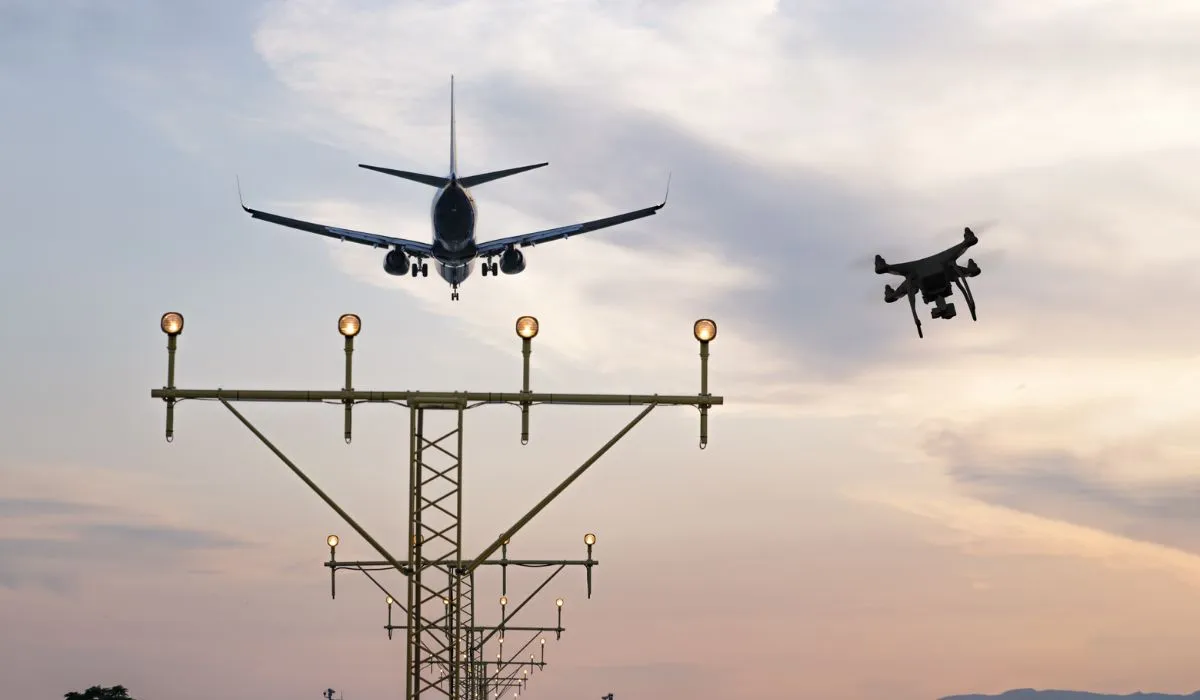
Drone operators intending to fly at altitudes below 400 feet in controlled airspace near airports must obtain an airspace authorization from the FAA beforehand.
LAANC is accessible to those flying under the Small UAS Rule Part 107 or as Recreational Flyers, via FAA Approved LAANC UAS Service Suppliers.
LAANC usage involves two main approaches:
Part 107 pilots must register their drone and possess a Remote Pilot Certificate.
Recreational Flyers are required to register their drone and complete the Recreational UAS Safety Test (TRUST) before their initial flight.
For operations in controlled airspace necessitating both a waiver and airspace authorization, applications for both must be submitted through the FAA’s DroneZone.
 Source: FAA
The following companies have fulfilled the necessary technical requirements as of 2026 and have formalized agreements with the FAA to offer LAANC Services:
| Approved Service Supplier | Part 107 Near-Real-Time Authorization | Part 107 Further Coordination | Exception for Recreational Flying/Section 44809 | IOS App | Android App | Desktop |
| AirMatrix | Y | Y | Y | – | – | Y |
| Airspace Link | Y | Y | Y | Y | Y | Y |
| Aloft | Y | Y | Y | Y | Y | Y |
| AstraUTM | Y | Y | Y | Y | Y | – |
| AutoPylot | Y | – | Y | Y | Y | – |
| Avision | Y | Y | Y | Y | Y | Y |
| eTT Aviation | Y | Y | Y | – | – | Y |
| FlightReady | Y | Y | Y | Y | – | – |
| UASidekick | Y | Y | Y | Y | Y | Y |
| Wing | Y | – | Y | Y | Y | – |
*Y = publicly available service
 UAS Facility Maps | Source: Aloft.AI
The FAA updates LAANC rules as drone integration into national airspace evolves. Here are the key points every pilot should know:
 0
0

Add Your Comment