

Laredo Hotel Fire: Why Drone Pilots Should Stay Clear of Emergency Scenes

October 8, 2026
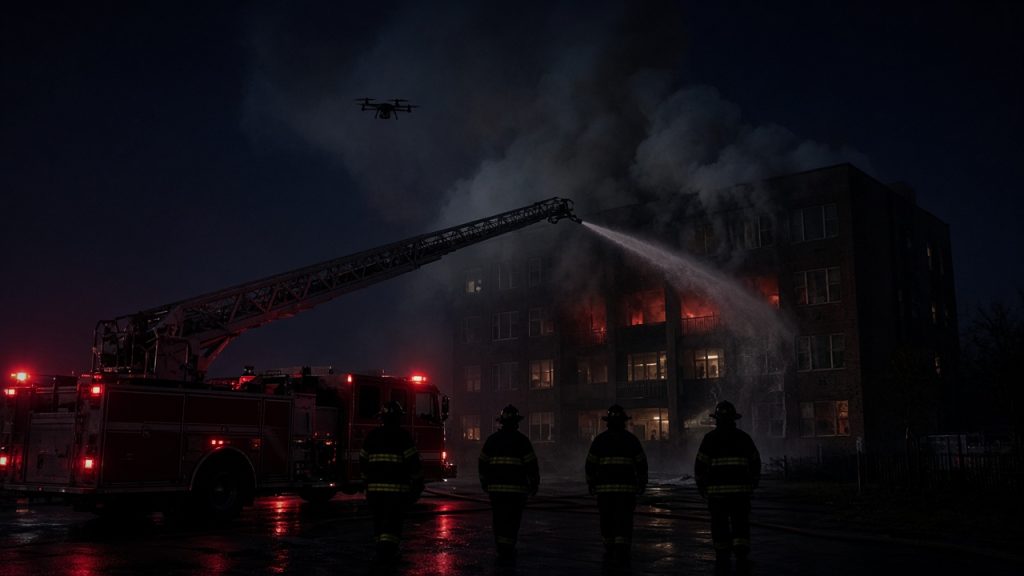
A major hotel fire in Laredo, Texas, this week produced a warning every drone pilot should hear. Police Chief Miguel Rodriguez told reporters that if anyone flies a drone over the scene, officers will “take them down.”
When it comes to drones at emergency scenes, the message is clear: stay away. But the episode also shows how the rules around drones, emergencies and counter-drone powers actually fit together. Here’s what happened and what you need to know.
The three-alarm fire broke out shortly before 1 a.m. on Wednesday, October 7, at the DoubleTree hotel on Garden Street in downtown Laredo. The 14-story building was later declared structurally unsafe, with officials concerned about a possible collapse. The mayor declared a local state of disaster.
Officials were also flying a drone of their own. The city used it to assess the building’s structural integrity before sending more personnel into areas that might be unsafe. Rodriguez said outside drones could interfere with the firefighters, engineers and officers still working the scene.
This is where it gets interesting. DroneXL checked the FAA’s temporary flight restriction list on Wednesday evening and found no TFR covering Laredo.
That matters because the FAA’s main tool for emergency scenes is a disaster TFR under 14 CFR 91.137, the same type used over wildfires. When one is in place, flying inside it is a clear federal violation, and it shows up on official TFR maps and many drone apps.
No TFR doesn’t mean you’re in the clear, though. Part 107 still prohibits operating in a careless or reckless manner that endangers life or property. Flying over an active high-rise fire with a collapse risk and responders below is a fast way to end up on the wrong side of that rule. Local laws on interfering with emergency operations may also apply.
Until recently, the honest answer was generally no. Counter-drone mitigation, such as jamming, taking control of or disabling a drone, was largely reserved for certain federal agencies.
That changed with the SAFER SKIES Act, part of the FY2026 National Defense Authorization Act. A Justice Department and Homeland Security rule now sets out how state, local, tribal and territorial agencies can use counter-drone authority. Under that framework:
The public statements didn’t say whether any Laredo officer holds that certification. As DroneXL noted, “mitigate” in a press briefing could simply mean finding the pilot and ordering the drone down. That requires no special certification at all.
Knowing when not to fly is part of being a professional. Our Part 107 prep course covers flight restrictions, hazardous operations and emergency procedures, so you can make that call with confidence.
The Laredo fire is a reminder that the sky over an emergency belongs to the responders, and that drones at emergency scenes create real risk. Even without a posted TFR, flying there puts people at risk and your certificate on the line. Watch the news coverage, and keep your drone on the ground.
Sources: DroneXL; Officer.com / Laredo Morning Times; Laredo Morning Times; 6 CFR Part 124 (SLTT counter-UAS rule); FAA: Temporary Flight Restrictions
 0
0
