

Seasats and Neros Put Archer FPV Strike Drones Aboard the Quickfish Uncrewed Boat

November 11, 2026
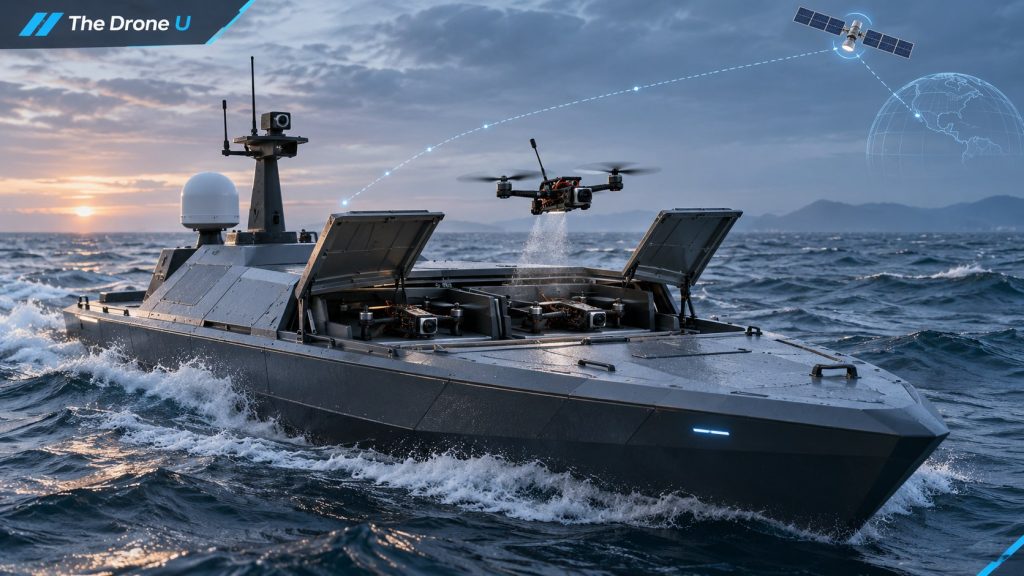
A small uncrewed boat that can sit at sea for weeks and then launch its own strike drones is the idea behind a new partnership between Seasats and Neros. The two U.S. companies announced on Tuesday, Nov. 10, that Neros’ Archer FPV drones will fly from Seasats’ Quickfish unmanned surface vessel (USV), and they say they have already proven the setup with multiple launches at sea.
Quickfish is the fast-response member of San Diego-based Seasats’ USV family. The company lists a sprint speed of 40 knots, endurance measured in weeks and the ability to ride out rough seas. Its enclosed, modular payload bay protects the drones from salt water and weather until they are needed. Defense Daily reported that the bay holds 450 pounds and can carry six Archer drones. Neros’ own announcement puts the paired system’s maximum range at more than 550 nautical miles.
The drones are Neros’ Archer 10-inch Strike and Archer AI models, one-way FPV aircraft that the Torrance, California, company says were shaped by combat experience and designed for mass production. Satellite links and relays on the boat let operators pilot both the vessel and the drones from a control room anywhere in the world. In Seasats’ concept, Quickfish can be cued by its Lightfish surveillance vessels or other sensors, race to a contact, take a closer look, and launch drones if needed. The boat can then return to port, refuel and reload.
Neros described the pairing as a kind of miniature, fully uncrewed aircraft carrier that can be built at scale for a fraction of the cost of traditional ships.
“Maritime awareness matters most when operators can act on what they see,” said Seasats co-founder and CEO Mike Flanigan. Neros co-founder and CEO Soren Monroe-Anderson said government customers are “looking for novel ways to containerize strike drones,” and that layering unmanned systems helps keep operators out of harm’s way.
The announcement fits a pattern seen across recent conflicts, where cheap FPV drones have become one of the most important weapons on the battlefield and militaries are hunting for ways to carry them farther. Launching them from uncrewed boats extends their reach well beyond what a pilot on shore can manage with a handheld radio, and keeps sailors off the water.
It also builds on a busy month for Neros. Earlier in November, the company received a $450 million conditional loan commitment from the Pentagon’s Office of Strategic Capital to expand U.S. manufacturing of drones and their components. Neros says Archer systems are sold directly by the company, while customers who want combined boat-and-drone packages work with Seasats. Neither company announced a government contract tied to the Quickfish integration.
This is a defense system, not something civilian pilots will fly. But the skills behind it should sound familiar. FPV piloting, video links, radio-frequency planning and long-range command and control are the same building blocks used in commercial FPV work, inspections and public safety flying. The defense drone industry, including makers like Neros, is growing fast and hiring people who understand how drones actually fly.
It is also a reminder that drone tactics overseas continue to drive counter-drone policy at home, from new detection systems to more security TFRs. Flying legally and keeping your Remote ID working matters more than ever.
Most drone careers, civilian or defense-adjacent, start with the basics: airspace, weather, regulations and aeronautical decision-making. Drone U’s Part 107 test prep course covers all of it, and students have been known to take the online course in 3 days and pass the test.
Sources: Defense Daily; Seasats; Neros.
 0