

Best Drones for Flying in the Wind

April 22, 2026
QUICK ANSWERFor most pilots in 2026, the DJI Air 3S is the best drone for flying in the wind if you want strong performance at a fair price (~$1,099). It matches the published wind spec of drones costing twice as much. If budget is no limit, the DJI Mavic 4 Pro (~$2,149) has the same wind-resistance spec but a higher top speed and greater mass, giving it an edge in sustained strong-wind shooting. Avoid mini-class drones (under 250g) in any wind above 15 mph — the physics work against them. For professional coaxial setups, the DJI Inspire 3 is still the gold standard, but at a very different price point. |
Flying a drone in the wind is one of the hardest skills to build and one of the most valuable if you work commercially. Depending on where you operate, wind conditions can ground you for days at a time. Pilots who have the right equipment and know how to use it miss fewer jobs and stay safer when they do fly.
This guide covers what to look for when choosing a drone for windy conditions, and which current models handle wind best. We’ll also learn what DJI’s published wind resistance spec actually means in practice, and how to fly safely when the air is moving.
First, let’s understand the one number that every drone manufacturer uses and what it actually tells you.
Every DJI spec page lists a ‘Max Wind Speed Resistance’ figure, usually in m/s. Before looking at specific drones, you need to understand what that number does and doesn’t tell you.
What it is: DJI measures wind resistance by having the drone take off vertically to 1.5 meters in Sport mode inside a wind tunnel. The listed figure is the wind speed at which it can do that. It is not the wind speed at which the drone will fail, flip, or lose control.
What it isn’t: a hard limit. Pilots regularly fly in wind conditions above the published spec without problems. The spec is a controlled-environment baseline, not a ceiling.
What actually matters more: a drone’s top speed. In a headwind, the drone has to fly forward to hold position or make progress. A drone that can do 25 m/s in still air has far more room to fight a 12 m/s headwind than one that tops out at 16 m/s. Weight and motor reserve also play a major role.
| Key Insight The best proxy for real-world wind handling is top speed, not the published wind resistance figure. The faster a drone can fly in still air, the more headwind it can push through. A 12 m/s wind resistance spec means little if the drone’s top speed is only 16 m/s. |
Next, let’s explore the seven things you need to consider before choosing any drone for wind flying.
Use these seven criteria to compare any drone for wind performance. The table below applies them to every current model.
| Criterion | What It Means in Practice | What To Look For |
| 1. Max Wind Resistance (spec) | DJI publishes this figure in m/s. They measure it by having the drone take off vertically to 1.5 meters in Sport mode inside a wind tunnel. It is a useful baseline for comparing drones — but it is not a hard ceiling. | Higher is better. 12 m/s is the top consumer spec as of 2026. |
| 2. Top Speed (wind headroom) | Top speed is how fast the drone can fly in still air. In a headwind, this is what lets it push back. A drone rated at 12 m/s wind resistance but only 16 m/s top speed has far less room to fight wind than one doing 25 m/s. | The faster the drone, the more wind it can handle. The Mavic 4 Pro leads at 25 m/s. |
| 3. Weight and Frame | Heavier drones stay steadier in crosswinds. The Mavic 4 Pro at 1,063g holds its spot much better than the 249g Mini 4 Pro. The more a drone weighs, the harder the wind has to push to move it. | More weight means more stability. Mini drones are hit hardest by the wind. |
| 4. Gimbal Stabilization | A 3-axis mechanical gimbal absorbs the jitter that wind puts through the frame. Without it, footage becomes unusable even when the drone is technically ‘holding position.’ | All consumer DJI drones listed here have 3-axis gimbals. |
| 5. GPS Hold Quality | This is how tightly the drone locks onto a fixed point in GPS mode when wind is pushing it. Good GPS hold keeps your shot steady without you fighting the sticks the whole time. | Current DJI models all hold well. The mini-series is the weakest in this area. |
| 6. Battery Drain in Wind | Flying into the wind forces motors to run harder, draining the battery faster. In strong wind, expect 20-35% shorter flight time than the spec sheet suggests. | Budget for 25% less flight time in strong winds. Set RTH higher than normal. |
| 7. Price vs. Wind Capability | Plan for 25% less flight time in strong winds as a practical rule. | Air 3S gives the best wind-per-dollar ratio currently. |
Now, let’s explore the best drones for flying in the wind in 2026.
| Model | Wind Limit | Top Speed | Weight | Price | Best For |
| DJI Mavic 4 Pro (May 2025) | 12 m/s (~27 mph) | 25 m/s (~56 mph) | 1,063 g | $2,199 | Professional shoots, demanding wind, long missions |
| DJI Air 3S (2024) | 12 m/s (~27 mph) | 21 m/s (~47 mph) | 720 g | $1, 099 | Best value for wind resistance, travel, and commercial work |
| DJI Mavic 3 Pro (2023) | 12 m/s (~27 mph) | 21 m/s (~47 mph) | 958 g | $2,199 | Professional cinematography, strong wind stability |
| DJI Air 3 (2023) | 12 m/s (~27 mph) | 25 m/s (~47 mph) | 720 g | $1, 099 | Mid-range all-rounder, solid wind performance |
| DJI Mini 4 Pro (2023) | 10.7 m/s (~27 mph) | 25 m/s (~36 mph) | 249 g | $1, 099 | Light wind only — under 250g regulatory limit |
| Table Note
Wind resistance and top speed figures are sourced from DJI’s official spec pages as of April 2026. Prices are approximate US retail. All models include 3-axis mechanical gimbal stabilization. |
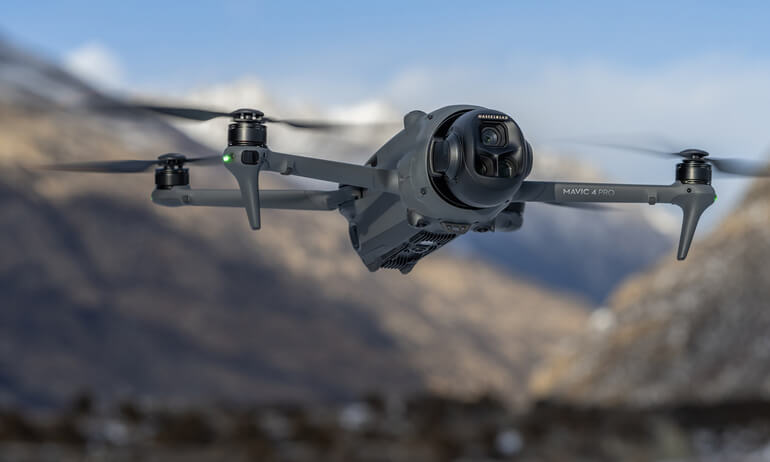
Best Overall for Professional Wind Flying
Released in May 2025, the Mavic 4 Pro is the most capable consumer folding drone DJI has built. When it comes to wind, it has two clear edges over the rest of the lineup.
Its top speed of 25 m/s is higher than that of any other current consumer DJI model. That extra speed means it can hold position in wind that would push a slower drone backward or sideways.
At 1,063g, it is the heaviest folding consumer drone DJI makes. More weight means wind has less relative effect.
Who It’s For
Professional pilots who shoot in demanding conditions regularly need every performance advantage. The extra cost over the Air 3S only makes sense if you fly regularly in strong, sustained winds, run long missions, or need the triple-camera setup for high-end commercial work.
Source: DJI
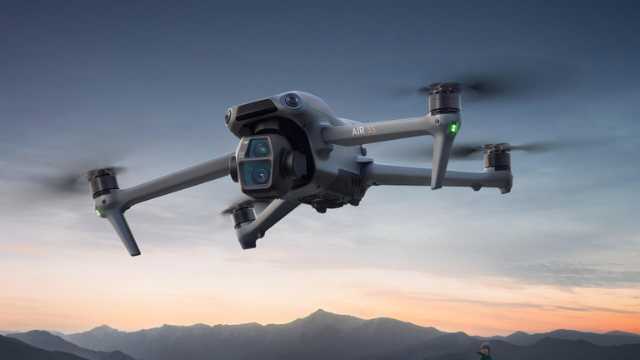
The Air 3S is the pick for most commercial pilots in 2026. It hits the same published wind spec as the Mavic 4 Pro and Mavic 3 Pro at around half the price of either.
It weighs 720g, making it lighter than the Mavic 4 Pro, so the wind has a greater effect on it. But its 21 m/s top speed gives it plenty of room to handle the wind conditions most commercial jobs involve. GPS hold is tight. The 1-inch main sensor produces professional footage in most light.
Who It’s For
Commercial pilots, serious hobbyists, and anyone who needs reliable wind performance without a $2,000+. If the Mavic 4 Pro’s advantages don’t match your specific workflow, the Air 3S is the right pick
Source: DJI
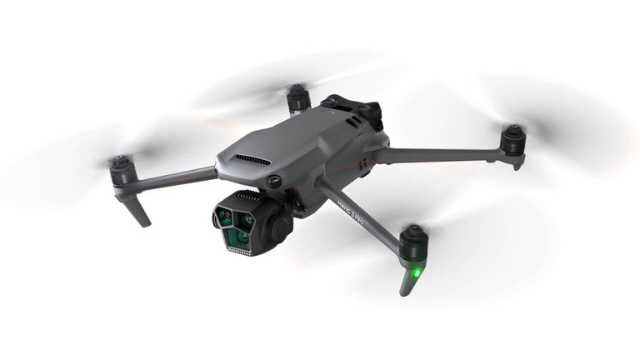
The Mavic 3 Pro shares the same published wind resistance and top speed as the Air 3S but is heavier at 958g. That extra weight helps in crosswinds. The problem is price; at this level, the Mavic 4 Pro is a stronger drone in every way.
If you already own a Mavic 3 Pro, it is still a capable wind platform. If you are buying new, compare the Mavic 4 Pro and Air 3S before making a decision.
Source: DJI
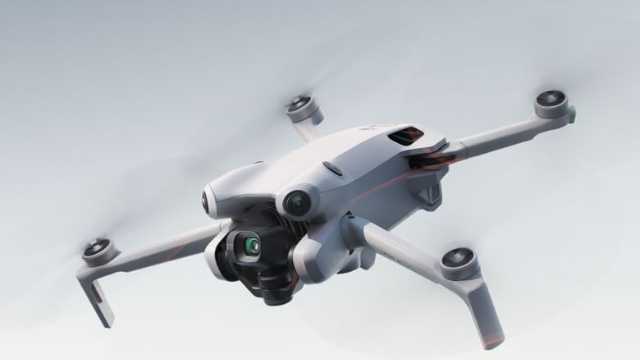
The Mini 4 Pro is the pick when you need to stay under the 250g regulatory threshold. It is a capable drone and a big jump over older mini-class models. But in the wind, its limits are real and worth being honest about.
At 249g, even a moderate crosswind pushes it around. Its 16 m/s top speed leaves less room to fight a headwind than larger models. Under 15 mph, it flies well. Above 20 mph, the motors work very hard, which drains the battery fast and adds wear.
If wind performance is your primary concern, the Mini 4 Pro is not the right drone. Its weight makes wind handling a basic physical limit; no firmware update can fix that. Choose it when the 250g threshold matters to your operation, not because you want to fly in strong winds.
Source: DJI
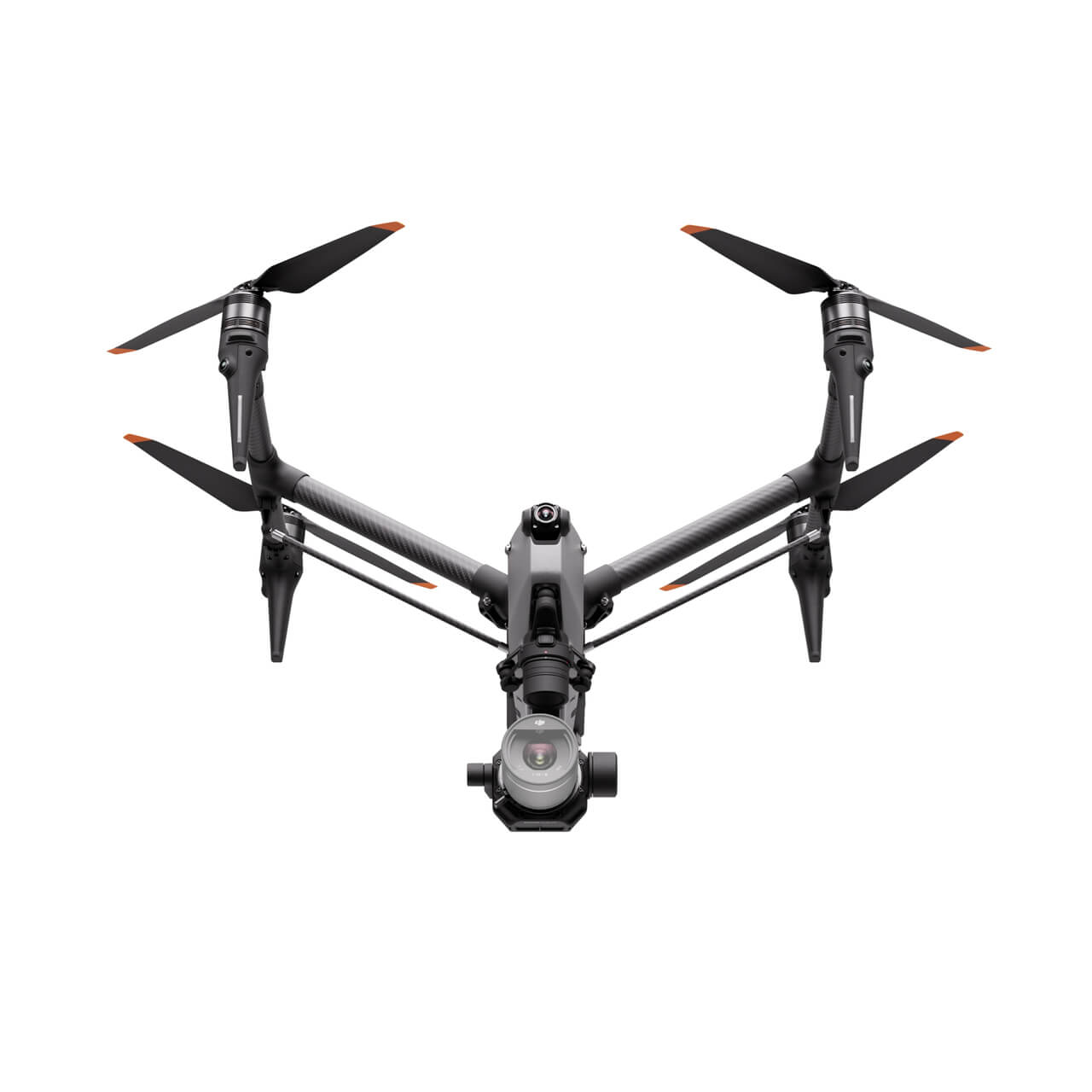
Coaxial setups are the best platforms for flying in the wind. Coaxial drones have two motors on each arm, spinning in opposite directions on the same axis. This makes them more efficient, more stable, and better at handling wind than a standard quadcopter of the same weight.
The DJI Inspire 3 is the current professional coaxial option from DJI. It is built for broadcast and cinematic work and starts at above $15,000 with lenses. That puts it out of reach for most commercial pilots, but it is worth understanding why it performs so differently in wind compared to a folding consumer drone.
If you fly regularly in wind above 30 mph sustained and your budget allows for it, the Inspire 3 is worth a serious look. For everyone else, the Air 3S and Mavic 4 Pro cover the realistic wind range for commercial work.
Having the right drone is only half the answer. These six habits are what separate pilots who fly safely in wind from those who don’t.
Wind makes motors work harder, which uses more power. In sustained wind above 20 mph, plan for 20 to 35 percent less flight time than the spec sheet shows. A drone rated for 45 minutes might give you 30 in a headwind. On windy days, set your RTH (return-to-home) battery threshold higher than normal, 35 to 40 percent instead of the default 20 to 25.
On windy days, always take off and land with the drone facing into the wind where possible. A tailwind during landing pushes the drone forward and down in unpredictable ways. Pointing into the wind on landing gives the drone the best chance to hold a stable hover close to the ground, which is where most wind incidents happen.
Attitude Mode (Atti Mode) turns off GPS hold and lets the drone float freely in the air. In the right conditions, i.e., predictable, steady wind, this can be used like a surfer uses a wave. The drone drifts naturally on the breeze, which can produce smooth, flowing shots that GPS hold makes impossible. It requires real skill and practice to use safely. Do not attempt it without thorough training.
Wind speed increases with altitude. The air at 400 feet AGL is almost always stronger than the air at 50 feet. If conditions are close to your comfort limit, fly lower. You will get smoother footage and put less strain on your motors and battery.
A common mistake in wind is flying out with the wind at your back, only to realize you have to fight it the whole way home on a low battery. Plan it the other way. Fly into the wind first, when the battery is full, and come back with the wind behind you. The drone uses less power on the return and arrives home with more reserve.
The DJI Fly app shows a warning when the wind goes above about 7 m/s (15 mph). Many pilots read this as a sign that the drone is about to fail. It isn’t. It means conditions have changed, and you should pay closer attention. At 15 mph, the drone is not at its limit. Just watch the battery drain, and position hold more carefully than you would on a calm day.
Flying in the wind is one of the skills that separates pilots who work year-round from those who wait for calm days. The right drone is part of the answer, but skills matter just as much as specs.
For most pilots in 2026: start with the Air 3S. It gives you the wind performance you need at a price that makes sense. If you are already pushing it in your day-to-day work, the Mavic 4 Pro is the step up. Leave mini-class drones for the calm days.
And practice Atti Mode. In experienced hands, wind is not a problem; it is one of the best tools in aerial cinematography.
Become a DroneU member to learn to fly in any conditions. Our courses cover wind flying techniques, Atti Mode, battery management in the field, commercial operations, and Part 107 certification.
Subscribe to AskDroneU, our regular podcast where we answer your questions about all things drone-related. Available on iTunes, YouTube, and at TheDroneU.com.
 1
1
Add Your Comment