

Class D Airspace: A Comprehensive Guide for Drone Pilots (2026)

May 26, 2026
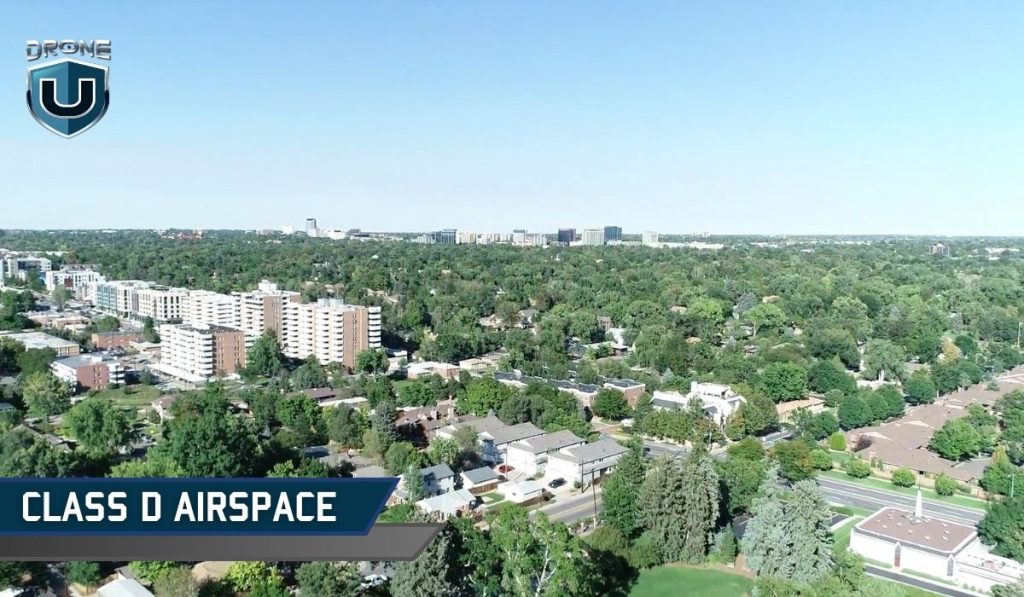
Quick Answer: Class D AirspaceClass D airspace surrounds airports with an active control tower. It extends from the surface up to 2,500 feet AGL and covers roughly 4 to 5 nautical miles from the airport center. Do you need authorization? Yes. All drone pilots, recreational and Part 107, must get prior FAA authorization before flying in Class D. Use LAANC for instant approval or FAA DroneZone if LAANC is not available at your location. Altitude limit: 400 feet AGL maximum for drone operations. Visibility requirement: 3 statute miles. Stay 500 feet below clouds, 1,000 feet above clouds, and 2,000 feet horizontally from clouds. When the tower closes: Class D reverts to Class E or Class G. Authorization is no longer required but standard safety rules still apply. How to identify it: Look for a dashed blue circle on sectional charts or check B4UFLY and Aloft before every flight. |
Class D airspace surrounds airports with an active control tower. It requires prior FAA authorization before any drone flight, recreational or commercial. No authorization means no legal flight, regardless of altitude.
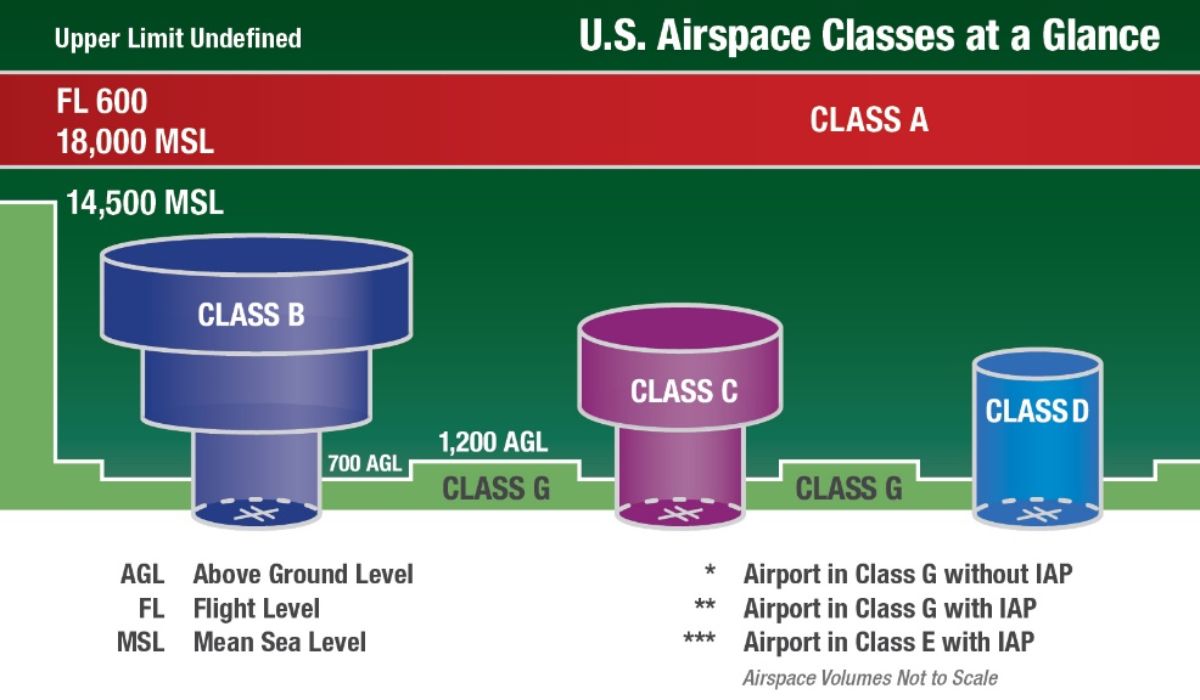
Class D airspace consists of Air Traffic Control (ATC) towers to conduct airport operations safely and efficiently.
Class D airspace includes almost any kind of air traffic, from airlines and corporate traffic to cargo operators and weekend fliers. Everyone shares this airspace at many Class D airports.
Its key characteristics include the following:
Most accidents in controlled airspace happen because pilots do not understand the rules, not because they intend to break them.
Class D airspace represents such a highly controlled airspace; that’s why you cannot fly within this zone without prior authorization from the FAA.
Drones can operate in this airspace only with proper ATC authorization that has jurisdiction over that airspace.
Class D airspace is commonly found around smaller airports. It forms a cylinder around the airfield, extending 2,500 feet above airport elevation and roughly 4 to 5 nautical miles from its center.
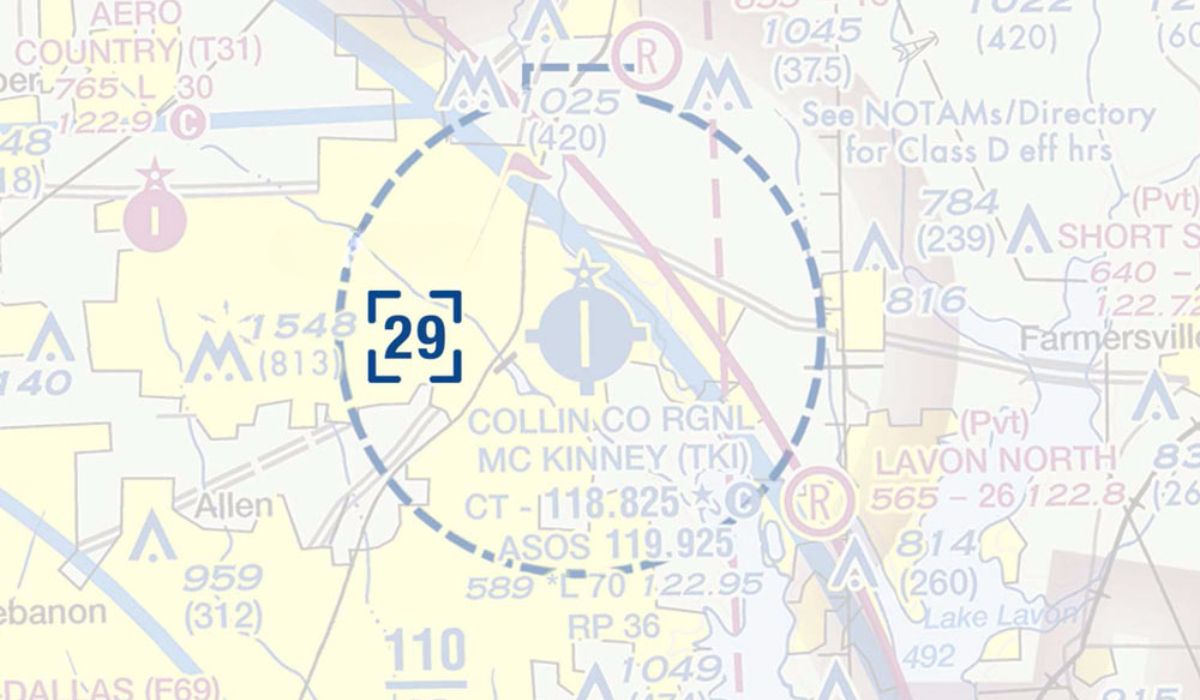
The most accurate identification of Class D airspace is necessary for safe and efficient flight operations. The best way to achieve this is by using aeronautical charts like AirMap or any other flight planning apps that provide precise airspace locations.
A blue dashed circle on aeronautical maps symbolizes the airport, serving as a visual indicator. Around that, Class D airspace is depicted with a two-digit number surrounded by square enclosed brackets.
There are the following requirements you need to take into account before operating your drone in Class Delta areas:
To fly a drone, you’ll need to get prior approval through airspace authorization by the FAA.
Authorization can be obtained for a single location or area governed by a single ATC.
You can easily obtain FAA authorization through the LAANC (Low-Altitude Authorization and Notification Capability) system.
It’s a partnership between some private drone companies (like DJI, Skyward, and Kittyhawk) and the FAA that allows you to apply for instant airspace authorization using a mobile or web application.
If LAANC is not available at your desired location, you can fill out the FAA’s online airspace authorization form and wait for it to be processed. Depending on the complexity of your request, this may take at least 90 days or even longer to process.
To fly drones in controlled airspaces, you must comply with the FAA’s Part 107 rules. These rules outline the qualifications needed for a commercial drone pilot, including remote pilot certification issued by the FAA.
This ensures that you are well-versed in the different airspace classes. Understanding these classifications will prepare you to operate in controlled airspaces with altitude restrictions and line-of-sight requirements.
Although there are no specific transponder requirements for most drones flying in Class D, it’s still essential to follow these basic equipment safety rules:
Flying a drone in controlled airspaces often requires a high level of communication to ensure safe flying surroundings for manned aircraft.
So, here are some drone flying communication best practices you must follow in controlled airspaces:
While you don’t always need to interact with ATC, still there are some specific communication procedures in Class D airspace to follow:
If your drone is near manned traffic, or if ATC specifically shares any requests, then you have to use the two-way radio communication system.
In such situations, you must have an understanding of basic Class D airspace communication requirements like:
Use these basic radio procedure steps to maintain clear communication and a safe flight:
Class D airspace is controlled airspace. Authorization is mandatory before every flight. The altitude limit is 400 feet AGL and weather minimums apply at all times.
The preparation is simple. Secure your LAANC approval before takeoff, check the weather, and confirm Remote ID is active. With those steps done, flying in Class D is no more complicated than any other controlled airspace.
Understanding the rules is what separates legal flights from violations.
Check out our group training and one-on-one training programs, here.
 2
2
Add Your Comment