

Germany Puts €34 Million Into Building Ukraine’s BABKA Scout Drone With Wingcopter

November 25, 2026
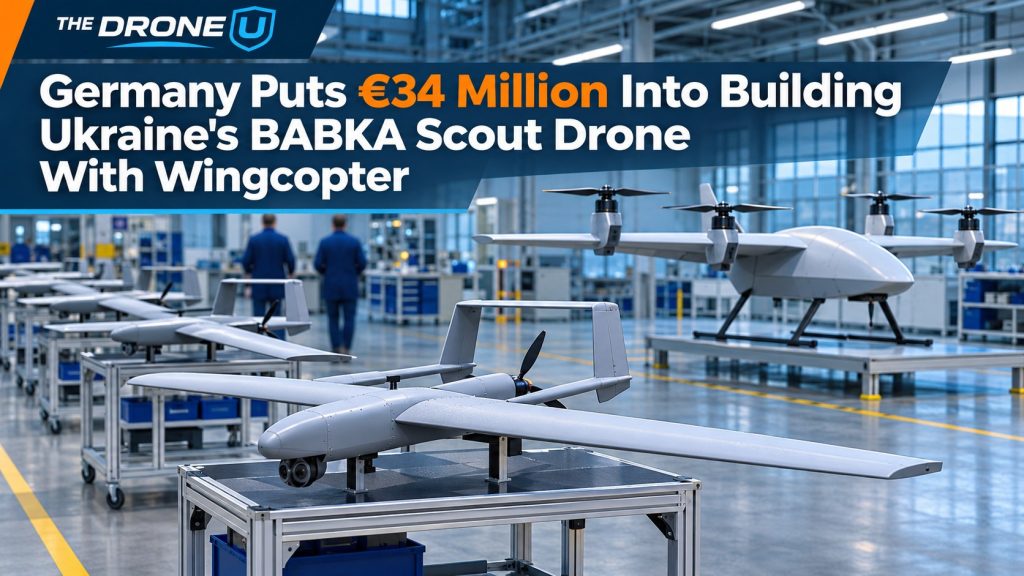
Germany is paying to build a Ukrainian-designed reconnaissance drone on German soil. Defense Minister Boris Pistorius said in Berlin, after meeting Ukraine’s defense minister Yevhenii Khmara, that the government will put about €34 million toward setting up production of the BABKA, a small fixed-wing scout drone that Ukrainian units already fly. The work goes to a joint venture between German drone maker Wingcopter and Ukraine’s TAF Industries.
TAF Industries takes part through its subsidiary Shadow Flytech LLC. Wingcopter takes part through Wingcopter Security & Defence, a business unit it set up recently. The two companies signed a memorandum of understanding at the Munich Security Conference earlier this year, formed the joint venture in Germany after that, and say they want to become the country’s largest maker of fixed-wing reconnaissance drones.
Pistorius framed the money as winter help for Ukraine. He said Germany will scale up production of drones that have “proven particularly effective” in Ukraine’s defense and are especially important this winter, and that the BABKA “will be produced in Germany in the future—specifically for Ukraine.”
Ukrainian forces get the first deliveries. The production sites are new and their locations are being kept secret. The companies say they will also offer the aircraft to the German military and other NATO forces later.
According to Wingcopter’s announcement, the joint venture will build two main reconnaissance aircraft:
TAF Industries brings a lot of production volume. DroneLife reports that the company makes more than 30 defense products, including electronic warfare and counter-drone systems, and can build up to 80,000 FPV drones a month.
Germany’s public broadcaster Tagesschau noted that Chancellor Friedrich Merz and Ukrainian President Volodymyr Zelensky agreed in April to work more closely on drone production. Pistorius also said the two countries signed a letter of intent to keep developing Ukraine’s “Delta” battlefield management system. Europe is moving quickly to make drones at home and to stop depending on Chinese hardware. We covered that trend when Germany’s military pulled DJI drones from its bases, and in the House China committee report calling commercial drone makers a national security asset.
Most U.S. pilots will never touch a BABKA. The story still matters, because the money shaping the next generation of drones increasingly comes from defense budgets. Companies best known for civilian work, including delivery and mapping, now run defense units alongside their commercial lines. That pace of investment in fixed-wing and VTOL designs could change which non-Chinese aircraft reach the commercial market over the next few years.
For pilots, the takeaway after the DJI ban hasn’t changed: learn whatever aircraft you fly very well. Fixed-wing and hybrid VTOL drones handle differently from quadcopters. They need room to climb, glide and turn, and their emergency options when a link drops or a motor quits are different too. A solid grounding in regulations, airspace and weather makes that transition easier. Students have been known to take Drone U’s online Part 107 course in 3 days and pass the test.
Sources: DroneLife (Miriam McNabb, Nov. 24); Wingcopter announcement (Nov. 24); Tagesschau.
 0