

What Is a TFR? Temporary Flight Restrictions and NOTAMs for Drone Pilots

November 17, 2026
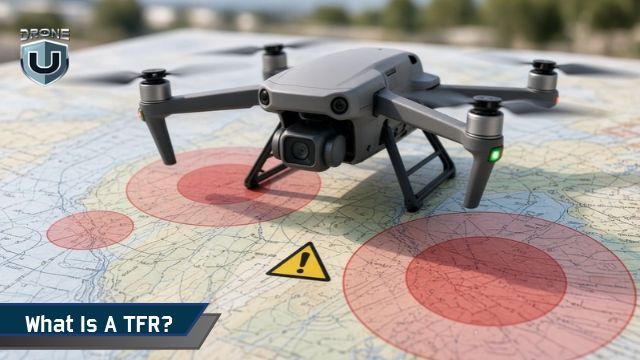
Quick Answer: What Is a TFR?A Temporary Flight Restriction (TFR) is a temporary no-fly zone the FAA creates for a specific area, altitude, and time period. The FAA issues it through a Notice to Airmen (NOTAM). NOTAMs for drone pilots include these restrictions along with other airspace changes. TFRs protect people and property, support emergency response, or address security needs. They apply to drones. Under 14 CFR 107.47, Part 107 remote pilots must comply. LAANC authorization does not override a TFR. You must check for active TFRs and NOTAMs before every flight. |
Before you launch, check the airspace, get LAANC if you need it, and check the weather. Then you still have one more thing to do. You need to know what a TFR is and how NOTAMs for drone pilots work so you stay clear of temporary restrictions.
A TFR can shut down an area that was completely open the day before. It can appear with little notice. And it applies to your drone just like it applies to any other aircraft. If you fly commercially, this is part of your job. If you fly for fun, it still applies to you.
This guide explains what a TFR is, how NOTAMs for drone pilots connect to those restrictions, the types that matter most, and how to check them. We will also understand how this topic fits into Part 107 study.
Let’s first understand what a TFR actually is.
A Temporary Flight Restriction (TFR) is the FAA’s way of temporarily closing part of the airspace. Think of it like a temporary road closure. The FAA blocks aircraft from operating in a defined volume of airspace for a limited time unless they have special permission.
The restriction covers a specific radius or area, a specific altitude range, and specific start and end times. Those details live in the NOTAM that creates the TFR. You have to read the actual text. A map pin alone is not enough.
TFRs are not the same as permanent restricted or prohibited areas. Those permanent areas appear on sectional charts. Most TFRs do not, because they come and go between chart cycles. That is why you check them separately every time you fly.
For drone pilots, the key rule is simple. 14 CFR 107.47 requires you to comply with the TFR rules in 14 CFR 91.137 through 91.145 and 99.7. The FAA does not require you to prove you knew about the restriction. Flying inside one without authorization is a violation either way.
TFRs reach you through a specific system. That system is the NOTAM.
A NOTAM is a Notice to Airmen. It is a time-critical message from the FAA. It tells pilots about changes or hazards in the National Airspace System. These changes are not yet published on charts or in other permanent documents.
NOTAMs for drone pilots cover many things. A closed runway near your site. An out-of-service navigation aid. A crane. And Temporary Flight Restrictions.
A TFR is one specific type of NOTAM. The FAA publishes the restriction as a NOTAM so every pilot can find the exact details. The NOTAM text tells you the location, the altitude limits, the active times (usually in UTC/Zulu time), and any special conditions or contacts.
You will also see FDC NOTAMs. These are Flight Data Center NOTAMs. Many important TFRs, especially security and VIP ones, are issued as FDC NOTAMs.
The name has changed over the years. In late 2021, the FAA switched the full name to Notice to Air Missions. In February 2025, it changed the name back to Notice to Airmen. The abbreviation stays the same. When you hear either version, people mean the same thing.
For drone pilots, the practical point is this. TFRs travel through the NOTAM system. Checking NOTAMs for drone pilots is how you find out about TFRs and other temporary changes.
Not every TFR looks the same. The next section covers the ones you will see most often.
Not every TFR works the same way. Here are the ones you will see most often as a drone pilot when you review NOTAMs for drone pilots.
These appear around wildfires, hurricanes, chemical spills, or accident sites. They protect people on the ground and the aircraft that are working the incident. Many of these run from the surface up to a few thousand feet, so they cover normal drone altitudes.
These move with the President, Vice President, or other protected officials. They often have a large outer ring and a tighter inner core. Drone flights are usually prohibited throughout the area unless you have a specific authorization.
These cover major league baseball, NFL games, NCAA Division I football, and certain auto races. The typical size is a 3-nautical-mile radius from one hour before to one hour after the event, up to 3,000 feet AGL.
The FAA uses these for certain military sites, critical infrastructure, and other security needs. Some are long-standing. Others appear for specific operations. Violations can carry serious consequences, including interception and possible criminal charges.
These restrict unmanned aircraft over eligible large public gatherings when a law enforcement agency requests them. They are often limited to 400 feet AGL. Authorization usually requires approval from the requesting agency or an FAA Special Governmental Interest (SGI) waiver.
Some restrictions last longer than a typical temporary window. The southern border drone TFR is one example that runs for an extended period and is still published as NOTAMs.
These rules sit inside Part 107. Here is why they matter for your certificate and your flights.
Part 107 pilots have a clear regulatory duty under 14 CFR 107.47. That means you check NOTAMs for drone pilots before every flight, even if you flew the same site yesterday.
A LAANC approval only covers controlled airspace authorization. It does not permit you to fly inside a TFR. A Part 107 waiver does not override a TFR either.
On the knowledge test, the FAA expects you to understand airspace restrictions, the difference between permanent special-use airspace and temporary restrictions, and the requirement to check NOTAMs. Questions can ask about the purpose of a TFR, the regulation that requires compliance, or how you find current restrictions.
If you are studying for the Part 107 exam, treat TFRs and NOTAMs as core material. You will use the same knowledge every time you plan a real job. Our Part 107 test prep course covers airspace rules, including TFRs and NOTAMs, in short lessons and quizzes.
Knowing the rules is only half the job. You also need a simple way to check them every time.
Make this a fixed step in your preflight process. Do it the day of the flight, not the night before. New TFRs, especially VIP ones, can appear with short notice. This is the practical side of using NOTAMs for drone pilots.
Here is a simple checklist:
You can also call Flight Service or use other official briefing tools. The goal is the same. Confirm that no TFR covers your planned flight area at the planned time.
Even with a solid checklist, some mistakes still happen. These are the ones to avoid.
Pilots run into trouble when they treat TFRs as optional or outdated. These mistakes show up regularly when people skip a full check of NOTAMs for drone pilots.
Any of these can put you inside an active restriction. The safest habit is to treat the official TFR list and the NOTAM text as required reading.
What is a TFR? It is a temporary airspace restriction the FAA issues through a NOTAM. NOTAMs for drone pilots include these restrictions and other temporary changes you need to know about. They apply to your drone. You must check for them before every flight, and a TFR overrides a normal LAANC approval.
Understanding TFRs and NOTAMs is basic pilot knowledge. It keeps you legal, protects people on the ground, and keeps you clear of emergency operations. It is also material the FAA tests on the Part 107 exam.
Enroll in Drone U’s Part 107 test prep course. You get on-demand video lessons, FAA-aligned quizzes, a downloadable study guide, and lifetime access. Most students finish in a few days and walk into the test ready. Start with the free practice test if you want to see where you stand first.
 0
