QUICK ANSWER
What Is Drone Fleet Management?
Drone fleet management is the systematic oversight of multiple aircraft, pilots, and operations as a single coordinated program. It covers three pillars: operations control (aircraft status, maintenance, and data traceability), compliance management (Part 107 currency, registration, and audit records), and pilot training (certification tracking, recurrent training, and role-based qualification). Without it, growing drone programs face compounding risks, such as expired credentials, maintenance gaps, and missing flight records that fail client audits. |
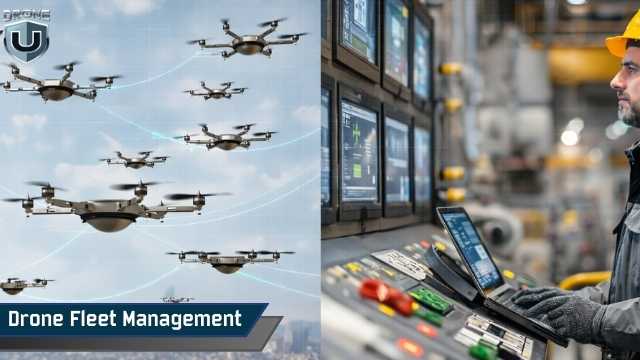
Drone fleet management means overseeing multiple drones, pilots, and missions as one connected program. It replaces the manual tracking that breaks down the moment an operation starts to grow.
When you fly one or two drones, management is simple. You know which drone flew the mission, which battery you used, and where the data went. As soon as you add more drones, more pilots, or another job site, that clarity disappears. You start relying on spreadsheets, chasing maintenance logs, and hoping nothing important gets missed.
In this article, we’ll learn how drone fleet management software works, how compliance fits into daily operations, and how to scale without losing oversight.
Let’s start with the basics.
What Drone Fleet Management Actually Means
Drone fleet management is not just tracking aircraft. It means running your entire drone operation as one connected system. Every drone, pilot, mission, and compliance record is part of the same workflow. Nothing lives in a separate spreadsheet or someone’s memory.
The difference between managing drones and managing a fleet is the difference between individual accountability and organizational accountability. In a fleet, the program, not the person, is responsible for knowing whether every aircraft is airworthy, every pilot is current, and every flight is documented. That shift in accountability is what makes drone programs scalable, audit-ready, and enterprise-grade.
Fleet management also creates consistency. The same pre-flight checks, the same maintenance routines, the same reporting steps, every time, regardless of which pilot is flying or which site they are at. That consistency is what clients, insurers, and regulators look for when evaluating whether a drone program can be trusted with serious work.
Most importantly, drone fleet management helps you stay compliant as you grow. Regulations do not scale automatically. When you manage your fleet as a system, you keep records organized, stay audit-ready, and avoid compliance gaps that can slow operations.
Next, let’s look at when drone fleet management becomes necessary.
When Fleet Management Becomes a Requirement
Most drone programs start without formal fleet management. One or two drones, a couple of pilots, and a shared spreadsheet are enough to keep things running. That changes fast.
The tipping point is rarely a single event. It is the accumulation of small failures. A maintenance log goes missing. A pilot’s certificate lapses without anyone noticing. A client requests flight records from three months ago, but no one can locate them quickly. Each problem is manageable in isolation. Together, they signal that the program has outgrown informal tracking.
According to Future Market Insights, the enterprise drone management market is projected to grow from USD 2.09 billion in 2025 to USD 10.70 billion by 2035, indicating how quickly organizations are moving from manual tracking to structured fleet programs.
The table below lists the most common warning signs and the cost of leaving each unaddressed.
| WARNING SIGN |
WHAT IT SIGNALS |
RISK IF IGNORED |
| Can’t quickly answer “which drone flew last?” |
No centralized flight log |
Audit failure |
| Pilot certification dates tracked in email |
No credential management system |
Illegal commercial flight |
| Battery inspections are performed “when we remember.” |
No maintenance workflow |
In-field aircraft failure |
| Different pilots follow different pre-flight checklists |
No standardized SOP enforcement |
Inconsistent safety outcomes |
| Multiple drones, no status dashboard |
No fleet visibility |
Wrong aircraft dispatched |
| Client requests a data report, which takes hours to compile |
No data traceability system |
Lost client confidence |
The right time to implement fleet management is before these warning signs become incidents. The cost of setting up a structured system is always lower than the cost of recovering from a compliance failure, a grounded aircraft, or a lost enterprise contract.
Now, let’s break down the core components that make drone fleet management software work in practice.
Core Components of Drone Fleet Management
Every mature drone program, from a 5-drone inspection company to a 100-drone enterprise program, is built on the same three operational pillars: the complexity scales. The structure doesn’t change.
Here are the core components of a drone fleet management system.
1. Operations Control
Visibility and control over every aircraft, mission, and data output in your program. This covers fleet status, maintenance tracking, mission assignment, and flight log traceability — the systems that keep daily operations running without blind spots.
2. Compliance Management
Keeping every aircraft, pilot, and operation legally current at any program size. This covers Part 107 currency, aircraft registration, Remote ID, and audit-ready documentation, the records clients and regulators ask for.
3. Pilot Training and Currency
Ensuring every pilot is certified, current, and qualified for their specific mission type. This covers certificate tracking, recurrent training, and role-based authorization — the difference between a pilot who is legally allowed to fly and one who is operationally ready to fly.
Why all three matter together
Operations, compliance, and training are not independent tracks. A pilot who is current on their certificate but not trained for a specific mission type (thermal inspection, BVLOS, confined space) is a compliance gap. An aircraft that passed maintenance but has no associated flight log is a traceability gap. Fleet management means all three pillars run in sync, not just one.
Together, these components turn scattered operational details into a structured system. They give you control, consistency, and confidence as your drone operation scales.
Let’s understand each pillar in detail in the next section.
Operational Control and Standardization Across a Fleet
As your fleet grows, consistency matters as much as capability. Drone fleet management gives you that control by turning best practices into standard workflows.
1. Fleet Visibility and Aircraft Status
Fleet visibility means knowing the current state of every aircraft in your program at a glance. Identify airworthy drones, track those in maintenance, and monitor drones assigned to active jobs.
Without a centralized system, this information lives in different people’s heads or different spreadsheets. That works for two drones. It fails at ten.
Fleet management software gives you a live status dashboard. Before dispatching an aircraft, a program manager can confirm it is airworthy, check its last maintenance date, and verify which pilot it is assigned to, without making phone calls.
2. Maintenance and Battery Tracking
Batteries are the most common failure point in commercial drone programs. They degrade with each charge cycle, and a battery that looks fine on the outside can fail mid-flight. Fleet management systems track cycle counts per battery, flag units approaching end-of-life, and log every inspection. This prevents the most common cause of in-field downtime, especially a battery failure that a 10-second pre-mission check would have caught.
Aircraft maintenance tracking works the same way. Flight hours accumulate. Propellers wear. Motors need inspection at defined intervals. Fleet software tracks all of it automatically based on logged flight time, rather than relying on pilots or managers to remember service schedules manually.
3. Mission Assignment and Data Traceability
Every mission should produce a traceable record that links a specific flight to a specific pilot, aircraft, battery, job site, and deliverable. This is not just good practice; it is the foundation of enterprise accountability.
When a client disputes data quality or when an aircraft incident requires investigation, you need to pull the complete flight record in minutes. Programs that lack this traceability spend hours reconstructing records from emails and memory, and sometimes can’t reconstruct them at all
Let’s look at how drone fleet management supports compliance as your operation scales in the next section.
Compliance Management Within a Drone Fleet
Compliance becomes challenging as your drone operation grows. What works for one drone fails at fleet scale. Drone fleet management turns regulations into repeatable processes. These processes fall into a few key areas that fleet management software helps you handle every day.
1. Managing FAA Part 107 Requirements at Scale
Under Part 107, every pilot must stay current, and every flight must follow specific rules. Fleet management software helps you track pilot certifications, renewal dates, and operating limits in one place. You no longer rely on memory or last-minute checks. The system shows you who is cleared to fly before a mission starts.
2. Aircraft Registration and Remote ID Tracking
Each drone in your fleet must meet registration and Remote ID requirements. Fleet management software stores registration numbers, Remote ID status, and aircraft details alongside the drone record. When regulations change or enforcement increases, you can quickly confirm compliance.
3. Flight Records and Audit Readiness
Every flight creates a compliance record. When you manage a fleet, those records add up fast. Fleet software logs flight details automatically and keeps them searchable. When auditors ask for documentation, you can produce it without scrambling.
4. Compliance Audit Checklist
Here’s a list of what Enterprise Clients ask for:
- Current Part 107 certificate for each pilot
- FAA registration for each aircraft
- Remote ID compliance documentation
- Flight logs for the contract period
- Maintenance records per aircraft
- Battery inspection and cycle history
- Airspace authorizations (LAANC records)
- Incident reports and corrective actions
- Standard operating procedure documentation
- Pilot training and recurrent currency records
- Insurance certificate of coverage
- Data handling and retention policy
Pilot Training and Currency
Training is not just an onboarding activity. It is an ongoing compliance function. A pilot who was fully qualified 18 months ago may no longer meet current requirements. Either because their recurrent training is due, because regulations have changed, or because the program has added new mission types that require additional qualifications.
In a well-managed fleet, the training pillar answers one question for every pilot at all times: Is this pilot qualified to fly this mission today? That question covers Part 107 currency, mission-type qualification, site-specific training, and any enterprise or client-specific requirements.
Biennial Recurrent Training
The FAA requires recurrent training every 24 months for Part 107 pilots. The FAA provides this training free online. In a multi-pilot program, tracking who completed it and when is the responsibility of the program manager, not the individual pilot. Fleet management systems automate this tracking, flagging pilots who are approaching their renewal window before they lapse.
Mission-Type Qualification
Not every Part 107 pilot is qualified for every mission. Thermal inspection requires understanding how to operate and interpret radiometric sensors. Construction mapping requires photogrammetry workflow knowledge. BVLOS operations will require additional organizational qualifications under the incoming Part 108 framework.
Fleet management programs track qualifications per pilot per mission type. This prevents the common error of assigning a qualified pilot to a mission they are not trained for, which creates liability even when no incident occurs.
| Drone U provides structured training resources that align with these requirements. An All-Access Membership gives every pilot in your program access to Part 107 preparation, recurrent training support, and mission-specific courses, ensuring currency doesn’t become a bottleneck as the team grows. |
Now let’s focus on how drone fleet management helps you scale without losing oversight.
Scaling Drone Operations Without Losing Oversight
Scaling a drone operation is not just about adding more aircraft. Each new drone, pilot, and job site increases complexity. Without structure, growth leads to blind spots. Drone fleet management helps you scale while keeping full control of your operation.
Here are the key scaling challenges that affect your fleet as it expands.
1. Managing Larger Fleets
As fleets grow, manual tracking falls apart. Fleet management software gives you a clear view of every aircraft, no matter how many you operate. You can assign drones, monitor availability, and prevent conflicts without increasing administrative work.
2. Supporting Multi-Location Teams
Scaling often means operating in multiple locations. Fleet software helps you manage teams across sites while maintaining the same standards. You control access, permissions, and workflows so every location operates under the same rules.
3. Mixed Aircraft and Payload Management
Growing fleets rarely stay uniform. You may add different drone models or specialized payloads over time. Fleet management software organizes all aircraft and configurations in a single system. This helps you match the right equipment to the right job without confusion.
4. Using Automation to Maintain Oversight
Automation becomes essential as scale increases. Fleet management tools automate maintenance alerts, compliance checks, and reporting. This reduces manual effort and prevents gaps as flight volume increases.
Scaling works best when oversight scales with it.
The Shift to Drone Fleet Management
As you address these challenges and scale, your focus shifts from managing individual flights to running a structured, system-driven drone program. With growth, you standardize workflows, centralize documentation, and automate compliance to keep operations consistent.
Your decisions shift from manual coordination to data. Instead of asking whether a drone can fly, you evaluate utilization, readiness, and overall program performance. Drone fleet management provides the structure needed to scale with visibility and control without increasing coordination effort at the same pace.
Now let’s see how drone fleet management works in real-world operations.
Real-World Fleet Management Scenarios
Drone fleet management becomes easier to understand when you see how it plays out in real operations. Different teams face different challenges as they scale.
Here are common scenarios where drone fleet management becomes essential.
| Industry |
Scenario |
Challenge without Fleet Management |
The Fleet Management Approach |
Outcome |
| Utility & Energy |
Multi-state power line inspection — 24 aircraft, 18 pilots across 8 states |
- No single view of pilot currency or aircraft maintenance across the program.
- The compliance team is rebuilding records manually before every audit.
|
- A Centralized dashboard tracks all aircraft, pilots, and certifications.
- Maintenance alerts are automated per aircraft.
- Pilot currency flagged 60 days before expiration.
|
- FAA documentation audit passed in under 2 hours.
- Previously took 3 days of manual compilation.
|
| Public Safety |
Metro police department — 12 drones shared across multiple shifts |
- Manual logs are inconsistent across shifts.
- No reliable way to link a flight to a specific officer and incident authorization when accountability is required.
|
- Role-based access limits checkouts to certified officers only.
- Every flight is auto-logged with officer ID, mission type, and incident reference.
- Supervisors see fleet status in real time.
|
- Use-of-force incident review required a complete drone footage record.
- Full flight record, including battery, aircraft serial, and authorization chain, produced in under 5 minutes.
|
| Construction |
National contractor — 12 pilots, 40 active project sites |
- Enterprise client requests 6 months of pilot credentials, insurance docs, and flight records before signing.
- No organized system to compile them on the client’s timeline.
|
- All certificates, insurance documentation, and flight logs are stored in the fleet management system.
- Compliance package exportable on demand.
|
- $180,000 annual contract won.
- Competitors without organized documentation could not produce the required records in time.
|
| Agriculture |
Crop monitoring & spraying — 8 aircraft, 3-state, 5-month season |
Two aircraft had mid-season failures due to untracked battery degradation, causing missed client appointments and unplanned equipment replacement costs. |
- Battery cycle tracking per unit with automated retirement alerts at 80% of rated cycle life.
- Pre-season maintenance standardized and logged.
- Aircraft availability is visible before scheduling.
|
- Zero mid-season aircraft failures the following season.
- Battery replacement is planned and budgeted in advance.
|
These examples share a common thread. The programs, such as audits, incidents, and contract deadlines, handled pressure well and had structured systems in place before the pressure arrived. The ones that struggled were still running on spreadsheets and memory when it mattered most. Software selection is the practical next question.
Let’s understand how to choose drone fleet management software in the next section
Choosing Fleet Management Software
Fleet management software is the system layer that makes the three-pillar framework operational. The right choice depends on your program size, mission types, and the compliance standards your clients or industry require.
| PLATFORM |
BEST FOR |
KEY STRENGTH |
PRICING TIER |
| Airdata UAV |
Flight log analysis and maintenance tracking |
Automatic DJI log sync, battery health monitoring |
Free tier available; paid from ~$15/mo |
| Dronedesk |
All-in-one operations for small to mid-size programs |
Client management, airspace intelligence, compliance reporting |
From ~$29/mo |
| DJI FlightHub 2 |
DJI-centric fleets |
Native DJI integration, live telemetry, and remote control |
Included with DJI enterprise hardware |
| DroneDeploy |
Enterprise data and fleet management combined |
End-to-end from flight to processed output, BVLOS-ready |
Enterprise pricing — contact for quote |
| Aloft (formerly Kittyhawk) |
Public safety and enterprise airspace management |
LAANC integration, FAA authorization, and incident records |
Tiered — from free to enterprise |
| FlytBase |
Automated dock-based drone programs |
Drone-in-a-box support, autonomous mission management |
From ~$200/mo per dock |
Platform selection depends on fleet size, mission type, and whether your clients or the industry specify an approved platform. For DJI-centric fleets under 20 drones, Airdata UAV and Dronedesk cover most operational needs at a manageable cost. For enterprise programs over 20 drones with data processing requirements, DroneDeploy or FlytBase are the more complete options. In public safety and utilities, Aloft has become a near-standard platform for FAA authorization and incident documentation.
Common Selection Mistakes
Most programs choose software based on feature lists. They end up paying for capabilities they don’t use while missing the basics they actually need. The right question is not “what does this software do?” It is “Does this software fit how my team actually works every day?”
The second common mistake is waiting too long. Programs that implement fleet management after they have already hit their pain points spend weeks migrating data from spreadsheets and rebuilding records. Programs that implement it before the pain points arrive have clean data from day one.
Choose a platform that can grow with you. Switching fleet management software at 30 drones is significantly more disruptive than choosing a scalable platform at 5.
Enterprise Consideration
Enterprise clients and government agencies often specify approved software platforms as a condition of contracts. Before selecting fleet management software, check whether the clients you are targeting have requirements or whether your industry has an emerging standard. In utilities and public safety, specific platforms are becoming de facto requirements for vendor approval.
Drone U’s enterprise drone programs include guidance on software selection as part of program design.
How to Implement Drone Fleet Management
Most programs overcomplicate the start. The practical sequence is:
1. Audit what you have. List every aircraft, battery set, and pilot. Record certification dates and last maintenance dates for each.
2. Choose one platform and migrate. Pick a software platform that matches your current size, not your projected size. Switching later is far easier than building on the wrong foundation.
3. Standardize one workflow first. Pre-flight checklists are the highest-impact starting point. Every pilot following the same checklist immediately improves consistency and creates the first documented compliance record.
4. Set automated alerts before you need them. Configure maintenance alerts, certification renewal flags, and battery cycle tracking in week one. These prevent the most common compliance gaps from developing silently.
5. Run a mock audit after 30 days. Ask yourself: could you produce a complete flight record, pilot credential, and maintenance log for any flight in the past month in under 10 minutes? If yes, the foundation is working. If not, identify which record is missing and close that gap before it becomes a client or regulatory issue.
Conclusion
Drone fleet management is not a feature you add when a program gets big enough. It is the operational structure that makes growth possible without compounding risk. The programs that handle audits, contract requirements, and aircraft incidents all share one thing: they had structured systems in place before the pressure arrived.
As Part 108 moves toward finalization, organizational accountability replaces individual pilot accountability for BVLOS operations. Programs already running all three pillars will adapt without disruption. Programs still on spreadsheets will face a structural rebuild at the worst possible time. The right moment to build that structure is now, before the next audit, the next enterprise contract bid, or the next aircraft incident.
Join Drone U’s enterprise programs to build a structured, compliant drone operation.
Resources
| Enterprise Offers |
Operations Resources |
| Enterprise Drone Programs
Scalable training and compliance programs for organizations |
Drone Inspections Guide
Roof, solar, cell tower, and construction inspection workflows |
| Drone Business Courses
Operations, pricing, contracts, and scaling your program |
Drone Accuracy Guide
GPS, RTK, and PPK for enterprise mapping and inspection |
| Part 107 Certification
FAA exam prep for every pilot in your fleet |
US Drone Laws Overview
Federal and state compliance requirements for operators |
| All-Access Membership
Unlimited training access for your entire team |
BVLOS Operations Guide
Beyond visual line of sight — rules, waivers, and Part 108 |
 1
1