

Part 107 Test Changes on October 26, 2026: What’s New and How to Prepare for Chart Questions

October 1, 2026
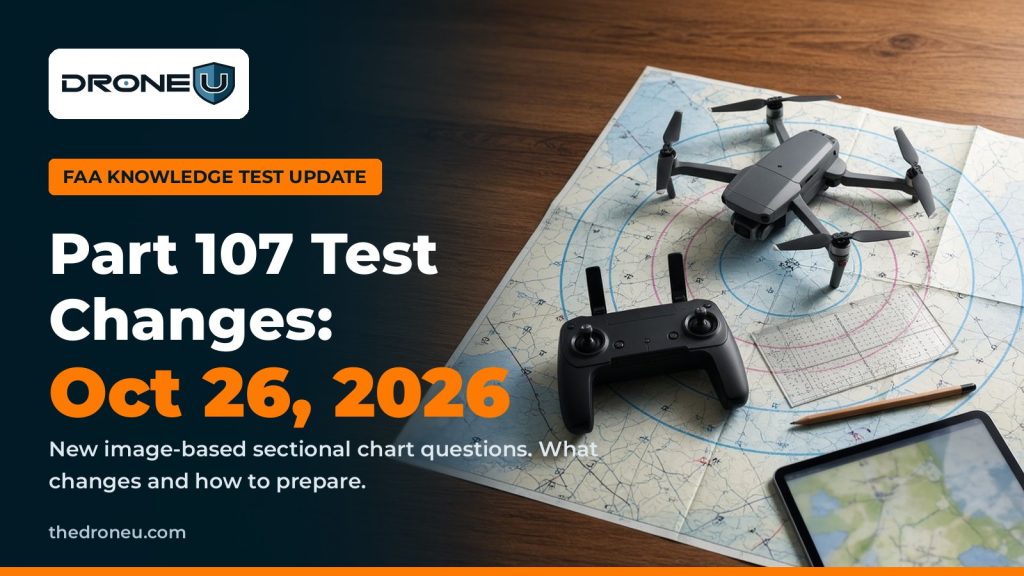
If you’re studying for your Part 107 right now, the Part 107 test changes coming on October 26, 2026 belong on your calendar. Starting that day, the FAA Part 107 knowledge test (officially the Unmanned Aircraft General – Small, or UAG, exam behind your Remote Pilot Certificate) will include image-based questions pulled from current FAA sectional charts. These images aren’t in the printed testing supplement you’ve been practicing with.
The FAA announced these Part 107 test changes in its Airman Testing Community Advisory. Below we cover what the advisory says, what stays the same, how the test has been trending, and a three-week plan to get chart-ready, whether you test before the change or after.

The FAA’s Testing Standards Section publishes the Airman Testing Community Advisory (ATCA) to announce changes to airman tests. The September 2026 Special Edition says that, beginning October 26, 2026, the Instrument Rating Airplane (IRA) and Unmanned Aircraft General – Small (UAG) tests “will include image-based questions not found in the test supplements.”
According to the FAA, the new images:
There’s also a date wrinkle you may have seen online. The June 2026 advisory listed October 27. The August and September editions corrected it to October 26, 2026, so October 26 is the date to plan around.
This is part of a broader FAA effort called the Graphics Conversion Project, which embeds images directly in test questions so candidates don’t have to flip through a printed booklet. The UAG test is already on the FAA’s list of exams with embedded-image questions. What’s new on October 26 is that some of those images will come from current charts rather than from the supplement.
The advisory includes two UAG sample questions. Both use cropped images from real sectionals: the Washington and Las Vegas charts, dated June 12 to August 7, 2025.
In other words, the Part 107 test changes don’t add new topics. Airspace classification and airport operations have always been on the test. The difference is the format. Instead of a familiar figure number from the supplement, you’ll be reading a fresh piece of a current chart you’ve probably never seen. If you memorized the supplement figures, that habit won’t carry over. But if you learned to read a chart, you’re fine.
Here’s what doesn’t change, according to the FAA’s own documents:
Even before the chart change, FAA 107 test results were moving the wrong way. The FAA’s annual Airman Knowledge Test statistics show:
| Year | UAG tests taken | Pass rate | Average score |
|---|---|---|---|
| 2024 | 67,576 | 84.20% | 79.95% |
| 2025 | 73,914 | 82.96% | 79.31% |
More people took the test in 2025, and a smaller share passed. An average score just under 80% isn’t much of a cushion above the 70% line. So the Part 107 test changes, which add unfamiliar chart images, won’t make things easier for anyone who prepared by memorizing.
At Drone U we treat sectional charts, controlled airspace and weather as the most challenging areas of the test, and the new format puts even more weight on charts. If you want the full list of traps, read our breakdown of the most common Part 107 test mistakes.
There’s no single right answer. However, with the Part 107 test changes only weeks away, here’s how we’d decide:
Test before October 26 if you’re already scoring consistently well on full-length practice tests and you can get a PSI appointment in time. You’ll take the test in its familiar form, and nothing about passing early puts you at a disadvantage.
Wait until after October 26 if you’re just starting out, or your chart reading is shaky. After all, three weeks isn’t long to go from zero to test-ready. Rushing into a $175 test to beat a date, then waiting 14 days to retest, is worse than taking the time to prepare properly.
Either way, the fix is the same: learn chart reading as a skill. Questions built on current chart images reward pilots who can find an airport, identify the airspace around it, pull the right frequency and spot the restrictions. That’s also what you’ll be doing for real when you plan a commercial job. Our Part 107 test prep course covers sectional charts, controlled airspace and weather in short video lessons, with quizzes that tell you when you’re ready.
Use this plan if you’re testing in the next month. It assumes you’ve already covered the basics of the regulations.
The goal for Week 3 is simple: when you see a chart crop for the first time, you know where to look within a few seconds.
How many questions are on the Part 107 test?
The UAG test has 60 scored questions. You may also see up to 5 unscored validation questions. You get 2 hours (120 minutes), and you need 70% to pass. The October 26 change doesn’t alter any of that.
Is the Part 107 testing supplement going away on October 26?
No. The FAA says it hasn’t set a date to remove testing supplements from test centers, it will give ample notice before it does, and candidates keep access to the supplement until then. Some questions will just use embedded chart images instead.
Can I see the new chart questions ahead of time?
No. The FAA says images used in active test questions can’t be previewed. However, you can practice the same skills with our free Part 107 practice test.
Does the change affect Part 107 recurrent training?
The advisory covers the UAG knowledge test, not recurrent training. To keep your certificate current, you still complete the FAA’s free online Part 107 Small UAS Recurrent course (ALC-677) every 24 calendar months. Pilots with a current Part 61 flight review can take ALC-515 instead. Our Part 107 renewal guide walks through the process.
How much does the Part 107 test cost?
PSI, the FAA’s testing vendor, lists FAA knowledge test vouchers at $175 each, plus any applicable tax. Confirm the amount when you schedule. For a full picture of what it costs to get licensed, see our drone license cost breakdown. For every step from FAA Tracking Number to temporary certificate, read how to get your Part 107 license.
In short, the Part 107 test changes reward pilots who understand charts instead of memorizing figures. That’s how we’ve always taught.
Want to see where you stand first? Take our free Part 107 practice test.
Enroll in Drone U’s Part 107 course for $147 (regularly $197). You get on-demand video lessons, FAA-aligned quizzes (score 90%+ and you’re ready), a downloadable study guide, access to the private Drone U community, lifetime access and a 14-day money-back guarantee. Whether your test date is before or after October 26, you’ll walk in knowing how to read the chart in front of you.
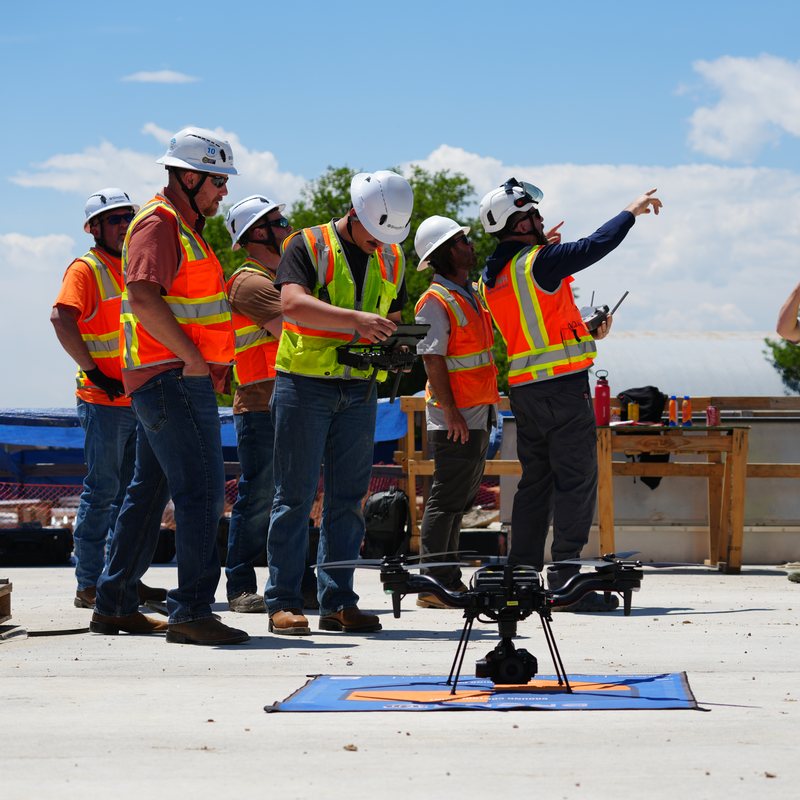
Hands-on drone training, on site with an enterprise team.
Training a group of employees for an enterprise drone program? In that case, we also bring hands-on, in-person Part 107 and flight training to organizations, so your whole team can prepare for the Part 107 test changes together.
Explore our Enterprise Drone Programs, or book a consultation with us to build a training plan for your organization.
 1
1