

Texas Drone Laws & Drone License (2026): Private Property, Critical Infrastructure and Part 107

October 8, 2026
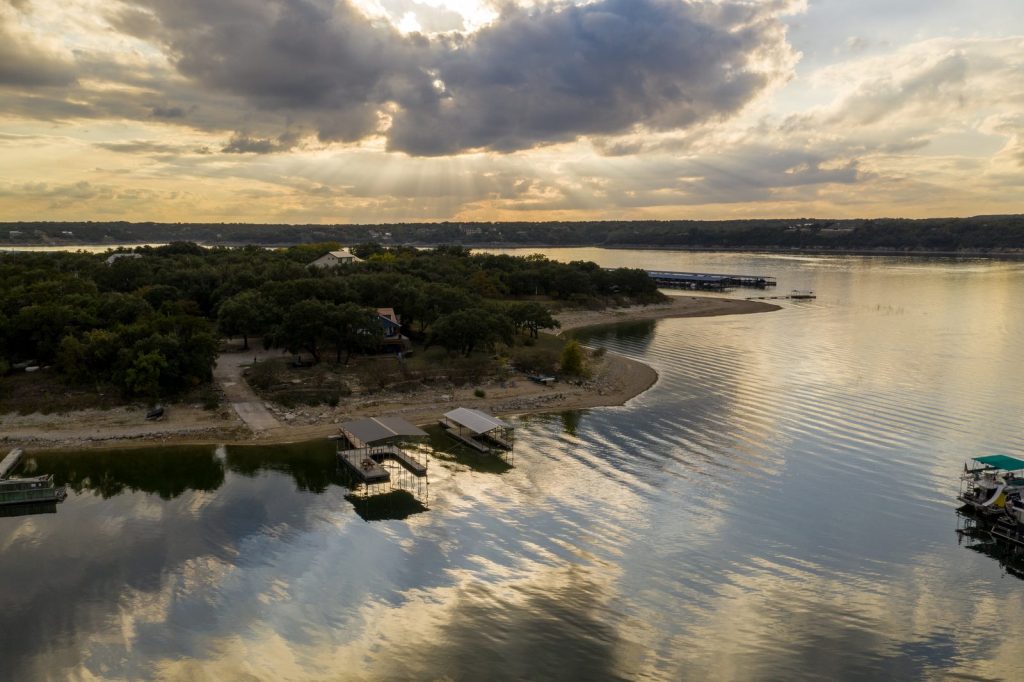
Texas drone laws are some of the most detailed in the country. If you’re a Texas drone pilot, you’re juggling three big pieces. First, a surveillance law can cost you $5,000 to $10,000 in civil penalties. Second, criminal no-fly rules cover critical infrastructure and big stadiums. Third, state law stops most cities from writing their own drone rules.
One thing to remember up front: states do not control airspace. The FAA does. States, counties and cities can only limit takeoff and landing from public land. Private property is private, and those same governments, and especially HOAs, cannot regulate flights over it the way the FAA regulates the air.
Here’s what each law says, where you can fly, and what it takes to get your Texas drone license.
Quick answer
Only if you fly for work, and the license comes from the FAA. What people call a Texas drone license is the FAA’s Remote Pilot Certificate under Part 107. For example, real estate photos, roof inspections, ranch surveys and paid event video all require it.
To earn it, you must:
Recreational flyers take the free TRUST instead; our TRUST test guide covers it. In both cases, register any drone that weighs 250 grams or more ($5, valid three years). A registered drone must also broadcast Remote ID.
The certificate also matters for Texas drone laws. Several Texas exceptions apply only to commercial operators who comply with FAA rules and hold every required FAA authorization. So the certificate isn’t just a federal box to check. It’s part of your protection under state law, too.
Going pro in Texas? Get your Texas drone license with our Part 107 course. It’s $147 (regularly $197), with lifetime access and a 14-day money-back guarantee. Drone U has 10+ years of in-person drone training and 14+ years of online drone education.
The FAA controls the airspace. However, states can regulate privacy, property and security, and Texas does all three.
| Law | What it does | Penalty |
|---|---|---|
| Gov. Code §423.002 | Lists 21 lawful ways to capture images, such as with the property owner’s consent, over public property, or by a real estate broker marketing a property with no identifiable people in the image. | Exceptions |
| Gov. Code §423.003–.004 | Bans using a drone to capture an image of a person or private property with intent to conduct surveillance. Possessing the image is a separate offense, and so is sharing it. Each image counts separately. | Class C misdemeanor; Class B if you disclose or distribute |
| Gov. Code §423.006 | Lets the property owner or tenant sue. The court also awards attorney’s fees to the prevailing party. | $5,000 per episode; $10,000 if images are shared; actual damages if shared with malice |
| Gov. Code §423.0045 | Bans flying over a critical infrastructure facility at 400 feet AGL or lower, making contact, or interfering with it. | Class B misdemeanor; Class A if repeated |
| Gov. Code §423.0046 | Bans flying over a sports venue with 30,000+ seats at 400 feet AGL or lower. | Class B misdemeanor; Class A if repeated |
| Penal Code §42.15 | Bans operating over, contacting or interfering with an airport, military installation or spaceport. Spaceports were added effective September 1, 2025. | Class B misdemeanor; Class A if repeated |
| Penal Code §38.115 | Bans flying at 400 feet or lower over a prison, jail or immigration detention facility, or interfering with one. | Class B misdemeanor; state jail felony if delivering contraband |
These laws have held up in court, too. In 2024, the U.S. Court of Appeals for the Fifth Circuit upheld Chapter 423’s surveillance and no-fly provisions in National Press Photographers Association v. McCraw.
No Texas law bans simply flying over private property. Instead, Chapter 423 targets capturing images with intent to surveil. In practice, three exceptions do most of the work for working pilots:
Our working rule for Texas drone shoots in real estate and construction: get written consent from your client, keep neighbors out of frame and never hover over the house next door. In short, if you wouldn’t want it posted, don’t capture it.
The list goes well beyond power plants. For example, if fenced or posted, it covers refineries, power plants and substations, water and wastewater plants, telecom structures, ports, rail yards and trucking terminals, gas plants, high-hazard dams and concentrated animal feeding operations. In addition, fenced oil and gas sites count, including pipelines, wellheads, tank batteries and drilling sites. In West Texas, that’s a lot of the map.
A commercial operator flying in compliance with all FAA rules and authorizations is exempt, and so is anyone with the facility owner’s prior written consent. A hobby flight, however, gets neither exception, so stay clear.
Big venues get double coverage. First, state law bans flying at 400 feet or lower over any venue with 30,000 or more seats, game day or not. That covers places like AT&T Stadium in Arlington and NRG Stadium in Houston. On top of that, the FAA prohibits drones within 3 nautical miles of MLB, NFL, NCAA Division I football and major auto races, from one hour before to one hour after.
Hunters, take note. According to Texas Parks and Wildlife (TPWD), using drones to hunt, drive, capture, take, count or photograph any wildlife is unlawful except under a TPWD permit. Using a drone to pursue or recover game during sport hunting isn’t permitted.
Texas is unusual here. Under §423.009, a city or county may not adopt or enforce drone rules except in three cases:
Any other local drone ordinance is void. As a result, the real local constraints in big Texas cities are airspace and property access:
In all four metros, you’ll need FAA authorization through LAANC for most controlled airspace. Check B4UFLY and the FAA TFR list before every flight.
According to TPWD’s park rules, drones are allowed in Texas state parks in only two situations. You can fly in the designated area at Martin Dies, Jr. State Park, or at another park with a filming permit from that park.
National parks, by contrast, are stricter. Big Bend and Guadalupe Mountains, like other National Park Service units, prohibit launching, landing or operating drones unless the park allows it. Our guide to flying in national parks and forests explains how that works.
Outside parks, Texas has a lot of uncontrolled airspace. Even so, the best spots are usually private land with the owner’s permission, away from fenced oil and gas sites, airports and military installations.
It takes two minutes. That’s cheap insurance compared with a Class B misdemeanor.
So what does a drone license in Texas cost? The FAA says testing centers charge approximately $175. Add $5 per drone for registration, plus whatever you spend on training. See our drone license cost guide for the full breakdown.
Are drones legal in Texas?
Yes. Drones are legal in Texas when you follow FAA rules and state law. The main limits are surveillance, critical infrastructure, large sports venues, airports, military installations, prisons and state parks.
Can I shoot down a drone over my property in Texas?
No. The FAA treats drones as aircraft, and federal law makes it a crime to damage or destroy an aircraft (18 U.S.C. §32). Firing a gun into the air also endangers people. Instead, document the drone, call local law enforcement and, if Chapter 423 applies, use its civil remedy.
Can I fly a drone over private property in Texas?
Flying over isn’t banned by itself. Capturing images of people or private property with intent to surveil is, unless an exception like owner consent applies.
Can Texas cities ban drones?
Mostly no. Under §423.009, cities and counties can regulate drones only during special events, for their own drone programs, or near facilities they own after FAA authorization and a public hearing. They can still control access to their own property.
Do I need a city permit to fly in Houston, Dallas, Austin or San Antonio?
Usually not for the flight itself, because state law preempts most local drone rules. However, special events can carry their own drone rules, and you still need permission to launch from city property. Meanwhile, the airspace over all four cities requires FAA authorization in many spots.
Can I fly a drone in Texas state parks?
Only in Martin Dies, Jr. State Park’s designated area, or with a filming permit from another park.
Texas drone laws give pilots plenty of room, as long as you respect property, infrastructure and privacy. Fly like the landowner is watching—because in Texas, they probably are.
See where you stand with our free Part 107 practice test. Then check our drone laws by state hub before you cross state lines.
Enroll in our Texas Part 107 drone license course for $147 (regularly $197). It includes on-demand video lessons, FAA-aligned quizzes (a 90%+ score is a good sign you’re ready), a downloadable study guide, private community access, lifetime access and a 14-day money-back guarantee.
Training a team? Explore our Enterprise Drone Programs or book a consultation to plan training for your organization.
Sources
 0
0
