

New York Drone Laws (2026): NYC Rules, State Parks and Drone License Requirements

October 8, 2026
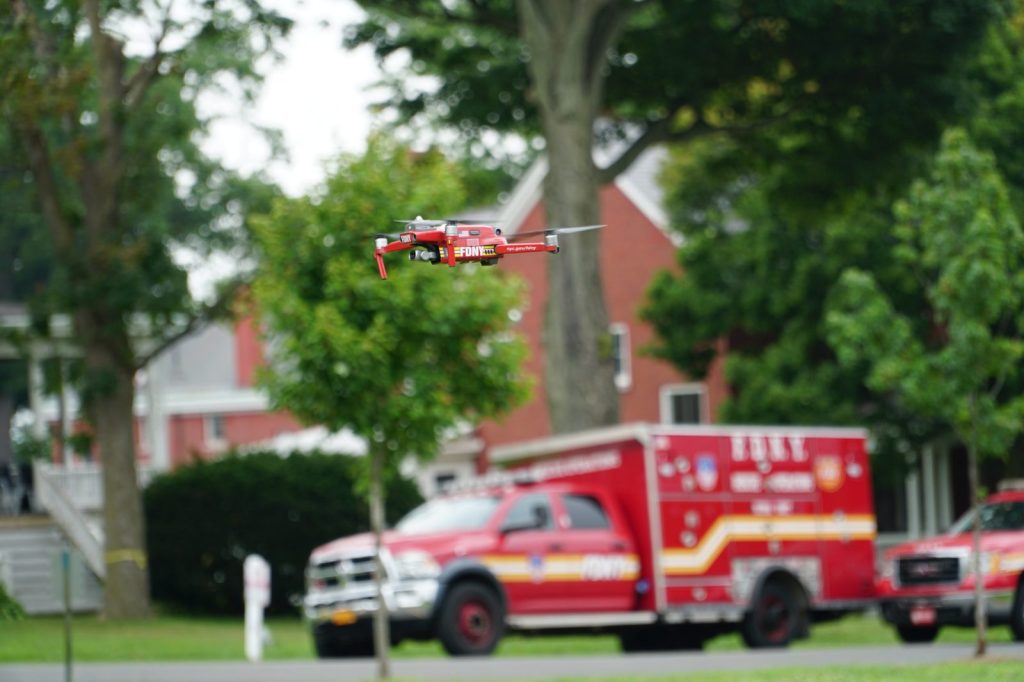
New York drone laws changed in a big way in 2026. The state added a brand-new drone crime to the Penal Law, and New York City still requires a permit for nearly every takeoff and landing inside the five boroughs.
One thing to remember up front: states do not control airspace. The FAA does. States, counties and cities can only limit takeoff and landing from public land. Private property is private, and those same governments, and especially HOAs, cannot regulate flights over it the way the FAA regulates the air.
So whether you’re flying a mini over the Finger Lakes or shooting real estate in Brooklyn, the rules stack up fast. Here’s what applies, who enforces it, and where you can legally fly.
Quick answer
Yes, if you fly for work, and you need a different certificate if you fly for fun. Either way, the FAA issues it, not Albany. New York drone laws don’t add a separate state license.
In addition, any drone that weighs 250 grams or more must be registered ($5, good for three years) and must broadcast Remote ID. Recreational flyers can learn the free test in our TRUST guide.
Here’s why the certificate matters even more under New York drone laws. The new Penal Law exemption for commercial and journalistic flights only covers drones flown in compliance with all federal, state and local rules. In other words, a paid flight without Part 107 doesn’t get that protection.
Flying for clients? Get your New York drone license with our Part 107 course. It’s $147 (regularly $197), with lifetime access and a 14-day money-back guarantee. Drone U has 10+ years of in-person drone training and 14+ years of online drone education.
The FAA controls the airspace. Even so, states can regulate public safety, privacy and land use. That’s the lane New York chose with Article 280.
| Law | What it does | Penalty |
|---|---|---|
| Penal Law §280.05 | Creates “unlawful use of a drone”: operating in a nefarious manner, or over prohibited space without express prior approval from someone you reasonably believe can grant it. | Class A misdemeanor |
| Penal Law §280.00 | Defines “nefarious” (for example, recklessly risking injury or property damage, interfering with police or emergency operations, harassing or surveilling people, delivering contraband, or dropping objects). Also defines “prohibited space”: within 500 feet horizontally of listed sites, up to 400 feet high, or any height without FAA authorization. | Definitions for §280.05 |
| Penal Law §280.10 | Exempts toy drones, recreational drones flown in compliance with all laws, commercial, educational, journalistic and other lawful flights in compliance with all laws, and government operators. Reckless flying loses the exemption. | Exemptions |
| Executive Law §236 | Lets police and peace officers use drone mitigation measures against a credible threat. Kinetic measures are allowed only if non-kinetic ones would fail, using federally approved technology. | Police authority |
The list is long. In fact, it’s the part of the new New York drone laws most likely to catch a careful pilot off guard. Prohibited space is the area within 500 feet horizontally of:
Think of it like a 500-foot moat around each site. To fly inside it, you need express prior approval from someone you reasonably believe has the authority to give it. In practice, that means the site owner or operator, in writing if you can get it.
First, the law defines a “recreational drone” as one weighing 0.55 pounds (250 grams) or less. A separate exemption covers drones flown for “other lawful purposes” in compliance with all laws. However, whether a heavier hobby drone fits that second bucket isn’t spelled out. Until courts or agencies clarify it, our advice is simple: stay out of prohibited space unless you have approval.
New York City is its own world, with rules that sit on top of state law. Under NYC Administrative Code §10-126(c), taking off or landing an aircraft anywhere other than a designated place is a misdemeanor, except in an emergency. The same section bans careless or reckless operation and flying in violation of FAA rules.
Since July 2023, the NYPD and the Department of Transportation have reviewed permit applications for drone takeoffs and landings across the city. The rules are in 38 RCNY §24-02, and you apply through the NYPD’s unmanned aircraft permits page. Here’s what the NYPD says applicants need to know:
Our take: build the permit timeline into every NYC quote. Clients rarely know this step exists.
NYC Parks lists five model aircraft fields where you can take off and land without the NYPD permit:
Notice what’s missing: Manhattan and the Bronx. Also note that a field doesn’t change the airspace above it. So check B4UFLY first, because much of the city sits under busy controlled airspace. For background, see our earlier post on NYC’s drone-friendly parks, though note that it predates the 2023 permit rules.
According to New York State Parks, drone flights typically require a permit. Contact the park office or the regional office before you go. Because rules vary by park, ask about your specific location and purpose.
The National Park Service prohibits launching, landing or operating drones in park units unless a superintendent allows it. That covers New York sites like the Statue of Liberty and Gateway National Recreation Area. In addition, the FAA lists the Statue of Liberty as a security-sensitive site where drone flights are restricted from the ground up to 400 feet. Our guide to flying in national parks and forests covers the details.
JFK, LaGuardia (LGA) and Newark (EWR) share the New York Class B airspace that blankets most of the city. Upstate, airports such as Albany, Buffalo, Rochester and Syracuse have their own controlled airspace. Before you fly in any of it, you need FAA authorization, which LAANC can provide in near real time where it’s available.
Beyond airspace, New York drone laws and FAA rules add three more restrictions to keep in mind:
Shooting real estate or events in NYC? You need Part 107 plus site permission—and usually an NYPD permit. Here’s the path to the first piece:
Budget-wise, the FAA says testing centers charge approximately $175. For a full breakdown, see our drone license cost guide. Meanwhile, New York operators already train with us. The New York Power Authority (NYPA) has been a Drone U training partner since late 2021, with more than 120 pilots prepping for Part 107 on our PROPS LMS.
Can you fly a drone in NYC?
Yes, but only legally from a takeoff and landing site the city allows. That means one of the five NYC Parks model aircraft fields or a site covered by an NYPD permit. You still need FAA airspace authorization where required.
Is the 500-foot rule around schools and police stations real?
Yes. New York drone laws now treat the area within 500 feet of schools, police and fire stations, airports, prisons, critical infrastructure and gatherings of 500+ people as prohibited space. Flying there without prior approval is a Class A misdemeanor unless an exemption applies.
Can I fly a drone over private property in New York?
The FAA controls the airspace, so overflight alone isn’t banned. However, harassing or surveilling people with a drone can fall under the new “nefarious manner” offense. Taking off or landing on private land also requires the owner’s permission.
Can police take down my drone?
Under Executive Law §236, police and peace officers can use mitigation measures against a drone they believe poses a credible threat. Kinetic measures are a last resort, allowed only if non-kinetic ones would fail.
Do I need a permit to fly in a New York state park?
Typically, yes. New York State Parks says drone flights generally require a permit from the park or regional office.
New York drone laws reward pilots who do the homework before the shoot. Know the airspace, know the 500-foot rings and get the permits. After that, the flying is the easy part.
Start with our free Part 107 practice test to see where you stand. Then check our drone laws by state hub before you fly outside New York.
Enroll in the Part 107 course for New York pilots for $147 (regularly $197). It includes on-demand video lessons, FAA-aligned quizzes (a 90%+ score is a good sign you’re ready), a downloadable study guide, access to the private Drone U community, lifetime access and a 14-day money-back guarantee.
Training a team? Explore our Enterprise Drone Programs or book a consultation to plan training for your organization.
Sources
 0
0
