

What Is a Drone? The FAA Definition of a Drone vs UAV, UAS and sUAS

October 8, 2026
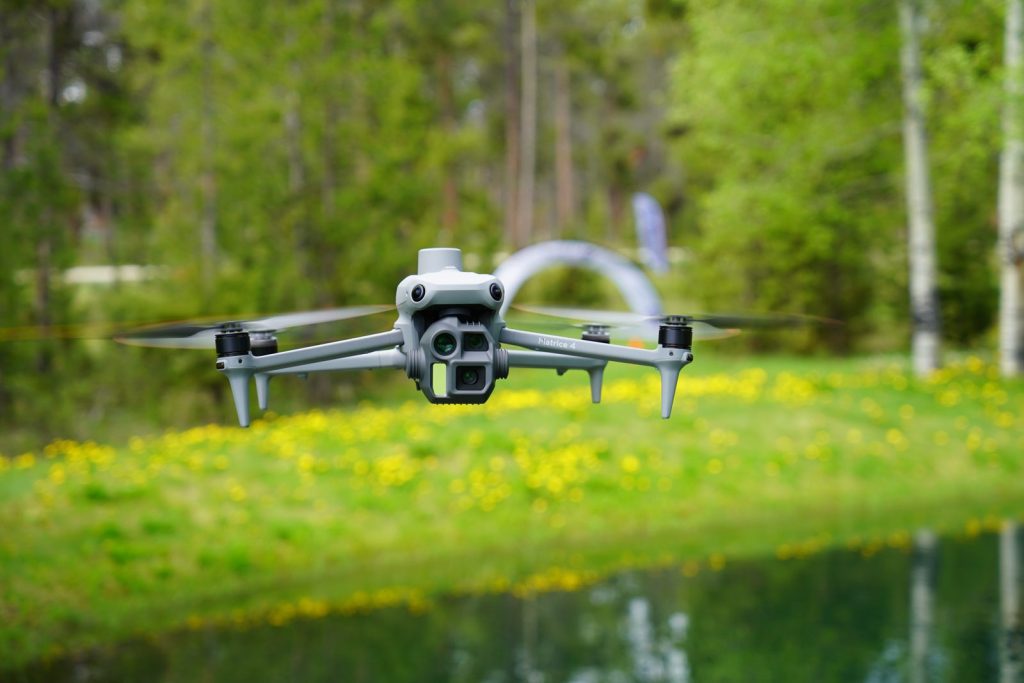
The simplest definition of a drone is an aircraft with no pilot on board, flown by a person on the ground, by automation or by both. That’s it. Whether it’s a palm-sized toy, a camera drone or a delivery aircraft, if nobody is flying it from inside, it’s a drone.
However, things get confusing when you start seeing UAV, UAS and sUAS on FAA pages, job listings and test questions. They’re related, but they don’t mean exactly the same thing. So below, we break down each term, how the FAA actually defines them and why the difference matters the moment you want to fly for work.
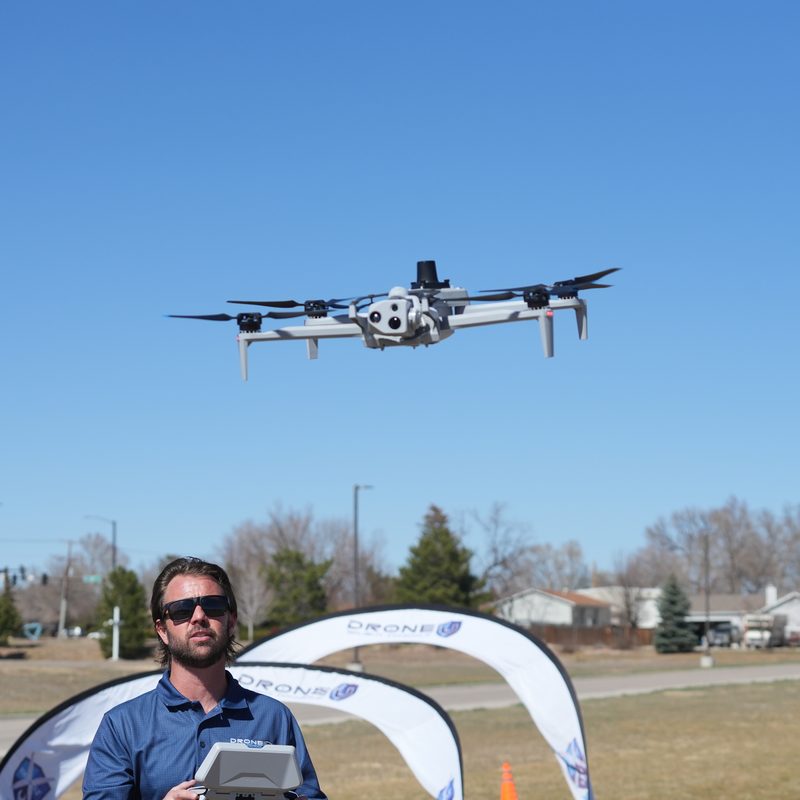
“Drone” is the everyday word. In fact, you’ll hear it from pilots, news outlets and even the FAA, which uses it all over its website, on pages like “How to Register Your Drone.”
Here’s the interesting part: “drone” isn’t a defined term in the FAA’s general definitions in 14 CFR Part 1. Instead, the regulations use “unmanned aircraft.” So the working definition in plain English is the same idea: an aircraft operated without a pilot on board.
There’s one more thing the FAA stresses: drones are aircraft. Its recreational flyer page puts it plainly—”Drones are aircraft. Congratulations, you are an aviator!” That’s why the same airspace, safety and registration rules that shape manned aviation reach your drone, too. If you plan to fly for work, you’ll learn the FAA rules in our Part 107 course, but first, let’s sort out the vocabulary.
If you want one definition of a drone that fits all five terms, it’s “an aircraft with no one on board.” From there, each term zooms in or out on a different part of the system. In other words, some describe just the aircraft, while others include everything you need to fly it.
| Term | Stands for | What it covers | Where you’ll see it |
|---|---|---|---|
| Drone | (Everyday word) | The aircraft, informally | News, retail, FAA consumer pages |
| UAV | Unmanned aerial vehicle | The aircraft itself | Common industry term; not defined in 14 CFR Part 1 |
| UA | Unmanned aircraft | The aircraft itself | FAA regulations (14 CFR 1.1) |
| UAS | Unmanned aircraft system | The aircraft plus its control station, communication links and other required elements | FAA regulations, programs and job titles |
| sUAS | Small unmanned aircraft system | A UAS whose aircraft weighs less than 55 pounds at takeoff | Part 107, the Part 107 test, the “small UAS rating” |
Put simply, the UAV or UA is the airplane, and the UAS is the airplane plus the cockpit. With a drone, the “cockpit” is your controller, app and radio link.
For regulatory purposes, the FAA’s official definitions live in 14 CFR 1.1 and 14 CFR 107.3. Here’s what they say:
Notice the phrase “including everything that is on board or otherwise attached.” In practice, that means the weight limit counts your payload, too: cameras, sensors, lights and anything you carry.
The “S” is where new pilots get tripped up. A UAS isn’t just the thing in the air. Based on the FAA’s definition, it includes:
This is also why lost link is treated as a system failure, not just an aircraft problem. If the link drops, part of your “aircraft” just went away, so plan for it before every flight.
These aren’t just vocabulary words. Instead, they decide which rules apply to you:
As a result, the same small drone can carry different obligations depending on why you fly it. That’s the practical side of the definition of a drone. Those weight lines and definitions are fair game on the Part 107 exam.

Beyond the legal terms, drones come in a few common designs, and each one has real trade-offs.
This is what most people picture: four or more rotors, vertical takeoff and the ability to hover in place. Because of that, multirotors are easy to fly and great for photos, video, inspections and small mapping jobs. The trade-off is endurance, since every rotor is working to hold the aircraft up.
Fixed-wing drones fly like small airplanes, with a wing doing the lifting. As a result, they’re efficient over long distances and large areas, which makes them popular for mapping big sites and corridors. However, they can’t hover, and they need room to launch and land. Our guide to fixed-wing drones compares popular models.
VTOL hybrids take off and land like a multirotor, then transition to wing-borne flight like a fixed-wing. In short, they aim to combine hover convenience with long-range efficiency. On the other hand, they’re more complex, and often pricier, than either design alone.
FPV drones are flown through goggles showing a live view from an onboard camera. Typically, they’re fast, agile and popular for racing and cinematic shots. That said, goggles limit your ability to scan the sky. The FAA’s recreational guidance says a visual observer is necessary if you want to fly FPV, and Part 107 requires visual line of sight with unaided vision. Read more in our guide to FPV drones.
Meanwhile, consumer and enterprise drones also differ in sensors, accuracy and support. Our breakdown of enterprise drones vs consumer drones explains what you get for the money.
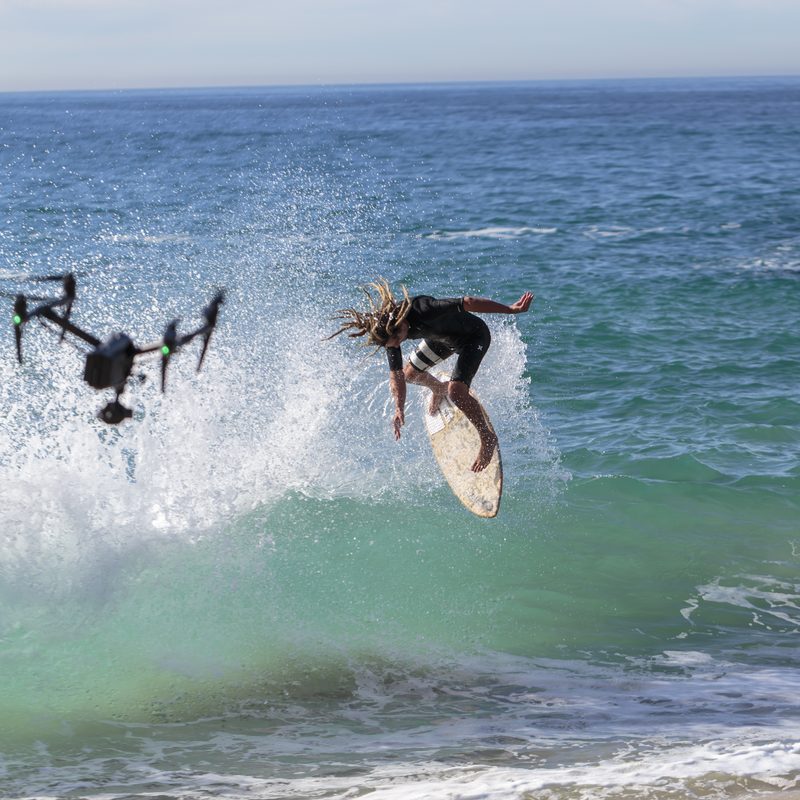
Once you understand the definition of a drone, the list of uses gets long fast. Here are the big ones, with our guides to each:
Most of these are paid work, which brings us to the question every new owner asks.
No matter which definition of a drone you use, the FAA cares about why you fly, not just what you fly. Here’s the short answer, based on the FAA’s rules:
The FAA also notes that compensation isn’t the only test. For example, taking photos to help sell a property counts as non-recreational, even if nobody pays you. When in doubt, the FAA says, assume Part 107. In addition, registered drones must comply with Remote ID.
For the recreational side, see our TRUST drone test guide. For the commercial side, read how to get your Part 107 license.
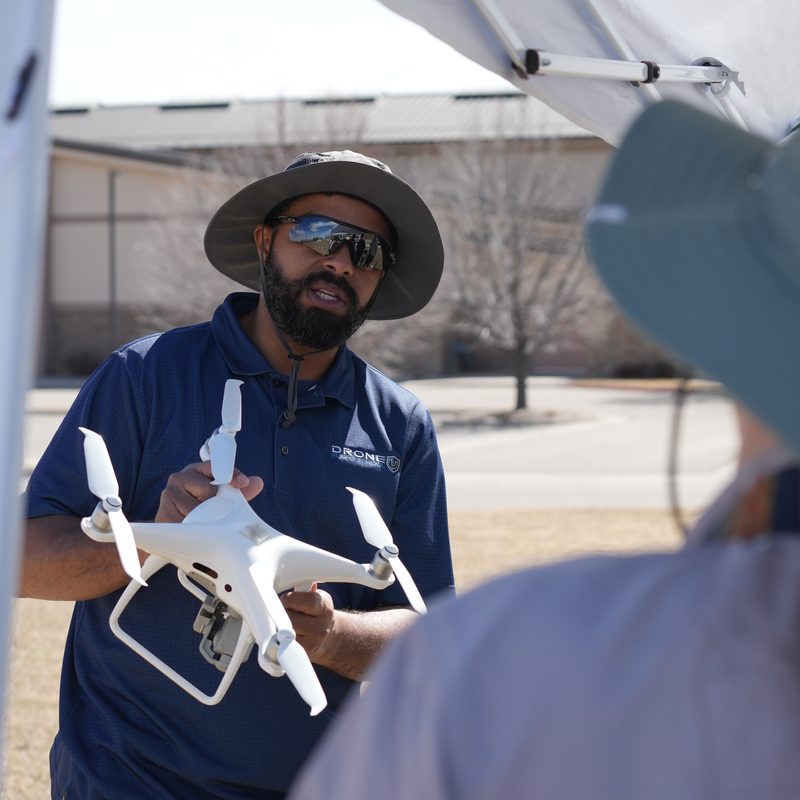
Now you know the definition of a drone and the terms around it. Next comes the fun part: flying it well and flying it legally.
If you just got your first drone, explore our free courses or our Drone Basics course to build safe habits from day one.
Planning to earn even a dollar with it? Get your Part 107 with Drone U’s course for $147 (regularly $197). You get on-demand video lessons, FAA-aligned quizzes (score 90%+ and you’re ready), a downloadable study guide, lifetime access and a 14-day money-back guarantee. Drone U has 10+ years of in-person drone training and 14+ years of online drone education, and we teach what actually works in the field.
Sources
 1
1
