
Autonomous Drones in 2026: How Close Are We to True Autonomy?

September 9, 2026
Quick Answer:Drones are not fully autonomous in 2026. Most systems combine automation (following pre-set routes) with limited autonomy (avoiding obstacles, adjusting paths mid-flight). True full autonomy (no human input at all) still only exists in narrow, controlled settings like defense and warehouse operations. |
Are autonomous drones actually flying on their own?
Fully autonomous drones are often treated as a solved problem. In practice, that isn’t the case. Some drones can launch, navigate, inspect, and land with minimal input, while others still require significant human oversight, even when labeled “autonomous.”
This question matters because autonomy shapes how drone operations scale, their reliability, and where they can be deployed. The promise is clear: fewer manual steps, faster missions, and lower operating costs. The challenge is whether today’s systems can deliver that level of independence outside structured environments.
In this guide, we will explore how autonomous drones work today, where autonomy delivers real value, and where current systems still fall short. We’ll also clarify what “true autonomy” means in drone operations and how close the industry is to achieving it at scale.
First, let’s understand what “autonomous” actually means in drone operations.
When people talk about autonomous drones, they’re often describing very different capabilities. Many drones labeled “autonomous” are not making independent decisions. Instead, they follow rules, scripts, or pre-defined flight plans created by humans.
This is where autonomy gets confused with automation. Automated drones fly planned routes, capture data at set points, and return home. Waypoint missions, corridor mapping, and scheduled inspections fall into this category. The drone executes the task, but it does not meaningfully interpret or reason about its surroundings.
True autonomy goes further. An autonomous drone can sense its environment and respond in real time. It can avoid obstacles, adjust its route, change altitude based on terrain, or pause a mission when conditions change. To do this, the drone relies on onboard sensors, onboard processing, and onboard control rather than continuous external guidance.
This difference matters because autonomy breaks down in unstructured environments. Most commercial and industrial drones sit between automation and full autonomy. They handle routine tasks well but struggle with edge cases and ambiguous conditions.
Autonomy can also be viewed as task-specific, given that a drone can be autonomous for navigation but not for mission planning or decision-making.
Next, let’s look at how drones moved from full manual control to today’s autonomous systems.
Early drones were little more than flying cameras. A pilot controlled every movement and made every decision in real time. If conditions changed or the signal dropped, the mission usually ended.
The first step toward autonomy came with basic autopilot features. GPS made it possible to hold position, fly straight paths, and return home automatically. These features reduced workload but did not add environmental awareness.
As onboard computing improved, drones began flying pre-planned routes without constant control. Waypoint missions and scheduled flights became common. Obstacle sensors added basic reactive behavior, allowing drones to slow down or stop when something appeared nearby.
More recent systems moved beyond fixed plans. Modern drones can adjust routes during a mission, respond to changing conditions, and make limited decisions on their own. This shift is driven by better sensors, faster processors, and AI models running directly on the aircraft. Instead of sending raw data elsewhere, drones now process information onboard and act immediately.
Each step toward autonomy increases system complexity, safety requirements, and regulatory scrutiny. That’s why most drones today combine automation with limited autonomy rather than operating fully on their own.
Now, let’s break down the different levels of drone autonomy in real use.
Autonomy is not a single capability. It exists on a spectrum, with each level offering a different balance between flexibility and reliability.
Industry experts group this spectrum into four levels, from a pilot controlling every move to a drone completing a full mission on its own. Here’s how each one works:
| Level | Name | What It Means |
| 1 | Human-controlled | Pilot manages every part of the flight in real time |
| 2 | Automated | Follows pre-planned routes, like waypoint mapping or return-to-home |
| 3 | Conditionally autonomous | Senses surroundings and reacts, but only within expected conditions |
| 4 | Fully autonomous | Plans and completes missions with no human input — rare, and limited to controlled settings |
Level 1 is the baseline: every input comes from the pilot, so reliability depends entirely on skill and attention.
Level 2 is where most consumer and mapping drones live today. Automation handles the repetitive parts of a flight, but the drone can’t respond to anything outside its programmed route.
Level 3 adds real sensing. The drone can react to obstacles or changing conditions, but only within the situations it was designed to handle. It still struggles in unpredictable, unstructured environments.
Level 4 is the goal, not the norm. A handful of defense and warehouse systems operate here, but the cost, testing, and certification involved keep it out of reach for most commercial use today.
Most commercial drones in use today sit at Level 2 or 3. Level 4 is still the exception, not the norm.
Next, let’s look at how autonomous drones actually work.
Autonomous drones rely on a combination of sensing, onboard computing, and decision-making software to operate with minimal input. Understanding these technologies explains why autonomy varies so much between drones.
Sensors are the drone’s eyes and ears. Most autonomous drones use cameras, LiDAR, radar, or infrared sensors to detect obstacles, map terrain, and identify objects. These sensors feed real-time data into the drone’s onboard computer.
Advanced systems combine multiple sensors. This is called sensor fusion. It gives a clearer view of the environment, even in low light or bad weather.
Once the drone senses its surroundings, it needs to make decisions. That’s where AI and decision engines come in. These systems analyze sensor data and choose the best path, detect obstacles, and adapt to changes. Some drones use machine learning (ML) to predict movements, like anticipating a person walking into the flight path.
Others rely primarily on pre-programmed rules, with limited overrides when predefined exceptions are triggered. Onboard AI allows drones to make these decisions instantly, without relying on external instruction or connectivity.
Processing decisions onboard is called edge computing. By processing data onboard, drones avoid latency issues tied to remote control or cloud-based systems. This allows faster reactions and enables operation in areas with limited connectivity.
These technologies form the foundation of autonomous flight, even though their effectiveness varies by environment and mission type.
With the basics covered, let’s see where drone autonomy works in real-world operations.
Autonomous drones are making progress, but their capabilities vary widely depending on the sector. The difference across sectors isn’t whether autonomy exists, but how much independence is trusted per mission. Let’s look at the sectors where autonomy is most advanced and where human oversight is still essential.
Defense applications lead the way in autonomy. Military drones can perform surveillance, gather intelligence, and even support tactical missions with limited human input. Swarming drones can work together to cover large areas or respond to threats. These missions are often conducted in tightly managed operational environments, so drones can operate with more independence than in crowded or civilian airspace.
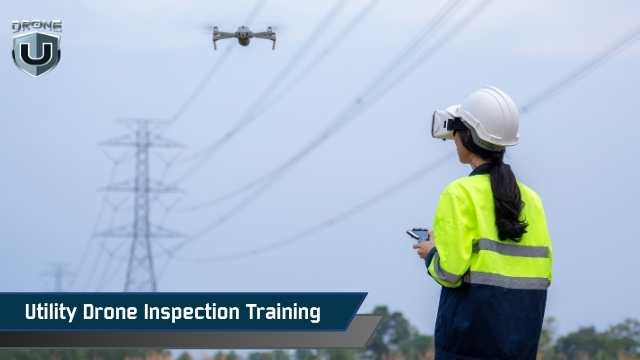
Industries like energy, construction, and infrastructure inspection use drones to monitor power lines, pipelines, and construction sites. Autonomous drones here can follow pre-planned routes, detect obstacles, and capture data efficiently. Automation helps reduce costs and improve consistency, but autonomy is typically limited to repeatable, low-variability workflows.
Emergency response and search-and-rescue teams use autonomous drones to scan disaster areas and locate people using thermal sensors. While drones can cover areas faster than humans, operators still supervise missions to make critical decisions, especially when lives are involved.
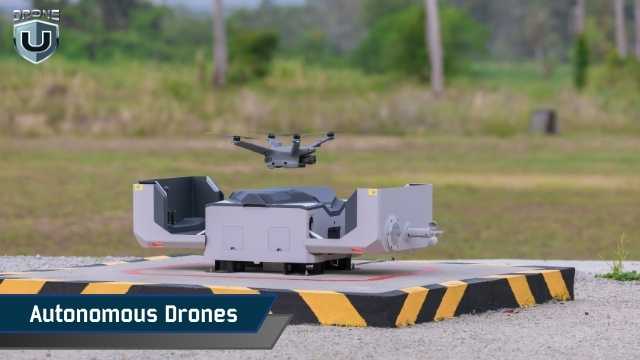
Delivery drones are the hardest to fully automate. Systems like drone-in-a-box can take off, navigate, and land automatically, but flying in public airspace requires human monitoring. Challenges include avoiding people, handling changing weather, and complying with regulations. Full autonomy is still rare in this sector. In many regions, regulations still require a human operator to monitor or intervene during delivery flights.
Farmers and environmental agencies use drones for crop mapping, spraying, and wildlife monitoring. Drones can fly set routes and adjust for terrain automatically. They handle routine tasks well, while strategic decisions like changing spray patterns or responding to unexpected obstacles remain external to the system.
For hobbyists, autonomy usually means simple automated flight modes like GPS-assisted navigation or obstacle avoidance. Fully autonomous drones are uncommon here, but features like follow-me modes and automated tricks give pilots some of the benefits without full independence.
Next, let’s look at the rules and safety limits that shape how autonomous drones are used.
Autonomous drones must operate within strict regulatory and safety frameworks.
Flying Beyond Visual Line of Sight (BVLOS) is essential for many autonomous missions. Regulators such as the FAA and EASA require robust detect-and-avoid (DAA) capabilities, Remote ID compliance, and clear risk mitigation strategies before approving these flights.
Safety is non-negotiable. Drones need obstacle detection, fail-safe landing mechanisms, and redundant systems to handle failures. Even autonomous drones must demonstrate that they can safely avoid collisions, recover from malfunctions, and operate reliably in different environments.
Beyond regulations, the public must trust autonomous drones. Incidents or near-misses can slow adoption, especially in commercial delivery or urban operations. Companies are using safety certifications, transparency in AI decision-making, and clear operational protocols to build trust. Transparency and safety validation remain critical for broader acceptance.
Now, let’s look at the obstacles that still hold drones back from full autonomy.
Even with advanced sensors, AI, and edge computing, drones are still far from true, fully independent operation in all scenarios. Several challenges slow the adoption of autonomous drones and limit their capabilities.
Urban environments and complex terrains are difficult for drones to navigate on their own. Detecting and avoiding dynamic obstacles, like people, vehicles, or unexpected objects, remains challenging. Battery life and payload limits also restrict how long drones can operate autonomously.
Autonomous drones raise questions about dual-use technology. Military-grade capabilities could be misused if they fall into the wrong hands. There are also concerns about privacy, data protection, and counter-drone threats, which add regulatory and operational complexity.
Even if a drone can operate autonomously, it must work alongside existing systems. Autonomous drones must fit into existing workflows, logistics systems, and airspace management structures. Coordinating these systems reliably remains an open challenge.
These factors explain why autonomy today is practical in specific contexts but difficult to scale universally.
Autonomous drones have come a long way. Many can fly, inspect, and land with minimal input. Automation handles routine tasks reliably, and limited autonomy works well in structured environments.
Fully independent drones remain rare outside highly manageable settings. Technical constraints, regulatory requirements, and operational complexity continue to shape what autonomy looks like in practice.
Advances in AI, sensors, and onboard computing are enhancing the capabilities of drones. Adoption is growing in defense, infrastructure, agriculture, and emergency response.
Autonomous drones are closer to true autonomy than ever, but the technology is still maturing. Understanding where autonomy works, and where it breaks down, provides a realistic view of what’s possible today and what lies ahead.
Want to build real skills in autonomous drone operations?
Join Drone U today to master autonomous drone technology in real-world operations.
 0
0