
Can You Fly a Drone at Night? US Rules and Requirements

November 14, 2026
Quick AnswerYes. You can fly a drone at night in the United States. Part 107 pilots need training completed after April 6, 2021, and anti-collision lights visible for at least 3 statute miles. Recreational pilots need the same lights. You do not need a waiver for normal night flights. All other drone rules still apply. Night flying used to require extra paperwork. That changed in 2021. The rules are now built into the normal operating framework. You still have to meet specific conditions before you take off after dark. Skip those conditions and the flight is not legal, even if everything else looks fine. |
Can you fly a drone at night? Yes, you can. In the United States, the rules are clear and straightforward once you know them. You do not need a special waiver for a normal night flight. You do need the right lights and, for Part 107 pilots, updated training. Every other drone rule still applies after dark.
A lot of pilots either stay grounded because they think night flying is banned, or they launch without checking the real requirements. Both are easy to fix. This guide walks through the exact rules and the practical stuff that keeps your night flights legal.
The first thing most pilots want to know is whether the old waiver is still required. For routine night flights, it is not.
The FAA dropped the waiver requirement for standard night operations in April 2021. You can fly at night under the normal rules as long as you have the right lights. Part 107 pilots also need the updated training.
A waiver only comes back into play for special cases. That includes flying at night with the lights off. It also includes combining night flight with something else that still needs a waiver, like going beyond visual line of sight. For a normal night flight with proper lighting, you do not need one.
Once you know a waiver is not required, the next step is to check the exact Part 107 conditions that replace it.
You can fly at night under Part 107 when both of these conditions are true. First, you complete your initial knowledge test or recurrent training after April 6, 2021. That training covers night operations, including how darkness affects vision and decision-making. If you earn your Remote Pilot Certificate after April 21, 2021, the night material is already on your test. If you earn it earlier, you must complete the free online recurrent training before flying at night.
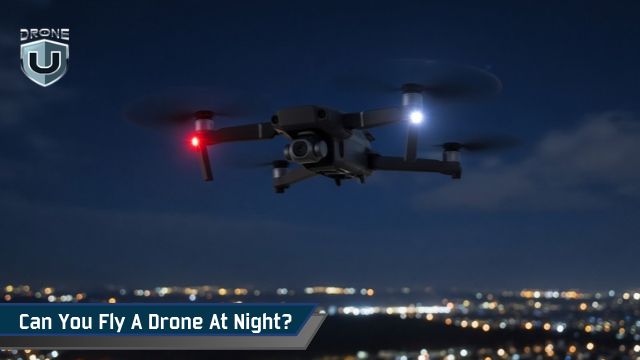
Your drone must carry anti-collision lighting. The light must be visible for at least 3 statute miles. It must flash at a rate that helps other aircraft see you and avoid a collision. You can reduce the brightness if operating conditions make that safer. You cannot turn the light off completely.
All other Part 107 rules still apply. Stay at or below 400 feet unless you are within 400 feet of a structure. Keep the drone in visual line of sight with your own eyes. Get airspace authorization before you enter controlled airspace. Yield to manned aircraft. Do not fly over people or moving vehicles unless your operation fits the specific categories that allow it. You still need at least 3 statute miles of visibility from where you are standing.
Night does not loosen any of those limits. It only adds the training and lighting requirements.
Part 107 is only half the picture. Recreational pilots have their own path, and it is simpler in some ways.
Yes, you can fly at night as a recreational pilot. You need the same anti-collision lighting visible for at least 3 statute miles. Everything else stays the same. Pass TRUST and carry proof. Keep the drone in visual line of sight. Stay at or below 400 feet in Class G airspace. Get authorization through LAANC or DroneZone before you go into controlled airspace. Give way to other aircraft. Do not fly carelessly or recklessly.
Some recreational pilots think the rules get looser at night. They do not. The lighting requirement applies to everyone. The main difference is that Part 107 pilots have that extra training step, and recreational pilots do not.
Knowing who can fly is only useful if you also know exactly when the night rules kick in.
Night begins 30 minutes after official sunset. It ends 30 minutes before official sunrise in most locations. The 30-minute windows on either side of sunrise and sunset are called civil twilight. During those periods, you still need the anti-collision light.
Under Part 107, you do not need the extra night training for twilight flights. Once the 30 minutes pass and true night begins, both the light and the training requirement apply.
Alaska uses a different definition of civil twilight based on the Air Almanac. If you fly there, check the local times carefully. Do not assume the standard 30-minute rule applies. Sunset and sunrise times change every day and vary by location. Use a reliable source such as the official Air Almanac or a trusted aviation app to confirm the exact times for your site.
The timing rules only matter if your lighting actually meets the standard. This is where most pilots run into trouble.
You need anti-collision lighting that is visible for at least 3 statute miles. The light must flash. A steady light does not count. The flash rate must be fast enough for other pilots to see the drone and avoid a collision.
Most lights built into consumer drones fall short of the 3-statute-mile standard. They look bright up close but fade quickly with distance. Many pilots add an aftermarket strobe on the top or bottom of the drone. Look for one that gives full coverage so the light shows from every angle.
Test the light before you take off. Make sure it is bright, flashing, and securely mounted. Carry a spare battery for the light if it runs on its own power. A light that dies mid-flight forces you to land immediately. You can reduce the intensity if a brighter light would create a problem, like when you are close to people or shiny surfaces. You still cannot turn it off.
With the rules and lighting clear, the practical next step is a simple pre-flight routine you can repeat every time.
Run through these steps when you plan a night flight:
Note the time, location, weather, and lighting setup in case you need a record later.
A good checklist gets you in the air legally. Staying safe once you are up requires extra attention because darkness changes how you fly.
Darkness removes the visual cues you rely on during the day. Distance becomes harder to judge. Obstacles blend into the background. You can lose track of the drone more easily if it moves against a dark sky.
Start with simple flights. Fly lower and closer than you would during the day. Use a visual observer when you can. The observer must be able to see the drone with unaided vision and stay in direct communication with you.
Watch the weather. Clouds, fog, or haze can drop visibility below the 3-statute-mile minimum even if the ground looks clear. Wind is harder to feel and judge at night. A sudden gust can push the drone farther than you expect. Battery life drops in colder temperatures.
Night flights often happen when temperatures are lower. Check your batteries and plan for shorter flight times. Obstacle avoidance sensors on many drones perform poorly or shut off in low light. Do not rely on them. Fly as if they are not there.
Once the safety basics are solid, many pilots want to know how to get good images after dark. Night opens up shots you cannot get during the day.
City lights, light trails, and lit-up landmarks can look great from above. You still need to stay legal while you capture them. Use a lower ISO and a slower shutter speed when the scene is bright enough. Many drones allow manual exposure. Lock the settings so the image does not jump around. Shoot in RAW if your drone supports it so you have more flexibility later. Keep the drone steady. Hover in place for stills. Use smooth, slow movements for video. Fast pans usually look worse at night because of noise and motion blur.
Stay aware of your surroundings while you frame the shot. It is easy to focus on the screen and lose track of the actual drone. Glance up often. Keep the flight path simple so you can watch both the screen and the aircraft. Respect privacy and local rules. A night flight over a neighborhood can draw attention even when it is legal. Know what is allowed before you launch.
Even with clear rules, the same errors show up again and again. Knowing them helps you avoid them.
Many pilots turn the lights down too far or leave them off because they think the built-in LEDs are enough. They are not. Some fly in controlled airspace at night without authorization because they assume night changes the rules. It does not.
Others skip the training update and fly anyway. The FAA can still take action. A few push beyond visual line of sight because the lights make the drone easier to see. Visual line of sight still means you can see the aircraft with unaided vision, not just the light. Avoid these, and you remove most of the risk.
Night flying is allowed in the United States once you handle the basics. Meet the lighting rule, and for Part 107 pilots, finish the required training, and a normal night flight does not need a waiver. The usual limits on altitude, visual line of sight, airspace, and safety stay the same after dark.
These flights give you extra hours for photography, inspections, search work, and other jobs. They also ask more of you because distance, obstacles, and weather are harder to judge. Stick to the light and training rules, keep early flights short and simple, run a solid checklist, and check conditions before you launch. That keeps the flight legal and lowers the chance of problems.
Start close to home until you feel comfortable. Add a reliable strobe, confirm your training status, and give night operations the same care you give daytime flights. Do that and night flying becomes a regular, useful option instead of something you avoid.
Want more? Check our guide on how to spot a drone at night so you know what other people see when you fly. Or look over the full Part 107 night operations details before your next evening flight.
Fly safe.
 0