
Drone Fly Through Tours | Drone Jobs
The newest video marketing trend are drone fly through tours and videos shot in one take. Continue reading
 0
0
Lessons Learned While Filming Cinewhoop Videos
Cinewhoop videos have become popular on social media. The GoPro strapped to a tiny drone captures stunning fly through videos of unusual locations. Continue reading
0
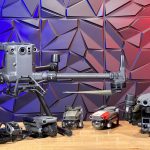
M30t vs. M300 | Best Enterprise Drone
For half the cost of the M300, the M30t offers better cameras and cheaper maintenance costs making it the best enterprise drone. Continue reading
0
How cold is too cold to fly a drone?
How cold is too cold to fly a drone in the winter time? If the temperature is within 5 degrees of the dew point, it is too cold to fly a drone. Continue reading
0
How to warm up drone batteries during flight.
When it comes to keeping your drone batteries warm, pilots can keep batteries stored at warm temps or use flight techniques to warm their batteries during flight. Continue reading
0
Tips to flying Drones in Freezing Weather
Flying a drone in cold weather can be challenging, but with the right precautions, it is possible to get some great footage even in freezing temperatures. Here are three tips to help you successfully fly your drone in cold weather and avoid a crash. Continue reading
0
China’s DJI Drones Blacklisted by US Commerce Department and DoD?
Have DJI drones been actually blacklisted? If so, how will it impact you as a drone pilot?
You’ll find the answers in this article.
DJI, one of the largest drone manufacturers in the world, has received more confusing news for its US operations.
DJI Drones were first blacklisted by the US government’s commerce department and now by the Department of Defense (DoD). Potentially making purchasing DJI drones much more difficult in the future.
DJI drones have received praise from consumers for their innovative design and ease of operation. So if you are a DJI fan, you will find out more about the fine print and the way ahead.
Have DJI Drones Been Blacklisted?
Shenzhen-based drone manufacturer DJI Technology Co., Ltd. is estimated to control more than 50 percent of the global market for commercial drones. On the contrary, they are included in the list of companies banned from receiving U.S. military contracts.
DJI was placed on the list in 2020, joining 76 other blacklisted companies. This includes companies such as Huawei and SMCI. It was initially thought this would occur due to national security concerns. But the US Commerce Department cited “human rights abuses” as the reason for DJI’s inclusion. Even with this being the case, based on our recent discussion with Kevin F, (notorious DJI hacker) there are still significant data issues. But we’ll leave that for future articles.
The blacklist gives the US president the power to impose penalties on organizations that are thought to be associated with the Chinese military.
According to the Commerce Departments website “The Entity List is a tool utilized by BIS to restrict the export, re-export, and transfer (in-country) of items subject to the Export Administration Regulations (EAR) to persons (i.e., individuals, organizations, and companies) reasonably believed to be involved, or to pose a significant risk of becoming involved, in activities contrary to the national security or foreign policy interests of the United States. Additional license requirements apply to exports, re-exports, and transfers (in-country) of items subject to the EAR to listed entities, and the availability of most license exceptions is limited.”
The statement follows the US Treasury Department’s prohibition of trading in shares of DJI and seven other Chinese organizations by US residents last year due to the company’ suspected involvement in the surveillance of the Uighur ethnic minority in Xinjiang, China’s far western region.
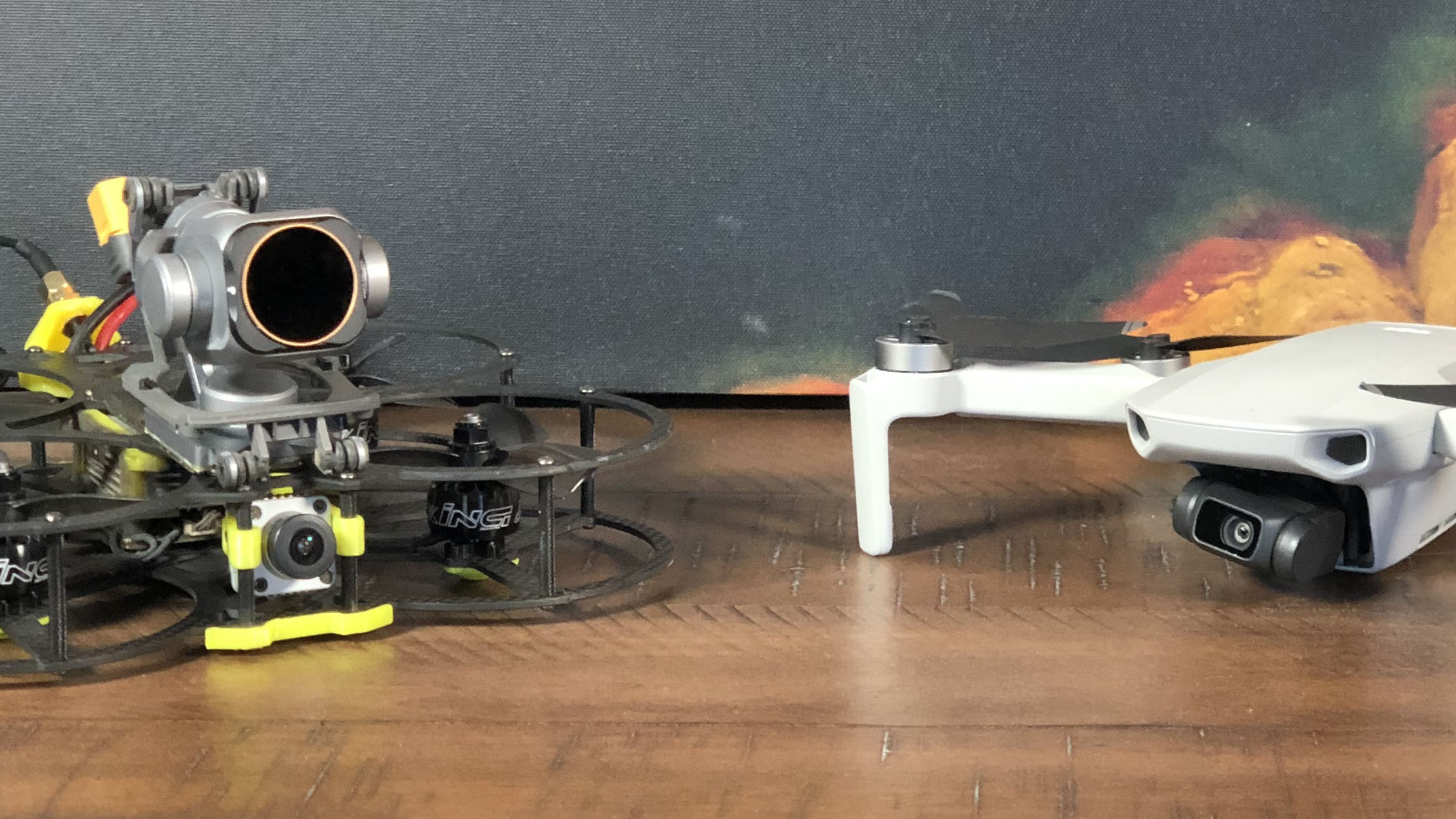
Being added to the entity list means the organizations on the list cannot have exports shipped to them from American companies unless those companies (exporters) secure an appropriate license to do so. It also means they are not privy to US-developed technology which may or may not affect them negatively. That depends on how much the company uses US-based components and tech.
US President Joe Biden wants to isolate Chinese companies with military links as part of a sweeping plan to counter Beijing in areas including defense, technology, and trade.
Does This Mean We Won’t Be Able to Buy DJI Drones?
While the fact that DJI has been blacklisted creates a challenge for SZ DJI Technology Co., Ltd. (the DJI parent company), it does not mean you’ll no longer be able to purchase DJI drones and products.
For example, Huawei is on the Entity list, and their phones are still available to American citizens, albeit it’s almost impossible to find the phones. Many top retailers, including the Microsoft Store and Walmart, stopped selling Huawei shortly after they were blacklisted.
DJI Blacklisted & No Drones to Fill the Void
Now that the United States has added DJI to the Entity List, in time it COULD become more difficult to purchase DJI drones. Especially true if you are from a federal agency, law enforcement agency, or other publicly funded organization. Unfortunately, we don’t know of a single drone manufacturer that comes close to any DJI offering for the price point.
Many argue that companies like Autel and Skydio will compete to fill any void that is left by DJI being added to the Entity List.
Yet, Skydio’s drones do not allow the pilot to be fully in-charge of their flight, thus potentially violating the FAA’s part 107. Autel makes capable drones but does not provide a “sensor-denied” flight mode. So if you ever want to stop a flyaway or emergency, it will be next to impossible to do so.

Following other US government agencies that have previously prohibited using its drones due to the potential dangers of data leaks, the Department of Defense (DoD) also decided to add DJI to its blacklist.
The DoD announcement said, “The Department is determined to highlight and counter the (People’s Republic of China) Military-Civil Fusion strategy, which supports the modernization goals of the People’s Liberation Army (PLA) by ensuring its access to advanced technologies and expertise are acquired and developed by PRC companies, universities, and research programs that appear to be civilian entities”.
“Section 1260H directs the Department to begin identifying, among other things, Military-Civil Fusion contributors operating directly or indirectly in the United States. The United States Government reserves the right to take additional actions on these entities under authorities other than section 1260H”, they added.
The DoD‘s blacklist announcement comes only after a few months after DJI had reported having made progress in lobbying US lawmakers to modify draft legislation that would have extended existing regulations restricting the sale of drones in the United States.
However, DJI has repeatedly claimed that DJI has never designed or manufactured military-grade equipment and has never marketed or sold its products for military use in any country and its drones aren’t capable of leaking data to any third party. They come with features allowing users to disable linked gear from transmitting the information they collect.
October this year, the United States Department of Defense (DoD) blacklisted 13 Chinese companies, including DJI, BGI Genomics, and China State Construction Group, on the grounds that they are Chinese military companies operating in the US.
China said the move was “typical political manipulation” and warned scientific and technological advances should not be used as weapons to restrict the development of others.
Now the question arises, “Is there a current drone offering that can compete with the commercial powerhouse of a Phantom?” No. Not even close.
FreeFly is the closest we’ve found to offer a drone that can do what a DJI Phantom does. Work such as mapping, film work, and action sports work. But as of today, the price difference is quite substantial.
That being said, top drone manufacturers such as AltiGator, Skyfront, and Parrot have been pushing their technology to build consumer drones that will ultimately replace DJI.
What are your thoughts on this move? Do let us know your comments below.
0
Uniform Law Commission Updates Tort Law Relating to Drones
So where do we stand on the Uniform Law Commission updates Tort Law relating to the drones act? If you’ve been following along, you’ll understand that this is all about the future of drones, drone lawsuits, landowner rights, and drone privacy laws and rights. If this is the first time you’ve heard of it, read on. You’ll learn a bit along the way.
What is the Uniform Law Commission (ULC)?
The Uniform Law Commission (ULC) is a private nonprofit association of Bar Members and holds no official power. But, they hold significant influence over how states draft their laws. No Uniform Law Commission Act is active unless passed by a state legislature.
As U.S.-based drone pilots and operators, we can enjoy responsible flights in just about the entirety of the National Airspace System (NAS).
If the current Uniform Law Commission’s (ULC) committee working on the “Tort Law Relating To Drones Act” has its way, we could very likely lose 25% of that airspace.
And a very familiar name (who is not a friend to drone owners) has a very prominent position on that committee. And he is there wearing his Pepperdine University Law Professor hat instead of his AirMap Co-founder hat.
We are speaking of none other than Mr. Gregory McNeal. This author finds it very interesting that Mr. McNeal is there under the Pepperdine banner and not the AirMap banner. Maybe it’s because AirMap stands to make quite a bit of money if this Act passes and he doesn’t want to appear to have a vested financial interest in the outcome of that act. But that’s purely conjecture. More on that in a bit.
You may be familiar with AirMap’s previous skirmish with the UAS community when it came to light that they were supporting Senator Feinstein’s Drone Federalism Act (SB1272, 2017). AirMap’s hired lobbyists not only supported the bill financially, they actively lobbied other legislators to vote for it. At least that’s the presumption, given emails sent to some in the UAS community by Senators who don’t agree with Ms. Feinstein’s bill. SB1272 text can be found here.
That Act, if passed, would give control of the first 200’ of the NAS over to local legislators. That act currently sits in the Senate’s Committee on Commerce, Science, and Transportation. It’s been there since May of 2017 and given Senator Feinstein’s fall from grace within her party, it’s unlikely to be advanced out of committee. This is a very lucky break for drone owners, whether they fly under 101/336 or 107 rules. If passed, it could have given political subdivisions the ability to shut down commercial and hobby drone operations in “their” airspace. That would have effectively killed the commercial drone business in those locales.
Luckily that act now seems to be stuck in bill purgatory. And we as a community should do all in our power to make sure it stays there.
Uniform Law Commission on Tort Law
In November 2017, the Uniform Law Commission (ULC) introduced the Tort Law Relating to Drones Act Committee. In December, they published their first draft of that act. That first draft was so horrid that its language had the very real likelihood of destroying the Commercial sUAS (drone) Industry in its infancy. And it could have done the same thing to the hobbyists.

It’s been a frustrating and occasionally contentious battle for sure, but thanks to the diligence and actions of the sUAS Community, the final version of the Tort Law Relating to Drones Act being sent to Anchorage in July will be one that not only protects landowners from aerial trespass (the general point of the committee), it provides exceptions and protections for the sUAS community as well. Those protections are offered to both hobbyists and non-hobbyists alike.
The reason for this success is attributable directly to those within the sUAS community who took the time to get educated and involved.
Let’s now talk about how SB1272 coincides with the ULC Committee’s work on the tort law act.
Will Tort Law Act Limit Our Airspace?
Until this point in our history, there has not been an easily defined legal criterion for a charge of Aerial Trespass. There have been many court cases that define it in certain instances, but those are very limiting, and can’t be used to give a standardized legal definition in other cases. The Tort Law Relating To Drones Act, as currently written, will put into play a very easily defined legal definition of Aerial Trespass.
Section 501: Aerial Trespass Using An Unmanned Aircraft clearly states that that definition would be: “(a) A person operating an unmanned aircraft is liable to an individual for trespass, if, without consent, the person causes the unmanned aircraft to enter into the immediate reaches of the airspace above the land of another.”
On the surface, this seems unobjectionable, but to understand the magnitude of what this would do to the hobby and commercial drone communities, we need to look up “immediate reaches”. We don’t have to go far to find that definition. The authors of this Act were kind enough to provide that for us.
Under Section 102. Definitions include “(5) Immediate Reaches”. This is defined as the airspace from ground level to at least [100] feet above the surface, or where surface improvements are present, the airspace at least [100] feet above those surface improvements.”
Think about that. And that’s “at least”. This means cities and states can increase it if they want.
If you are flying in an urban area, you would not be allowed to fly over any residence or property at an altitude of 100’ or less (above any improvements) without the fear of being cited for Aerial Trespass.
Now again, on the surface, this may not sound too limiting. But let’s put a real-world drone spin on it.
If you use a drone for real estate photography and videography, you find yourself routinely flying below 100’ above improvements on adjoining property. Insurance and inspection flights routinely fall under that same demand. Neither of those UAS disciplines can effectively do their jobs if they are limited to being 100’ or above adjoining property improvements.
And those are just two examples. There are plenty more.
Current aerial trespass doctrine is, “Flight by an aircraft in the air space above the land of another is trespass if
(1) “[the aircraft} enters into the immediate reaches of the air space next to the land.
(2) [it] interferes substantially with the other’s use and enjoyment of the land.” The ULC committee feels this definition is problematic because “there is no existing right to exclude aircraft from flying above one’s land without showing interference with use and enjoyment of the land.”
They also are trying to make it sound like they are doing the UAS communities a favor because “this will likely prove problematic as it will require a fact-specific showing related to each overflight before an unmanned aircraft could be excludable, leading to uncertainty and lack of uniformity.”
The committee feels if there is a legal definition of 100’ as “immediate reach”, it will make our jobs easier because we’ll have the uncertainty of where we’re allowed to fly removed from the equation.
This can’t be further from the truth, and smacks of behind-the-scenes activity with zero input from the people this will directly affect. It appears Mr. McNeal does have a Remote Pilot Certificate (at least someone with his name does), but apparently, none of the other representatives do. There are two members with names too common to check, so that is also a possibility. But if Mr. McNeal is the only one “representing” UAS owners, we’re screwed.
While I commend Mr. McNeal for getting his 107RPC, I’d like to see someone on that committee who uses their 107RPC to make money with, not someone who uses it to make money from.
There is a difference.
Why does the history of Mr. McNeal seem to suggest that he wants to drastically limit where drone owners can fly? Do a bit of research on that failure. But it was his first attempt at restricting our rightful access to the NAS.
To answer that questions, we need to look no further than the company that Mr. McNeal founded with Mr. Ben Marcus: AirMap.
How AirMap Stands to Gain at The Expense of The Entire Drone Community
AirMap is a company that has developed an app that allows UAS operators and pilots to see if they are in a safe area to fly. Very commendable. And their product is awesome. It’s the backbone of DJI’s GEO System. We don’t use it (We use Skyward, and KittyHawk once it comes online), but those who do seem to like it very much.
But behind the scenes, AirMap desires to work with states and localities to implement Unmanned Aircraft System Traffic Management (UTM). More info here.
UTM is a great idea, and in practice will make the skies safer. However, if done incorrectly, or with undue influence from companies that will directly benefit from its implementation, it can and probably will lead to a pay-to-play system. There you will have to subscribe to a service before you can fly in certain airspaces. In other words, pay the subscription or not fly there. Even though we have that right currently.
AirMap already has its foot in the door in Kansas. If McNeal and Marcus end up being the chosen UTM provider for the other 49 states, they stand to make a ton of money. And there is nothing wrong with that. It’s the American Dream. But it shouldn’t be at the expense of an entire industry.
When they stand to make that money on the backs of an industry they publicly profess support for, their words become very disingenuous.
You have to ask yourself why a company would actively try to make it harder for UAS owners to fly in the U.S. Especially if that company is supposedly working with us, to gain quicker access to the NAS in restricted areas. Are you working for us, or against us AirMap?
These actions seem to speak volumes about the seemingly true intent of their business model. It’s about making money, not keeping the NAS safe, or tenant/homeowner privacy.
Given the track record of the founders of AirMap, we strongly suggest that UAS owners, both 101/336 & 107, keep a very close eye on this committee’s work. If it continues down this path, keep your Congress Critters informed of what will happen if the Uniform Law Commission’s Tort Law Relating To Drones Act is put into law.
Pros & Cons of the Uniform Law Commission’s Final Draft – “Tort Law Relating to Drones Act”
Before I get into specific parts of the final draft of the ULC”s “Tort Law Relating to Drones Act”, go here and download it. Open it up so you can follow along below. Otherwise, I’d have to quote the draft and this would be a 10,000-word article. And no one wants to read one of those.
Please read through it and include Comments under each section. This will help you understand the thinking of the committee members on why that language was chosen or included.
So let’s talk about a few sections. First, the cons (honestly, there aren’t many):
- Section 3. Scope: To me, the inclusion of “owner” in the UAS means you better keep tabs on who has your birds, and what they’re doing with them.
- Section 4 (b): Also includes owners, see above.
- Section 5 (b) (7): Emotional injury is preposterous. It’s so subjective as to become pointless, but can be used by a Land Possessor to file a complaint.
- Section 5 (d): Someone here could revoke permission after the fact, and use it to bring a suit. “After notification” language would have been nice to be included here. If you’ve flown over your neighbor’s home for months without issue, but now they don’t like it, the first inkling you’d have of their displeasure could be a summons to appear.
- Section 7 (b): Does not include protection for the sUAS operator, nor any of the flight crew associated with the operation. This was argued for, but the committee ran out of time before being able to include it. This could, however, be added if (when) your state enacts this (more below).
And that’s pretty much it when it comes to the major bad parts of this act. There are arguably some annoying parts, but I’m of the mindset that it’s okay to lose a skirmish or two, as long as you win the war. And in my opinion, we won this war hands down.
Okay, the pros (or at least the highlights of the pros):
- This isn’t the law!: As mentioned, this is only used by states to craft their tort laws. This is intended to keep laws uniform from state to state to make our lives easier as interstate drone pilots and hobbyists.
- Section 2. Definitions: They’ve added “lawful possession” to the “Land Possessor” definition. This precludes squatters or those under court-ordered foreclosure from filing suits. So we can fly those bank-ordered missions without the fear of being successfully sued.
- Section 4 (b): This entire section makes it clear that nothing in this act can supersede Federal Law. Federal Preemption can still be used when appropriate, and any law crafted from this act must take Federal Preemption into account.
- Section 5 (b): This section consists of 13 different factors that must (can) be used to determine if an aerial trespass has occurred. Each of those factors must be used in that determination, and no single factor can be used to bring the suit successfully. The list must be used as a whole. However, not all parts of that list will apply to all instances (physical damage for example).
- Section 5 (b) (2): The purpose of the overflight is important. We routinely fly over adjacent properties to get imagery of different properties. Why we flew over is important.
- Section 5 (b) (7): Although the emotional injury is unnecessary in this section (as mentioned above), “physical damage” is also listed. So that can be used as a defense.
- Section 5 (b) (10): This easily prevents someone from being successful in a suit if they weren’t even home at the time. They would still have the physical damage aspect (7), but the emotional damage would be pointless.
- Section 6. Trespass to Land: This entire section gives not only distinct definitions of what Trespass to Land actually is, but it also gives specific examples of when we as drone operators are not liable. It further protects land possessors in the event of damage.
- Section 6 (d): If we land on someone’s property, we are allowed to have reasonable access to that property to retrieve our drones. As long as it’s within existing state law.
- Section 7. Duty and Liability of Land Owners: Many of us (sUAS owners) are also land owners. So we should like all of this section. This section tells the land possessor what must be done when it comes to known or unknown UAS above their land, but it also says that they don’t have to ensure their airspace is free of obstacles. That is our responsibility as drone operators.
As mentioned above, this is so much better than the initial language published by this committee; it’s night and day. There is nothing we can’t live within the final draft, and there’s plenty that protects us.
Another way you can tell this leans in our direction as drone owners are that there was one very vocal attorney on the committee that insisted that the final draft of the “Tort Law Relating to Drones Act” had turned into a drone operator’s Bill of Rights. He is a land use attorney, so we see his point of view, but he mentioned several times how he felt during the teleconferences.
So What’s Next?
On July 12-18th, this Tort Law Relating to Drones Act will be read in front of the entire Uniform Law Commission (ULC) membership in Anchorage. It will be its second reading at a National Conference and voted on by the entire ULC, as required. During that time, there may be additional discussions and revisions before the vote, however, it shouldn’t change much. If the act passes, it is published and becomes a template of sorts for any state wishing to craft drone tort law.
At that point, our focus as an industry would need to turn towards our state legislatures, because that’s where this language would be turned into law. Keep an eye on your state’s legislative sessions each year (especially for the next couple of sessions) and watch out for any drone tort laws being drawn up. If you see some, compare the language to the Uniform Law Commission language, and make sure they’re similar.
If not, get in touch with the bill’s sponsors and offer assistance. And make sure you have a well-educated coalition of your state’s drone owners prepared to graciously raise a stink over any unfavorable legislation.
This entire process, from the initial horrid language in November of 2017 to the final draft, is a testament to the willingness to set aside what seems to be our petty differences and fight together for a favorable outcome. This is a perfect example of the power we have as a single voice singing the same tune.
We’d like to see us continue that camaraderie when it comes to DAC issues, or even when the FAA brings about new regulations. We need to all fight for what’s best for the entire community, not just our little section of that pie.
And of course, we need to publicly thank those Uniform Law Commission (ULC) committee members who were open to discourse and had an open mind to our concerns. We genuinely believe they had honorable intentions at the beginning, yet we’re just not educated enough about the subject of drones to understand how their initial language would truly affect us. And that’s not meant as a negative. They were (mostly) incredibly open to suggestions from us. That’s all we should ever expect.
Frequently Asked Questions
What is a Tort?
A tort is an action or omission that causes damage to someone else. It can also be called a wrongful act. In law, a tort is any breach of duty owed to another person or entity.
Tort Law Definition
Tort law is the field of law that deals with civil lawsuits arising out of personal injury or property damage caused by negligence. Most legal claims fall within tort law. Tort law is designed to compensate victims for injuries they suffer due to the negligent actions of another party.
The idea behind tort law is to make people responsible for their own mistakes and not let them get away with harming others through careless behavior.
What is a Tort Claim?
A tort claim is any act that harms someone’s health or wellbeing, thereby violating their rights and making the offender liable for their sufferings and damage. When found legally responsible for such an injury, the liable party may be ordered to compensate the injured party for the physical, emotional, or other financial losses they’ve incurred.
What are the 2 Classifications of Torts?
The Torts are mainly classified as Intentional Torts and Negligent Torts.
Intentional Torts: An intentional tort is any act committed with the intent to cause harm or injury to another person or property.
Negligent Torts: Negligence tort occurs whenever someone fails to act carefully enough and causes harm to others.
Note: The information on this page is provided for informational purposes only and is not intended as a substitute for legal advice.
0
10 Types of Shots to Master Drone Cinematography
Are you looking for ways to improve your drone cinematography skills? If yes, then you’ve probably landed at the right place. In this article, you’ll discover some incredible types of shots so you can capture the best drone footage.
So let’s get ready to rock and roll…
Types of Shots to Deliver Best Drone Footage
The term ‘cinema’ refers to a series of techniques used to create moving images. Cinematographers use various types of shots such as panoramic, wide angle, telephoto, and so on to tell stories through images.
Each shot has its advantages and disadvantages. For example, a wide-angle lens gives you a wider view of the scene, but it also makes objects look smaller. On the other hand, a telephoto lens lets you zoom into a subject from far away, but it also makes things appear larger.
Here are a few different types of shots for cinematic drone footage:
- Spinning elevation shot
- Half moon bay shot
- Object shot
- 180-degree shot
- Obstacle shot to reveal the subject
- Object shot with large reveal down
- Slow reveal out of the subject.
- High angle shot
- Arc shot
- Tracking shot
Let’s take a closer look at each of them.
Spinning Elevation Shot
To capture a spinning elevation shot from your drone start directly over the subject, and slowly move up. To get the best shot do not turn more than 3 full circles, go easy, and don’t turn too much.
Half Moon Bay Shot
To take a half moon bay shot from your drone start with a diagonal flight path over your subject following a low elevation ending with a high elevation and make your yaw halfway through the diagonal pattern.
This half-moon bay shot helps you improve your yaw and elevation control in drone cinematography.
Object Shot
To get a cinematographic object shot start with your foreground as the lowest part of your object (say a tree). Make your position far enough away from the foreground object to make it look like you’re almost going to crash into that object then elevate over the object in a straight line.
This drone cinematic shot is meant to engage the clients or audience watching the video.
180-Degree Shot
In this cinematic shot, two or more characters must be in the same imaginary line with each other.
Obstacle Shot to Reveal Subject
De-elevate through obstacle shots to reveal the subject and add depth to your drone shots.
This is a common drone cinematography technique used by photographers who capture motion pictures.
Object Shot with Large Reveal Down
The key to this shot is to use a slow speed to reveal a larger object or a scene.
Slow Reveal Out of Subject
In this drone shot you slowly move out of the object, giving it a wide angle.
High Angle Shot
To get a high-angle shot from your drone move your camera through an object, elevate over the object, and then reveal up.
Arc Shot
The arc shot is also called a 360 degrees shot. In this shot, the camera moves in an orbit around the subject in an arc pattern.
Tracking Shot
In a tracking shot, the camera movements follow a traveling subject for an extended amount of time.
We hope you liked these cinematic shots that can dramatically improve your drone footage resulting in more engagement.
And we are just getting started…
There is More Cool Drone Cinematography Stuff Inside the Drone U Community Membership
In the Drone U community membership, we have provided an in-depth videography course to help you build advanced drone cinematic skills.
Feel free to share your thoughts, opinions, or experience in the comment box below.
0
BVLOS ARC Recommends new Part 107 Certificates
The FAA’s BVLOS ARC committee is recommending a new Certification for Part 107 pilots to empower advanced operations Continue reading
0

-
 Brinc Admits, We Caused the DJI Drone Ban! EXCLUSIVE
-
 Brinc Admits they're behind DJI Ban | Auterion Creates Drone Swarm Brain
-
 Trump Card on the DJI Ban, May be Best drone news of 2025. Will he tiktok DJI?
-
 This Drone Trick Makes Real Estate Videos Awesome!
-
 Exploring Drone Security: Opportunities and Challenges
More on Hot Topics