Most people waste time jumping between random videos, apps, and FAA documents. A clear path makes this much easier.
Thank you!
Quick Answer: How to Get an FAA Drone License (Part 107)
To get your FAA drone license, you must pass the FAA Part 107 knowledge test and complete the FAA certification process in IACRA. Most applicants can finish in a few weeks, depending on how long they study.
Create an IACRA account.
Obtain your FAA Tracking Number (FTN).
Study for the Part 107 exam.
Schedule and pass the FAA knowledge test.
Submit your IACRA application.
Complete the TSA background check.
Receive your temporary certificate.
Cost: $175 knowledge test fee Passing Score: 70% Heads up: Starting October 26, 2026, the test adds questions built on current sectional chart images
Your FAA drone license—officially the Part 107 Remote Pilot Certificate—is the legal requirement for any paid drone work in the US, including photography, real estate, inspections, and mapping. This guide covers who needs a Part 107 license, the exact steps to get certified, what’s on the test (including the October 26, 2026 change), and what you can do with it once you pass.
Here’s the honest take: Part 107 is very passable. You don’t need to have flown a drone before. You do need to learn airspace, weather, and the rules—and starting October 26, you need to be able to read a sectional chart you’ve never seen. If you want a structured path, our FAA drone license course walks you through every step below.
Let’s first understand what the Part 107 license actually is and why it matters.
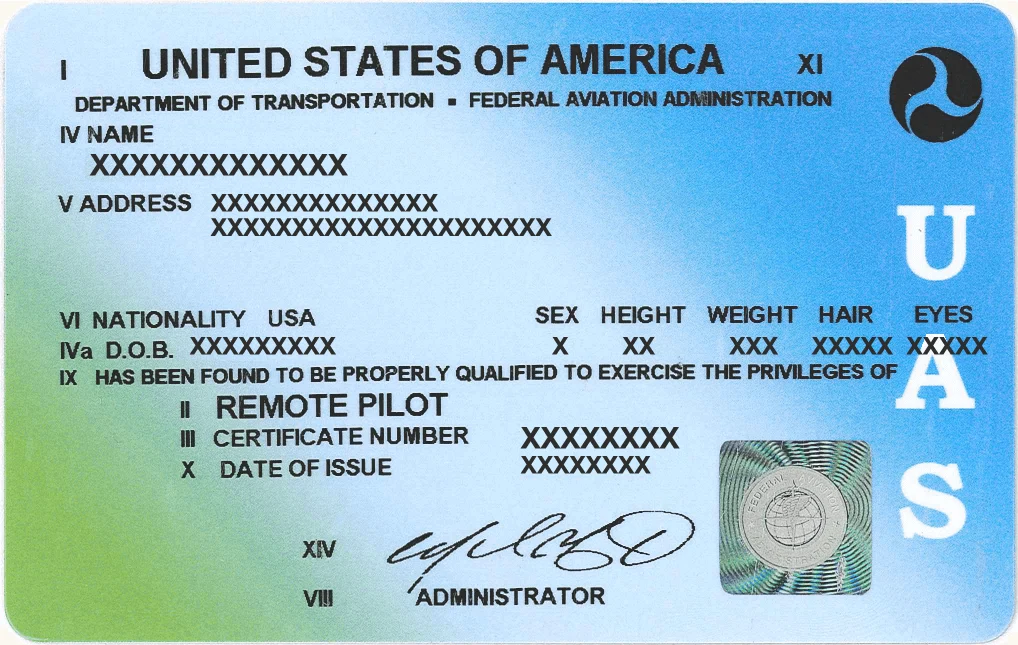
The Part 107 license, officially known as the Remote Pilot Certificate, is issued by the Federal Aviation Administration (FAA). It authorizes a remote pilot to operate small unmanned aircraft systems (sUAS) under federal regulations for commercial operations.
To put it simply: “drone license,” “commercial drone license,” and “FAA drone license” are the everyday terms people use. Part 107 is the specific FAA regulation, 14 CFR Part 107, that makes that license legally meaningful.
Part 107 rules were first introduced in June 2016 and updated in 2021 to permit night flying and operations over people without a waiver under specific conditions. At a glance, Part 107 requires:
Requirement
Details
Commercial use
Required for any revenue-generating or business-related drone work — photography, inspections, mapping, real estate
Let’s take a quick look at the importance of Part 107 certification and what it means for you as a certified drone pilot.
Do I Need a Part 107 License?
You need a Part 107 certificate if you:
Fly a drone for any form of paid work
Operate commercially on behalf of a business or employer
Use drone footage, data, or services in any revenue-generating capacity
Conduct promotional flights, even without direct payment
You do NOT need Part 107 if you:
Fly purely for recreational or hobby purposes and follow all FAA recreational rules (49 U.S.C. § 44809)
In that case, you pass the free FAA TRUST test instead of the Part 107 exam.
The FAA draws the line at commercial intent, not skill level or drone size. A $300 DJI Mini flown for a paying client requires a Part 107 license. A $2,000 professional rig flown on a weekend for fun does not.
Recreational pilots fall under a separate set of rules. You pass the free TRUST safety test, register any drone that weighs 250 grams or more ($5, covering all your recreational drones for three years), and follow community-based safety guidelines. No knowledge exam, no testing center, no test fee.
To earn a commercial drone pilot license under 14 CFR Part 107, here are the eligibility criteria.
For First-Time Applicants
To qualify for a Remote Pilot Certificate under Part 107, the FAA says you must:
Age: Be at least 16 years old to be issued the certificate. You can take the knowledge test at 14. There is no maximum age.
Language: Read, write, speak, and understand English.
Physical & mental fitness: Be in a physical and mental condition to safely fly a drone. No formal FAA medical exam is required. You self-certify.
Knowledge: Pass the initial aeronautical knowledge exam: Unmanned Aircraft General – Small (UAG).
No prior flying experience or aviation background is required. One caveat: certain drug or alcohol offenses can be grounds for denying an application for up to one year (14 CFR 107.57).
Keep your Remote Pilot Certificate easily accessible during all drone operations
Complete FAA recurrent training every 24 calendar months to maintain aeronautical knowledge recency
These rules apply to both first-time pilots and Part 61 certificate holders.
Step 3. Pass the FAA Drone License Knowledge Test
To earn your Part 107 license, you must meet the FAA’s aeronautical knowledge requirement. The FAA tests this knowledge through either an exam or online training, depending on your background.
For First-Time Pilots
You must pass the Unmanned Aircraft General – Small (UAG) knowledge exam at an FAA-approved testing center.
Exam Format at a Glance
Detail
Specification
Number of questions
60 multiple-choice
Time allowed
120 minutes (2 hours)
Minimum passing score
70% — at least 42/60 correct
Test location
FAA-approved Airman Knowledge Testing Center (bring a government-issued photo ID)
Exam fee
$175 per attempt
Chart questions
From October 26, 2026, some questions use images from current sectional charts that aren’t in the testing supplement
Results
Immediate pass/fail notification on screen
If you fail
Retest after 14 calendar days
Temporary certificate
Printed from IACRA after the TSA check; valid for up to 120 days
Permanent certificate
Mailed once FAA processing is complete
The exam is multiple choice and focuses on both aviation basics and drone-specific rules. According to the FAA’s Airman Certification Standards, the test breaks down like this:
Start by benchmarking yourself with Drone U’s free 70-question Part 107 practice test to identify weak areas, then work through our Part 107 study guide topic by topic. Aim to score 90%+ consistently before you book. The passing line is 70%, and the buffer matters.
For structured prep, the Drone U Part 107 license course ($147, regularly $197) includes 80+ on-demand video lessons, FAA-aligned quizzes, a downloadable study guide, and lifetime access. Many students finish in 7–14 days with 1–2 hours per day. Wondering how others do? See the FAA data in our Part 107 pass rate breakdown.
Structured study builds knowledge, but real flight time builds confidence. Nashville Drone Co offers hourly hands-on lessons in Nashville, helping local pilots get comfortable behind the controller while they study for the exam.
Walk Into the Exam Feeling Prepared
Confidence doesn’t come from studying more; it comes from knowing you studied the right things.
You’ll be able to:
Know where to start (and what to ignore)
Spot weak areas before test day
Review quickly without second-guessing yourself
Thank you!
Thank you. You will now be redirected to your requested resources.
Step 4. Apply for Your FAA Drone License in IACRA
After you complete the required exam or training, you must apply for your Remote Pilot Certificate through the FAA.
Here’s how:
Before exam day: Create a free IACRA account at iacra.faa.gov to get your FAA Tracking Number (FTN). You need it to register for the knowledge test, so do this before you book your appointment.
After passing: Log in to IACRA, start a new Remote Pilot Certificate application, and complete FAA Form 8710-13 electronically. You’ll enter the 17-digit Knowledge Test Exam ID from your test report. Note that the FAA says it can take up to 48 hours for your test to appear in IACRA.
Processing: Once your TSA security background check is complete, you’ll receive an email with instructions to print your temporary certificate from IACRA. It’s valid for up to 120 days, and your permanent certificate arrives by mail once FAA processing is complete. Have it available, physical or digital, whenever you fly.
For Part 61 certificate holders
Skip the proctored exam entirely. Complete the FAA ALC-451 online training course on the FAA Safety Team (FAASTeam) website instead. Then complete Form 8710-13 in IACRA and bring your ALC-451 completion certificate, proof of a current flight review, and photo ID to an FAA-authorized representative, who can issue your temporary certificate at the time of application.
You can complete this by making an appointment with one of the following FAA-authorized representatives:
Please note: * FAA-certified flight instructors (CFIs) cannot issue temporary certificates. They can process applications for applicants who do not require a temporary certificate.
Learn what certification you need for drone mapping in this video:
What Changes for the FAA Drone License Test on October 26, 2026
Beginning October 26, 2026, the FAA says the UAG test “will include image-based questions not found in the test supplements.” The images come from current FAA sectional charts, according to the FAA’s September 2026 Airman Testing Community Advisory.
Here’s what that means for you:
Same topics, new format. Airspace and airport questions were always on the test. Now some of them use a fresh chart crop instead of a supplement figure you may have memorized.
The supplement isn’t going away yet. The FAA hasn’t set a removal date and says it will give ample notice.
You can’t preview the images. The FAA keeps images in active test questions confidential.
The format doesn’t change. It’s still 60 questions, 2 hours, and 70% to pass.
Here’s the short version. The required costs are the $175 knowledge test fee and $5 per drone for Part 107 registration (valid for three years). The FAA’s recurrent training is free. A prep course is optional, but it’s where most people save time.
As for timing, it mostly comes down to how fast you study. Creating your IACRA profile takes minutes. Your test results can take up to 48 hours to reach IACRA, and the temporary certificate follows once your TSA check clears. For every fee in detail, see our drone license cost guide.
Once you earn your Part 107 license, you must continue to follow FAA operating rules to fly legally and safely.
Part 107 Operating Rules for Certified Pilots
Once certified, your Remote Pilot Certificate allows you to fly commercially under these standard Part 107 conditions.
Check out our Safe Drone Operations course to learn flying skills that will take you from a beginner to an expert drone pilot.
Core Operating Rules
Here are the core operating rules under Part 107:
Fly at or below 400 feet AGL (above ground level), or within 400 feet of a structure and no higher than 400 feet above its top
Maintain visual line of sight (VLOS) at all times without binoculars
Fly at night or during civil twilight only with anti-collision lighting visible for at least 3 statute miles
Keep drone under 55 pounds (including payload)
Fly at speeds under 100 mph (87 knots)
Yield right of way to all manned aircraft
Obtain LAANC authorization or other FAA airspace authorization before flying in Class B, C, or D airspace, or in Class E surface areas designated for an airport
Keep at least 3 statute miles of visibility from your control station
Stay at least 500 feet below and 2,000 feet horizontally from clouds
Comply with FAA Remote ID requirements. Your drone must broadcast identification and location data during flight
You cannot be a pilot or visual observer for more than one drone operation at a time.
Do not fly over people unless they are directly participating, under a covered structure or in a stationary vehicle, or your operation meets one of the four operations-over-people categories.
Do not operate your drone from a moving aircraft. From a moving vehicle, fly only over sparsely populated areas.
Related Reading: Check out “Drone Laws in the USA” to get more information on the regulations for unmanned aerial vehicles (UAVs), and see where you can fly a drone for no-fly maps and apps.
NOTE: Recreational pilots must pass The Recreational UAS Safety Test (TRUST). This requirement does not apply to Part 107 operations.
Beyond basic flight rules, there are a few operational considerations that can affect how and where you fly. Let’s understand these in the next section.
When You Need a Part 107 Waiver
You do not need a waiver to fly under standard Part 107 rules. A waiver is only required when you want to deviate from a specific regulation. The FAA now takes Part 107 waiver applications through the FAA Aviation Safety Hub. Here’s every regulation listed as waivable under §107.205.
Operations requiring a waiver
Regulation waived
Fly a small UAS from a moving aircraft or a vehicle in populated areas
§ 107.25 – Operation from a Moving Vehicle or Aircraft
Fly at night or civil twilight with anti-collision lighting turned completely off
Standard night/twilight flight does NOT require a waiver since the 2021 rule update — you only need this waiver for lights-off edge cases (e.g., drone light shows, certain FPV operations).
Operations in Class G airspace are allowed without air traffic control (ATC) permission. For Class B, Class C, and Class D airspace, and for the surface area of Class E airspace designated for an airport, you need ATC authorization before flying. For a plain-English rundown of each class, see our guide to airspace classes.
The fastest way to get it is Low Altitude Authorization and Notification Capability (LAANC), a free capability available through apps from FAA-approved UAS Service Suppliers such as Aloft. According to the FAA, LAANC is available at 726 airports and can return approvals in near-real time.
Note: If an airport doesn’t offer LAANC, request authorization through FAADroneZone instead. The FAA says those manual requests have historically taken up to eight weeks, so apply early.
3. FAADroneZone
FAADroneZone Drone Registration
The FAA uses an online portal called FAADroneZone for aircraft registration and for requesting airspace authorizations when LAANC is unavailable.
It helps in:
Registering your drone- $5 per drone, required before your first flight and valid for 3 years.
Airspace authorization for locations where LAANC is not available
Waiver applications submitted before the move to the Aviation Safety Hub, which the FAA says will still be processed in FAADroneZone
Next, let’s explore where most pilots actually stumble and what to do about it.
7 Common Mistakes Beginners Make With Part 107
Most problems that first-time pilots run into are predictable and avoidable. These are the ones that come up most often.
1. Confusing the TRUST test with Part 107 certification. The TRUST test is a free, untimed online safety course required for recreational flyers. Part 107 is a proctored, $175, 60-question exam at a certified testing center. They are completely separate. Flying commercially after only completing TRUST is illegal. If any money is involved, directly or indirectly, you need Part 107.
2. Skipping the FAA Tracking Number before exam day. You need an IACRA account and an FAA Tracking Number before you register for the exam. Create your IACRA account the same day you decide to pursue Part 107, not the week before the test.
3. Aiming for the minimum passing score. The pass mark is 70 percent, 42 correct out of 60. That is not the standard to aim for. Nerves, unfamiliar phrasing, and tricky weather questions can cost you points on exam day without warning. Study for 90 percent on practice tests. The buffer matters.
4. Flying commercially before the temporary certificate is issued. Passing the exam does not immediately authorize you to fly for compensation. Your temporary certificate is issued through IACRA after your application is submitted and the TSA security check is complete. Wait for that certificate before conducting any commercial operation.
5. Missing the 24-month recurrent training deadline. You must have passed your initial test or completed recurrent training within the previous 24 calendar months to fly under Part 107. Many pilots track the wrong date and become non-current without realizing it. Set a calendar reminder for 22 months after your test or last training—that gives you two months to complete the free FAA course before you lapse.
6. Assuming Part 107 covers every type of commercial operation. A Part 107 certificate authorizes standard commercial flight within the published rules. Some operations still require a separate waiver, such as flying beyond visual line of sight, at speeds above 100 mph, above 400 feet AGL, or in conditions that fall outside the standard operating limits. Having the certificate does not automatically authorize everything.
7. Not registering the drone before the first commercial flight. Drone registration through FAADroneZone ($5 per drone, valid three years) is a separate requirement from Part 107 certification. You need both the certificate and a registered drone before any commercial flight. Registration takes about ten minutes and is often forgotten in the excitement of passing the exam.
Keeping Your FAA Drone License Current (Recurrent Training)
Your Remote Pilot Certificate doesn’t expire. However, to use it, you must have passed the initial test or completed FAA recurrent training within the previous 24 calendar months (14 CFR 107.65).
Here’s the short version:
Most pilots: Take the free Part 107 Small UAS Recurrent course (ALC-677) on FAASafety.gov. No testing center required.
Part 61 pilots with a current flight review: Take ALC-515 instead.
Missed the deadline? Your certificate isn’t revoked. You simply can’t fly under Part 107 until you complete the training, and you don’t need to retest.
Counting the 24 months: It’s calendar months from your test or last training, not from the day the card arrived in the mail.
According to Precedence Research, the global drone services market is projected to reach about $142.22 billion by 2035.
A Part 107 license opens the door to the full commercial drone industry. The FAA’s Aerospace Forecast (FY 2024–2044) says that, starting from 368,883 remote pilot certificates at the end of 2023, commercial activity may require over 472,269 remote pilots within five years—over 103,386 new remote pilot opportunities.
Industries actively hiring Part 107 pilots (fleet shares below are from the same FAA forecast, based on 2023 commercial units):
Real Estate & Construction: The largest segment by far. General photography and real estate account for 81.88% of commercial UAS units (600,300 air vehicles), with construction adding another 3.96%. The most accessible entry point for new pilots.
Inspection & Infrastructure (Energy): Power lines, cell towers, bridges, wind turbines, and rooftops. Energy represents 3.03% of the commercial fleet, and drone inspections keep replacing dangerous manual climbs. In our experience, companies pay a premium for certified pilots in this niche.
Mapping & Surveying: Land development, civil engineering, and infrastructure projects use drone-collected data to replace traditional ground surveys. This niche requires additional software skills like DroneDeploy or Pix4D.
Agriculture: Crop health monitoring, irrigation planning, and yield analysis. Agriculture accounts for 5.86% of commercial UAS units (43,000 air vehicles) per the FAA forecast.
Film & Media Production: Commercial video, news, sports broadcasting, and events. Entertainment represents 2.73% of the commercial fleet — competitive but high-visibility work.
Insurance Claims Assessment: 1.40% of commercial units, used for property damage assessment and claims documentation.
All Drone U articles, podcasts, and resources for Part 107
Get Your FAA Drone License With Drone U
Part 107 is the easy part of a drone career—if you prepare the right way. Learn the rules, learn the airspace, and learn to read a chart you’ve never seen. That’s exactly what the October 26 test change rewards.
Disclaimer:Information in this guide reflects FAA regulations current as of October 2026. Drone regulations are subject to change. Always verify requirements directly with the FAA at faa.gov before flying commercially.
Ready to Pass Your Part 107 With Confidence?
Part 107 gets a lot easier when you stop guessing what to study.
This training gives you a clear plan, so you can prepare faster and walk into the exam knowing you’re ready.
Turn months of scattered studying into a few weeks of focused, structured prep
Score 90% or higher on our quizzes, and you’ll know you’re ready for the real test
Finally understand airspace, weather, and rules without memorizing blindly
Know exactly what to study — and what you don’t need to stress about
Thank you!
Thank you. You will now be redirected to your requested resources.
1. Can a 16-year-old get a Part 107 license, and do I need a pilot's license first?
The minimum age is 16; there is no maximum. And no prior aviation experience is needed. Part 107 is a standalone certification — no flight training, no existing pilot certificate, no flight proficiency test. The FAA tests aeronautical knowledge only.
2. Do I need to be a U.S. citizen to get a Part 107 license?
No. Foreign nationals and non-U.S. residents can also apply for and receive a Part 107 Remote Pilot Certificate. They must meet the standard eligibility requirements and pass the knowledge test.
3. How many questions are there on the Part 107 exam, and what is the passing score?
The Part 107 exam is 60 multiple-choice questions with a 120-minute time limit. You need to answer at least 70% correctly, i.e., 42 out of 60 correct answers to pass. Results are displayed immediately on screen at the testing center.
4. How much does the Part 107 exam cost?
The Part 107 exam costs $175 per attempt. It is paid when you book your PSI testing center appointment. The fee applies each time you test.
5. How long is a Part 107 license valid?
A Part 107 Remote Pilot Certificate doesn’t expire. To keep flying under it, you must complete free FAA recurrent training (ALC-677) every 24 calendar months. If you miss the deadline, you don’t need to retest. You just can’t fly under Part 107 until you finish the training.
6. How do I renew my Part 107 license, and is there a fee?
To remain current, complete the FAA's free online recurrent training course every 24 calendar months through FAASafety.gov. Most pilots do not need to retake the knowledge test. There is no FAA renewal fee.
7. Do I need a waiver to fly at night?
No. The 2021 Part 107 update removed the night waiver requirement. Night flying is now permitted as long as your drone has anti-collision lighting visible for at least 3 statute miles.
8. Can I fly in controlled airspace with a Part 107 license?
Yes, but you need authorization first. Use LAANC for near-instant approvals at 530+ FAA ATC facilities covering 726+ airports. For locations not covered by LAANC, submit a manual request through FAADroneZone. Class G airspace requires no authorization.
9. How long does it take to get a drone pilot license?
Most applicants receive their Part 107 certificate within 2–6 weeks. This includes studying for the exam, taking the test, submitting the FAA application, and completing the TSA background check.
Paul Aitken is a Certified Part 107 drone pilot and a Certified Pix4D Trainer. He is a pioneer in drone training and co-founder of Drone U. He created the industry’s first Part 107 Study Guide and co-authored Livin’ the Drone Life.
Paul is passionate about helping students fly drones safely and effectively. With over a decade of experience, he has led complex UAS projects for federal agencies and Fortune 500 clients such as Netflix, NBC, the NTSB, and the New York Power Authority.
Add Your Comment
Related Articles
The Top 36 Drone Companies in 2025
How to Choose the Best Drone for Cinematic Filmmaking




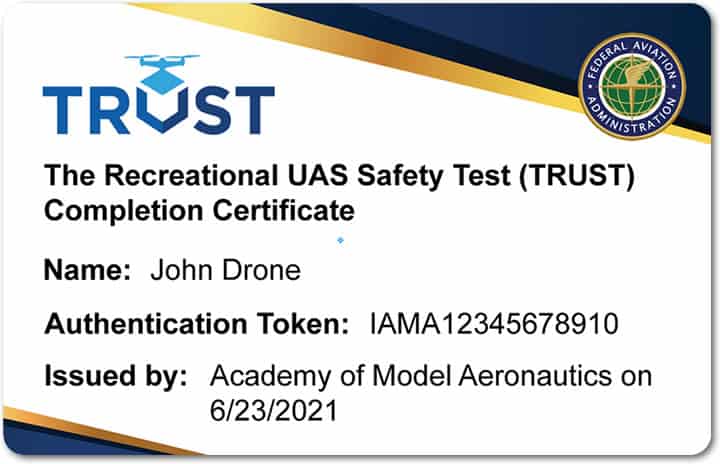 TRUST Certificate | Source:
  FAADroneZone Drone Registration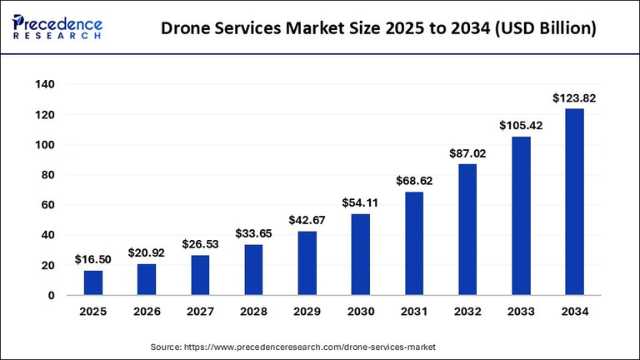


Add Your Comment