
How to Become a Drone Pilot in 2026: Part 107 Is the Easy Part (Here’s What Gets You Paid)

October 8, 2026
If you want to know how to become a drone pilot, here’s the honest answer: the FAA Part 107 certificate is the simple, easy part. You study, you pass, you’re done. What actually makes you a drone pilot people pay is everything after that—smooth video, beautiful photos, confident flying and the nerve to sell it.
So this guide spends a few minutes on the paperwork and the rest on the skills. Below is the path we’d follow if we were starting from zero today, whether you want to go creative or would rather fly mapping missions on a construction site.
First, the rule itself. If you fly for any business purpose—not just for pay—you fly under 14 CFR Part 107, and you need a Remote Pilot Certificate. The FAA’s own examples include photos to help sell a property and roof inspections. Purely recreational flyers take the free TRUST test instead; our TRUST drone test guide covers that side, and do I need a license to fly a drone? sorts out which rules apply to you.
Next, the requirements. According to the FAA, you must be at least 16, able to read, speak, write and understand English, and in a physical and mental condition to fly safely. Then you pass the Unmanned Aircraft General – Small (UAG) knowledge test:
That’s it. There’s no flight check, no college degree and no expensive drone required. In our experience, the only real hurdles are sectional charts and weather. Also note that starting October 26, 2026, the test adds image-based questions from current sectional charts, which our post on the Part 107 test changes explains.
Honestly, this is where most people overthink how to become a drone pilot. A structured course turns it into a short project. Our Part 107 certification course gives you on-demand video lessons, FAA-aligned quizzes (score 90%+ and you’re ready) and a downloadable study guide. Before test day, take our free Part 107 practice test as a readiness check.
After you pass, you apply in IACRA, clear a TSA background check and print your temporary certificate. Then register your drone ($5, valid for three years) and make sure it meets Remote ID. For every step, read how to get your Part 107 license.
Of everything on the test, this is the part you’ll use on every single job. Most clients won’t ask about it, but if you get it wrong, you’re the one who answers for it.
Here’s the plain-English version:
Think of LAANC as a toll-booth transponder: you still follow the rules of the road, but you don’t wait in line. Where LAANC isn’t available, you use the FAA’s manual process, which takes longer. Our guides to airspace classes, LAANC authorization and how to read a sectional chart go deeper.
Now the real work. Clients don’t hire a certificate—they hire results. And yet the Part 107 test never checks whether you can fly a smooth shot. That’s on you, and it’s the gap we dig into in a Part 107 license is just the start. These are the four skills we’d drill first.
Smooth footage looks intentional. Jerky footage looks like a hobbyist, even if the drone cost thousands. To get it:
Above all, practice one move until it looks boring—boring is good. Then link two moves together. Our drone videography guide and the Advanced Aerial Videography course go deeper.
A drone camera can’t hold a bright sky and shaded ground in one exposure. That’s where AEB (Auto Exposure Bracketing) comes in. With AEB on, the drone fires a quick burst of frames at different exposures. For example, DJI’s Mini 4 Pro brackets 3, 5 or 7 frames at 0.7 EV steps (fewer at 48 MP).
Then you merge them in your editing software for one photo with detail in the highlights and the shadows. A few habits make it work:
As a result, your photos look like what the client saw in person, not a blown-out sky over a dark roof. Our aerial photography class covers it in depth.
A hyperlapse is a moving time-lapse: the drone travels slowly while shooting a long sequence of photos, then stitches them into video. Many DJI camera drones build it in. On the Mini 4 Pro, for instance, the modes are Free, Circle, Course Lock and Waypoint.
Hyperlapse sells because it shows change—traffic, clouds, crowds, a sunset over a property. However, it also takes patience. Plan for wind, battery life and a clear sky, and save a waypoint route so you can fly the same path again on a later visit.
A fly-through is one continuous shot that flows through a business—a restaurant, gym, brewery, hotel or dealership—usually on a small, ducted FPV drone. Business owners love them because they show the whole space in one take.
They also demand the most planning. Rehearse the path, shoot when the space is closed or controlled, and get the owner’s permission. Also remember that outdoors under Part 107, someone must keep the drone in sight with their own eyes, so if you fly in goggles, you need a visual observer. Our fly-through drone tours course and our post on fly-through drone jobs show how pilots build this into a service.
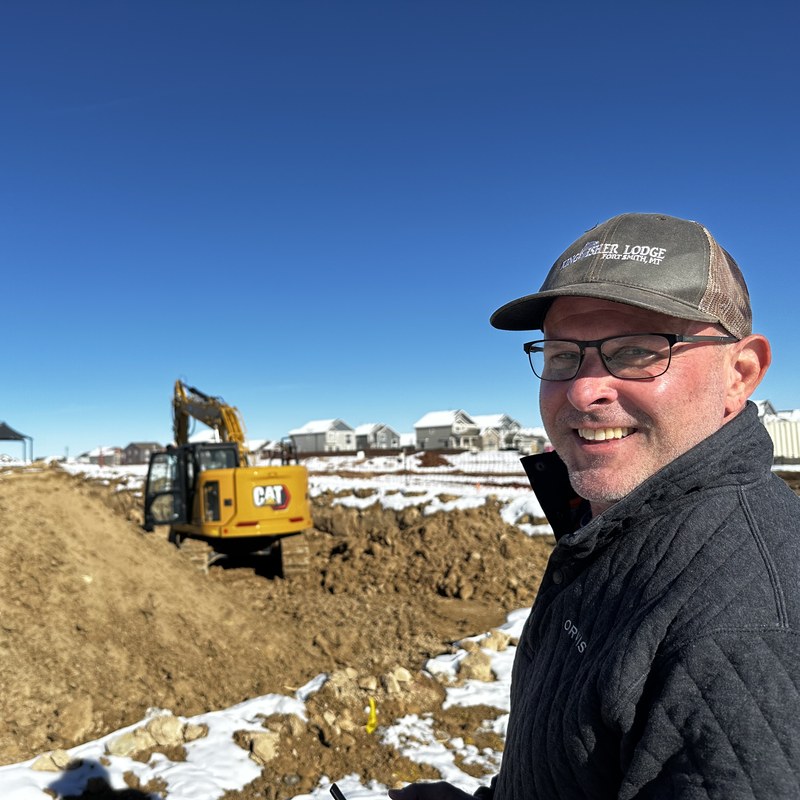
Not everyone wants to go creative. That’s fine. If you’d rather not color-grade footage or chase golden hour, you can go straight into mapping and work construction VDC jobs.
VDC stands for virtual design and construction. Contractors plan and manage projects with digital models, and drone data keeps those models honest. On a typical site, you:
We call this being a battery babysitter, and we mean it with love. The drone does the flying; you’re the professional making sure it happens safely, on schedule and with clean data. In fact, many sites get flown again and again as the project moves, which is why this is steady, repeatable work.
That said, it still takes skill. You need airspace knowledge, site-safety habits and an understanding of what the VDC team does with your data. If that sounds like you, this is one of the most practical answers to how to become a drone pilot with steady work. Start with our construction mapping workflow, the drone mapping guide and the Construction Drone Bundle.
Delivery companies hire pilots too, and every role we’ve seen starts with Part 107. For example, a current Amazon Prime Air Flight Monitor listing asks for a high school diploma and a Part 107 certificate. Wing’s sUAS Flight Operator listings ask for Part 107 plus three or more years of commercial or public UAS experience, or university-level aviation training. In other words, experience matters. Listings change often, so check each company’s careers page.
Either way, creative or mapping, success comes down to confidence. Not hype—confidence because you’re prepared.
Clients pay for the pilot who shows up and gets it done. So build habits that make delivery automatic:
Also, know when not to fly. If wind or light won’t give you the shot you sold, reschedule. Clients remember the pilot who protected the result.
This is the skill nobody puts on a list of how to become a drone pilot, and it’s the one that decides whether you get paid. Specifically:
On top of that, look the part. Many clients will ask for a certificate of insurance; our drone insurance guide covers your options, and how to start a drone business walks through the setup. If you’d rather be employed, our drone pilot jobs guide and drone pilot salary breakdown show where to look.
The certificate is faster and cheaper than most people expect. Many students finish the Part 107 course in 7–14 days with 1–2 hours of study per day. After that, allow time to schedule the test and clear the TSA check.
| Item | Cost |
|---|---|
| Part 107 knowledge test | About $175 (per the FAA) |
| Drone registration (Part 107) | $5 per drone, valid 3 years |
| Recurrent training every 24 calendar months | Free (FAA online course) |
| Drone U Part 107 course | $147 (regularly $197) |
Your drone, insurance and business setup are the variables. For the full breakdown, see our drone license cost guide. The skills, on the other hand, take as long as you practice—so start flying now.
That’s how to become a drone pilot in 2026: knock out the simple Part 107, learn airspace cold, then build the flying, delivery and sales skills that get you hired. Drone U has 10+ years of in-person drone training and 14+ years of online drone education, and we teach what actually works in the field.
Enroll in the Part 107 course for $147 (regularly $197). You get on-demand video lessons, FAA-aligned quizzes, a downloadable study guide, the private Drone U community, lifetime access and a 14-day money-back guarantee.
Want flight skills too? The New Pilot Bundle pairs Part 107 prep with flight-skills training to take you from beginner to confident, certified pilot.
Training a team? Explore our Enterprise Drone Programs, including hands-on Flight Mastery training, or book a consultation to build a plan for your organization.
We don’t teach hype. We teach what works—because we fly it ourselves.
Sources
 1
1